A tablet that helps venous ulcers heal faster — and what it cannot do
The 2025 review of the Journal of Vascular Surgery: Venous and Lymphatic Disorders separates marketing from evidence in venoactive compounds. In the toughest outcome — healed ulcer — three drugs reach level A, and always as adjuncts to compression.
 View the video lesson
Venous ulcer of the leg is the advanced stage of chronic venous disease — CEAP class C6. The aim of the treatment is to reduce venous hypertension: medical compression, reflux ablation or treatment of deep obstruction when viable, and local wound management. The question of this review is what remains: is there adjuvant medical therapy with evidence to support itself?
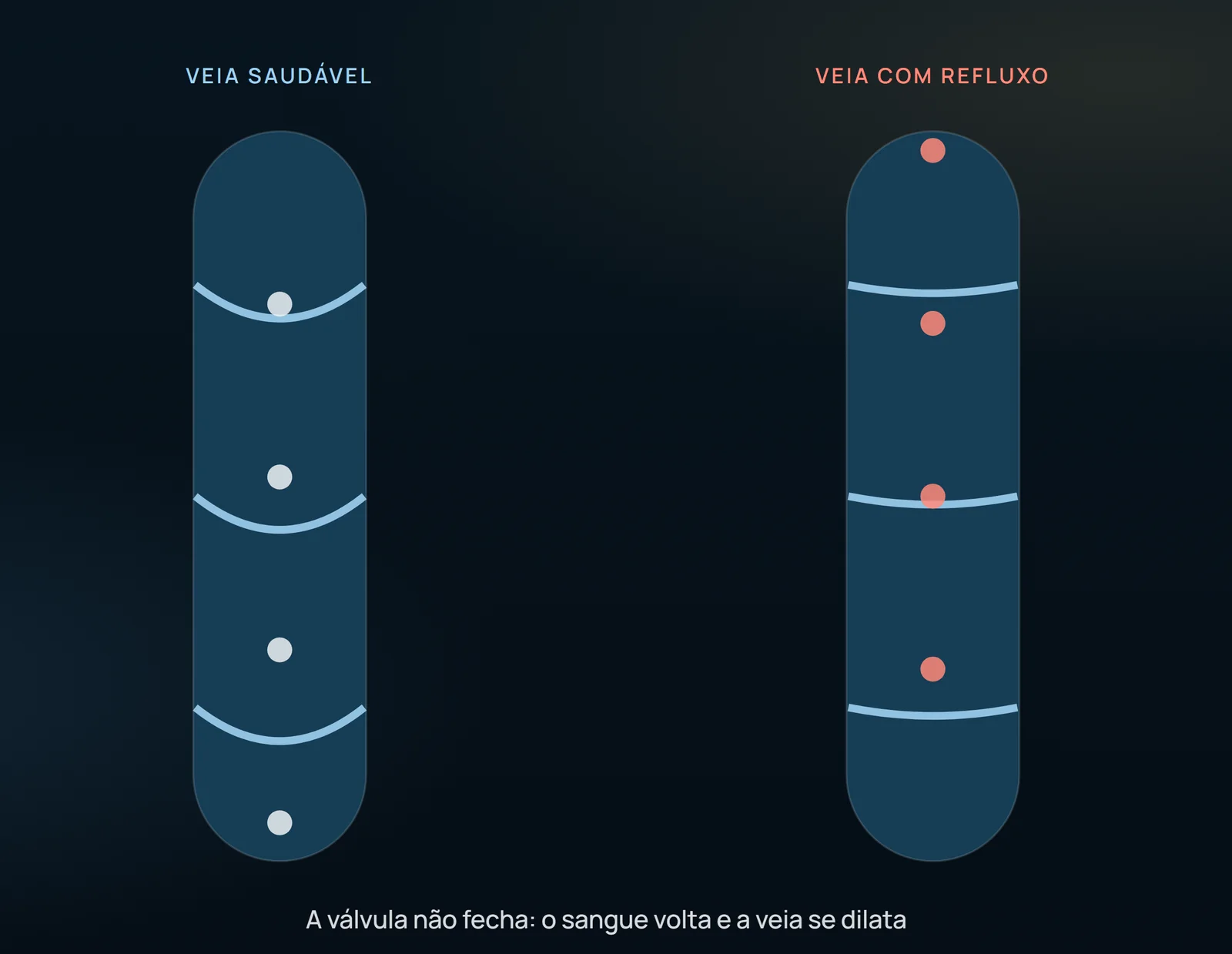
What venoactive people do, and what they're not
Venoactive compounds share effects: seal the endothelial barrier, improve lymphatic drainage, reduce orthostatic edema, improve venous tone, inhibit leukocyte adhesion to walls and venous valves and release of inflammatory mediators, decrease blood viscosity and promote flexibility of red blood cells. However, the group is not homogeneous: not all demonstrate activity in all these directions, and it is this heterogeneity that explains the difference in clinical efficacy between them.
MPFF: the meta-analysis of five trials
The micronized purified flavonoid fraction (MPFF) was evaluated in a meta-analysis of five prospective randomized trials with 723 patients with venous ulcer. In three trials, the comparator was standard treatment alone; in the others, standard treatment plus placebo. The duration was two months in one trial (500 mg BID) and six months in the other four.
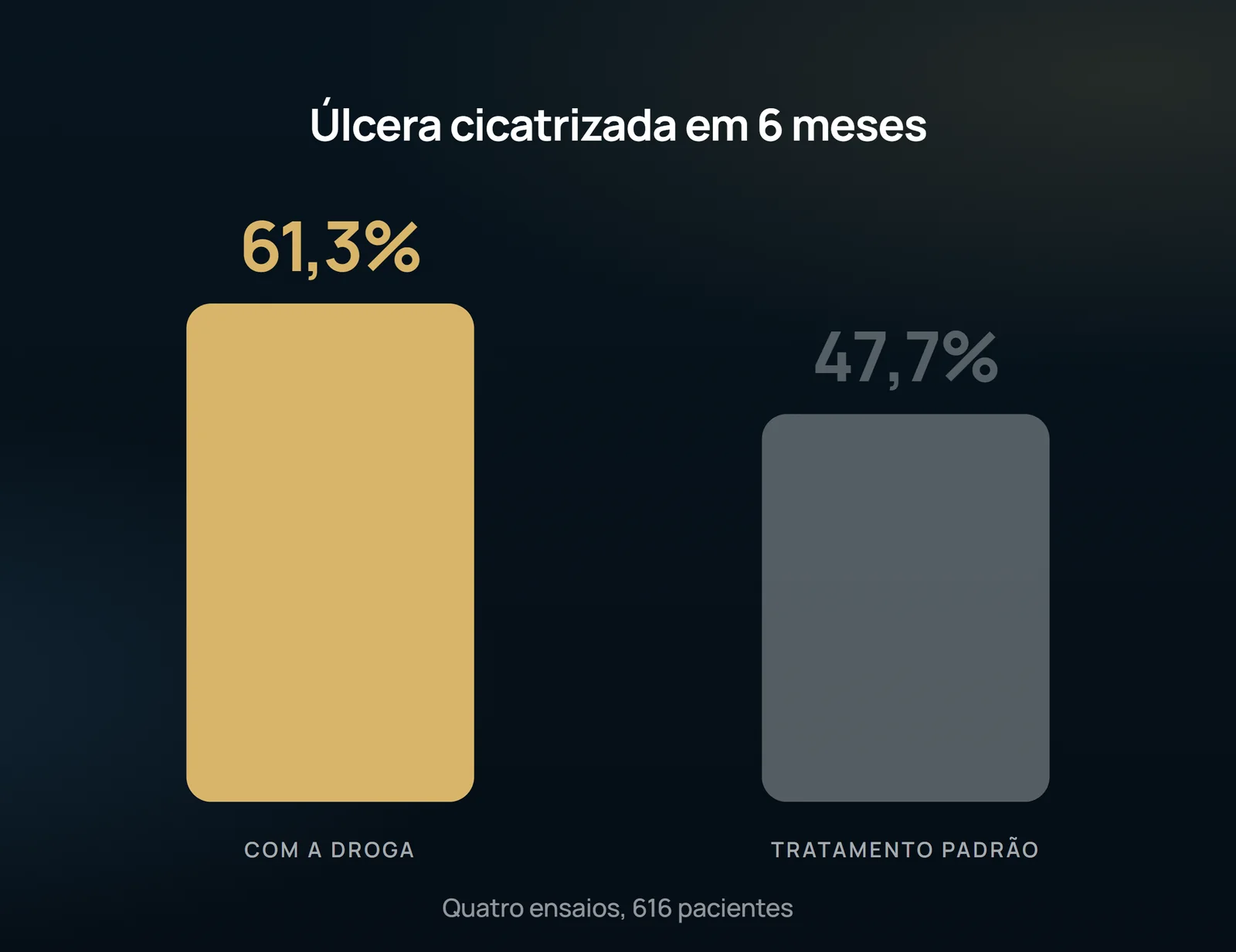
The difference was accompanied by a shorter healing time: 16 against 21 weeks. In the analysis after two months, with the five trials and 723 patients, the chance of healing was significantly higher in the adjuvant MPFF group (p = 0.015). In the Cochrane meta-analysis on flavonoids, the healing rate was higher in the MPFF group (RR 1.36; 95% CI 1.07 to 1.74).
The subgroup is the part that changes the conduct
The benefit of the MPFF was not uniform. It concentrated on ulcers of 5 to 10 cm2 (RRR 40%, 95% CI 6-87%) and lasting 6 to 12 months (RRR 44%, 95% CI 6-97%). In ulcers greater than 10 cm2 or less than 5 cm2, no significant effect of MPFF on standard treatment was found. It's an indication, not a promise.
Sulodexide
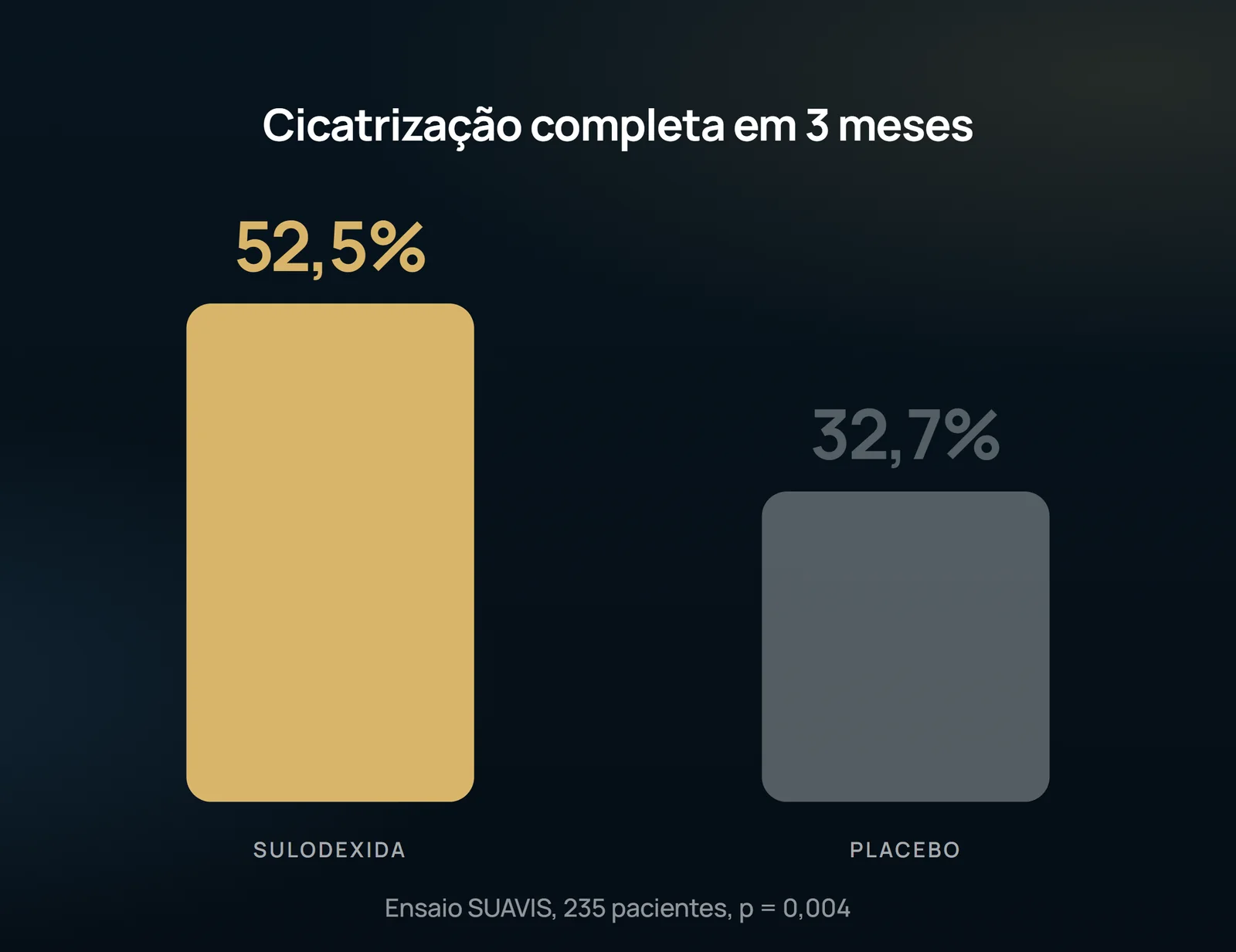
In TCT SUAVIS, controlled by placebo, with 235 randomized patients, sulodexide added to compression and local treatment led to complete healing in two months of 35% versus 20.9% in placebo (p = 0.018); in three months, 52.5% versus 32.7% (p = 0.004). Cochrane analysis, with three RCTs and 438 patients, showed improvement in healing from 29.8% to 49.4% (RR 1.66; 95% CI 1.30 to 2.12).
Pentoxifylline
The guidelines of the 2018 European Venous Forum point to exactly these three drugs as the highest level of evidence in venous ulcer healing: pentoxifylline, MPFF and sulodexide. The guidelines of the 2022 ESVS suggest MPFF, hydroxyethylrutosides, pentoxifylline or sulodexid as adjuvant treatment.
What the review does not allow to state
In all the trials cited, the drug was adjuvant: it entered on medical compression and local care of the wound, never in their place — no data here authorizes to replace compression by pill. The MPFF gain did not appear in ulcers larger than 10 cm2 or smaller than 5 cm2. Pentoxifylline has a price: adverse effects, mainly gastrointestinal, in 19.5% of patients versus 11.3% in placebo (RR 1.56; 95% CI 1.10 to 2.22). For hydroxyethylrutosides, two placebo-controlled trials and one comparing compression with and without the drug did not report additional benefit in healing, and Cochrane authors themselves point out limited data quality and uncertain risk of bias. Finally, this is a review that classifies evidence existing by the GRADE method — not a new trial, and does not replace the individual indication made by a vascular surgeon.
Content addressed exclusively to health professionals. No individual result is guaranteed: the indication depends on clinical evaluation and imaging examination of each patient (CFM 2,336/2023).