Why varicose veins return: the reflux nobody looked for
Changing stripping for intravenous ablation is not by itself a change of practice. The review of Whiteley's best practices argues that recurrence comes from sources of reflux that the typical randomized trial did not seek: incompetent perforations and pelvic venous reflux.
 View the video lesson
The scene is known: the trunk was ablated, the control duplex confirmed occlusion, and two years later the patient returns with varicosity. The reflex reading is a technical failure. Mark Whiteley’s review of best practices proposes another reading — and it is uncomfortable.
According to the author, many physicians who perform intravenous surgery simply replaced stripping with an intravenous procedure, without realizing that the whole approach to varicose veins management has changed. Changing the instrument is not changing the reasoning.
Three nets, not two
The venous system of the lower limb is described in three networks: N1, the deep veins in anatomical compartment 1; N2, the saphenous veins in saphenous fascial compartment; and N3, the veins of subcutaneous fat. Only N3 becomes visible on the surface — when the saphenous become incompetent, it is very rare that they dilate enough to appear on the skin. Hence the term "hidden varices": pathological stem reflux without a protruding vein, with the same clinical deterioration.
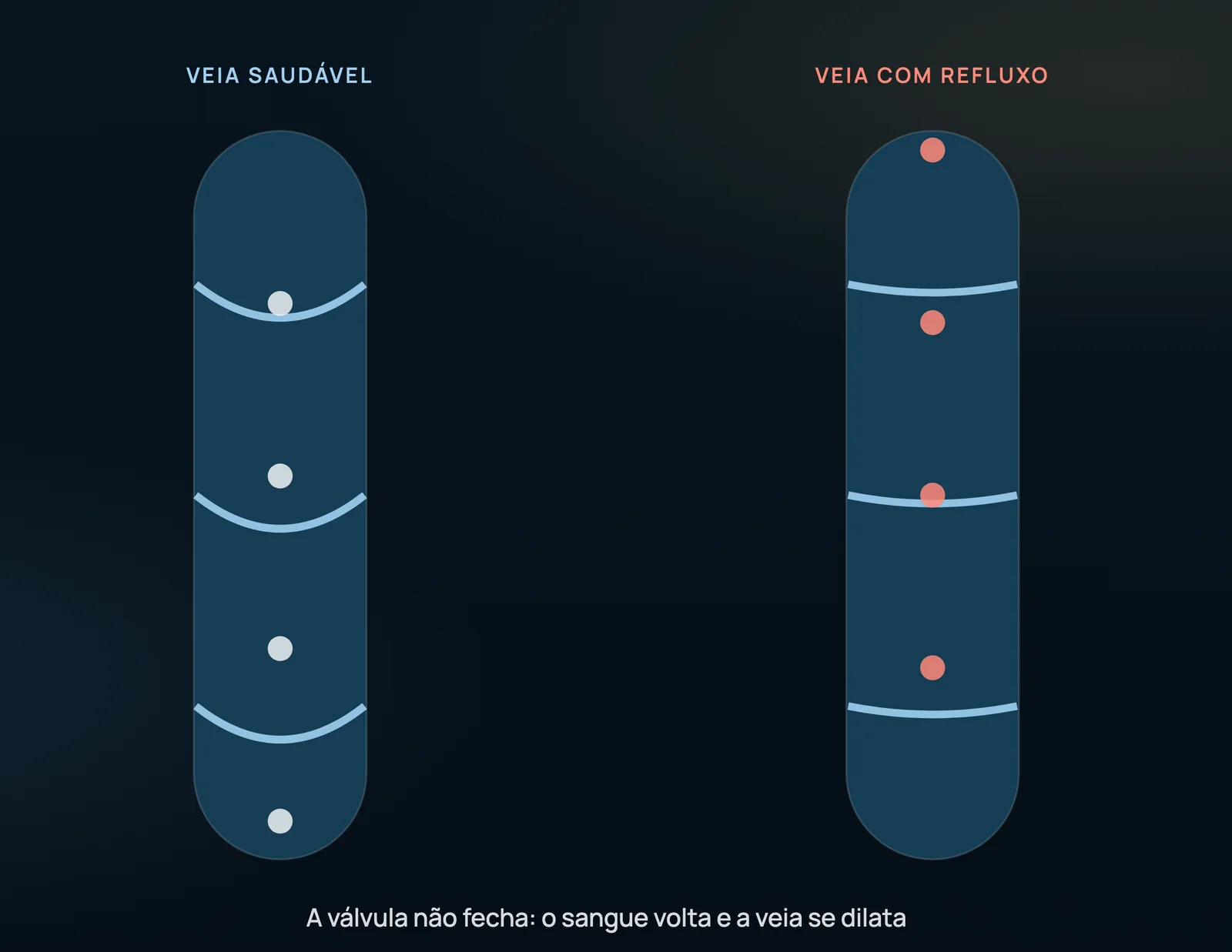
The argument that treating stem reflux would return competence to incompetent perforators was defended in the past and proved false. There is evidence that failure to treat them is associated with recurrence. Since the advent of the TRLOP technique in 2000, percutaneous treatment of these veins has been outpatient — before that, the alternative was subfascial endoscopic surgery, with incision of 2 to 3 cm and generally general anesthesia.
The pelvis enters the account
Research of the author's unit describes 1 in every 6 women and 1 in every 30 men with varicose veins in their legs having an important contribution of pelvic venous reflux. In relapse, weight is higher: in one quarter of all cases, and in one third of women who did not undergo hysterectomy, recurrent varicose veins are associated with failure to treat pelvic reflux. In more than 95% of these cases, at least one internal iliac vein or its tributaries is the main cause — not the isolated gonadal vein.
The exam as bottleneck
The venous duplex for varicose veins should never be performed in the supine position: severity is necessary for passive reflux, and the diameter of the great saphenous vein only correlates with hemodynamic impairment when measured on foot without weight discharge. The author goes beyond and defends the principle of "four eyes": whoever performs the duplex should not be the one who treats, because the report is subjective and the ablated vein destroys the evidence of diagnosis.
Treatment hierarchy and insufficient energy cost
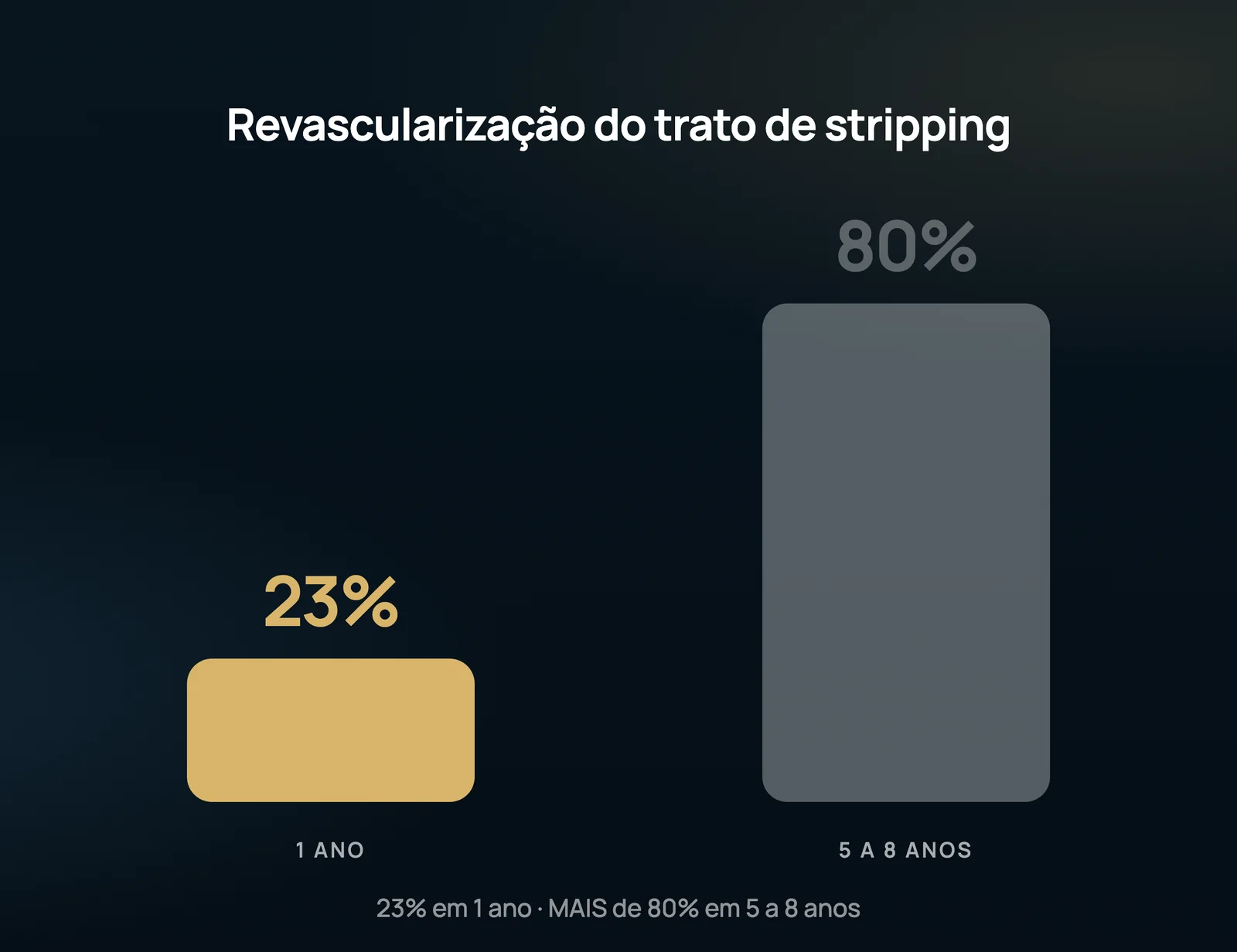
For the incompetent N2 trunk, intravenous thermal ablation is first line; sclerotherapy with ultrasound-guided foam, second; and open surgery with high ligation and stripping, third. One reason is the revascularization of the tract: 23% of people show some revascularization of the stripping treatment within a year, and more than 80% in 5 to 8 years — the vein is growing again, now without valves.
In thermal ablation, the target is transmural wall death with permanent fibrosis and atrophy of the treated segment. Insufficient energy only damages endothelium and intimate: initial occlusion is thrombotic and the vein reopens afterwards, because medium and adventitia remain as a living "venous skeleton" that allows recanalization.
What this article does not allow to say
This is a narrative review article of best practices, signed by a single author and supported largely by research from his own unit. There is no randomization, there is no comparative arm and there is no measure of effect: the text does not authorize to say that treating perforating or pelvic reflux reduces recurrence by any percentage. What he supports is a design criticism — randomized trials comparing open surgery and intravenous ablation do not seek incompetent perforators or pelvic venous reflux, and do not evaluate revascularization of the stripping tract. It is also worth noting that the author himself describes the TRLOP technique as his invention, which is a conflict of intellectual interest declared in the text. None of this invalidates the numbers cited; it delimits what can be concluded from them.
Content addressed exclusively to health professionals. No individual result is guaranteed: the indication depends on clinical evaluation and imaging examination of each patient (CFM 2,336/2023).