PPG did not replace duplex ultrasound — it changed who was referred for it
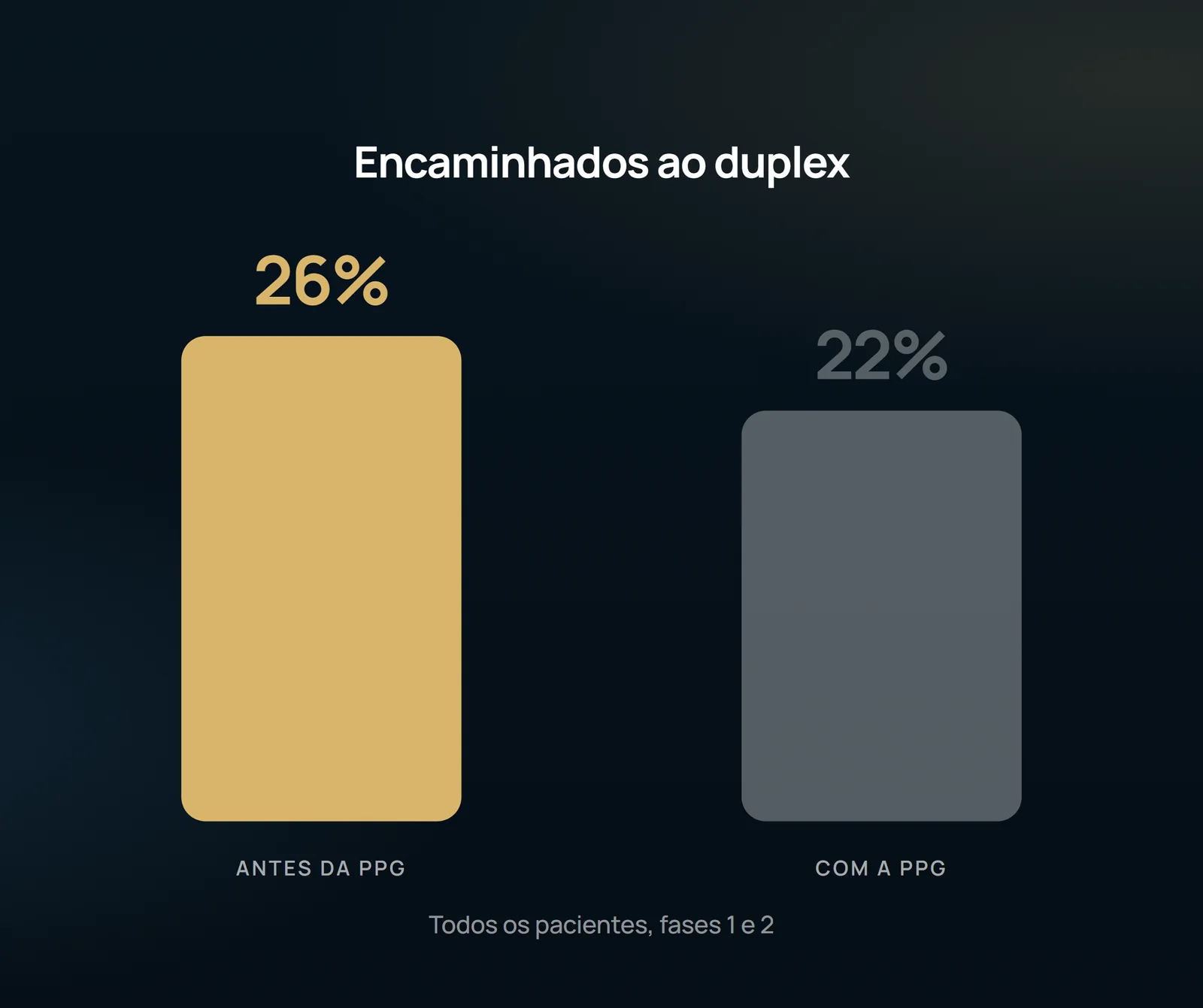
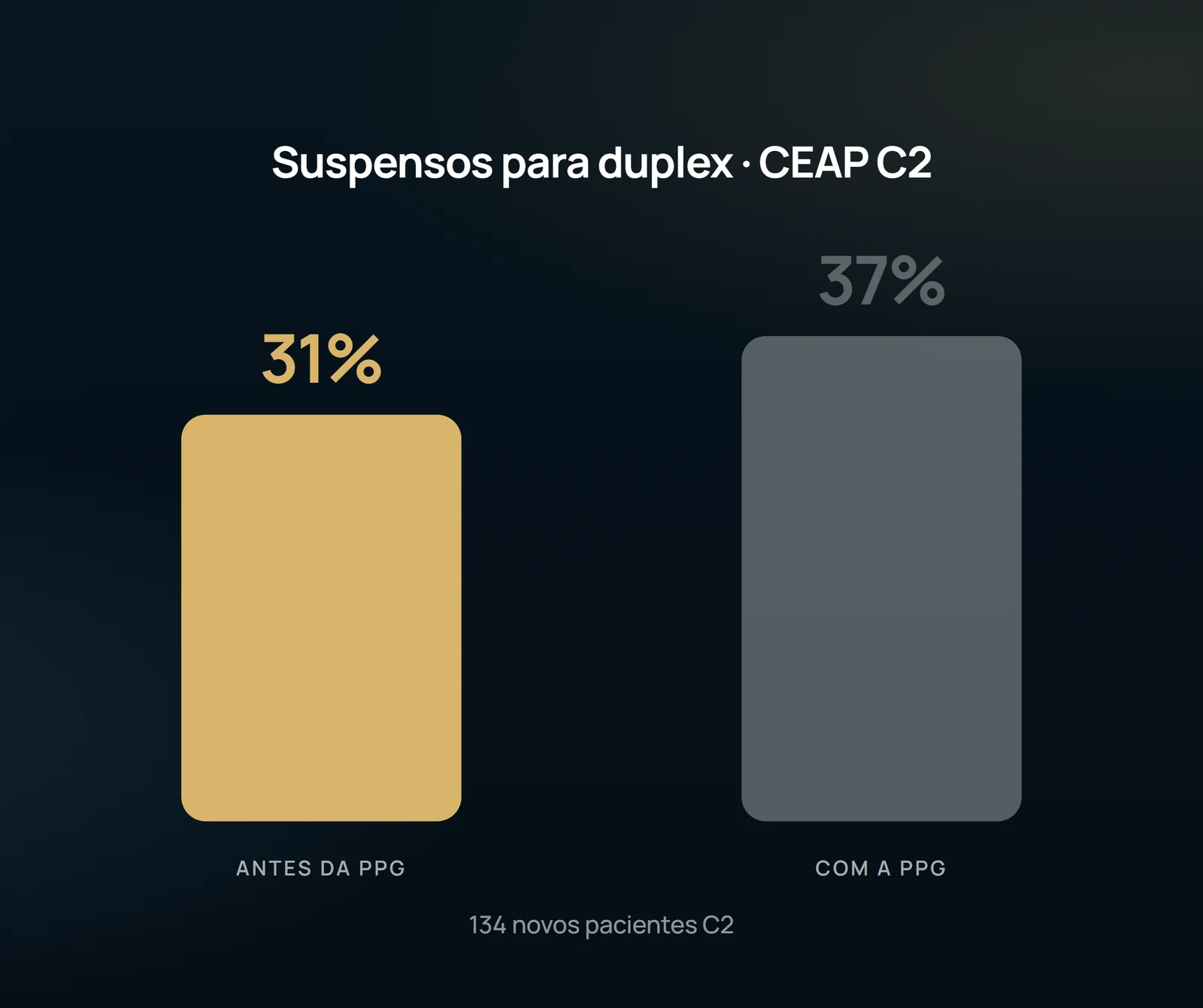
When an English service placed photoplethysmography at the entrance door of the venous outpatient clinic, referral to the duplex fell from 26% to 22% — and in new patients CEAP C2, it increased from 31% to 37%. The decision that the objective test really moved was another: the high one.
 View the video lesson
The easy reading of this study is what everyone does: the photoplethysmography (PPG) entered as the initial objective test and the surgery offered fell. The useful reading is another. If the argument for adopting a screening test is to save the expensive exam, then the number that matters is forwarding to the duplex — and it barely moved.
Service and design
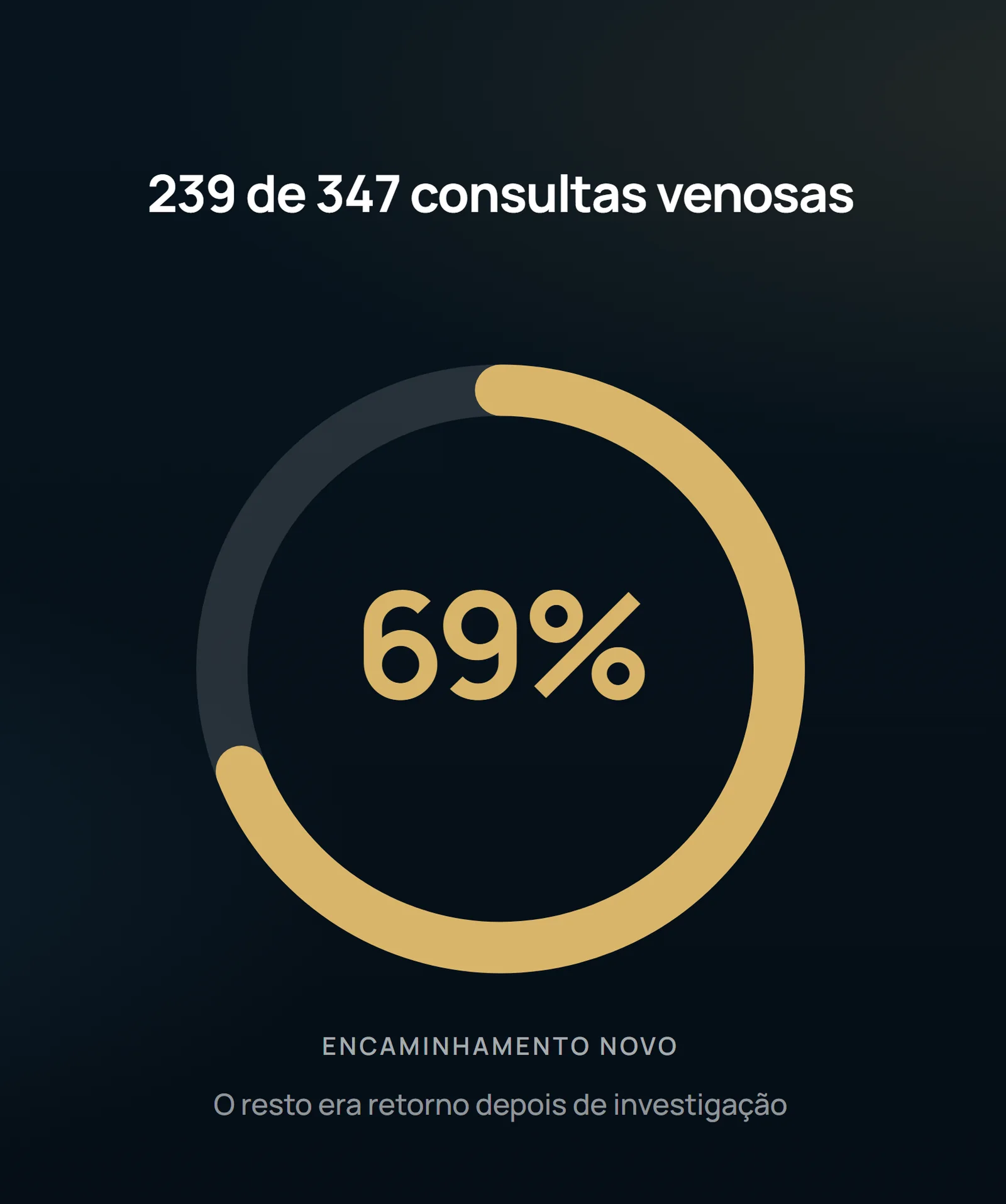
A prospective and observational study in all patients referred with venous disease to a single vascular surgery consultant over 68 weeks. In the first 22 weeks it was worth the conventional protocol (history, clinical examination, manual Doppler or duplex). In the next 46 weeks, every patient had previously undergone a clinical questionnaire and PPG, performed by a clinical scientist. There were 347 outpatient visits, 239 (69%) of them new referral; 59% of the new ones CEAP C2/3 and 23% were CEAP C4-6.
The test is the same as always: ten dorsiflexions of the foot to trigger the calf pump and measure the time that the tracing takes to return to 90% of the baseline. Under 25 s is abnormal, and exercise is repeated with a cuff of 60 mmHg in the calf or thigh to isolate the superficial component.
Referral to the duplex has hardly changed
And in the largest subgroup, the new patient with CEAP C2, the movement was contrary: the category "suspend" — the case that is on hold because it needs duplex — rose from 31% to 37% (134 new patients C2; 7 CEAP C3 patients were excluded from this table). Who expected PPG to disengage the vascular lab read the article in half.
Why don't you let go?
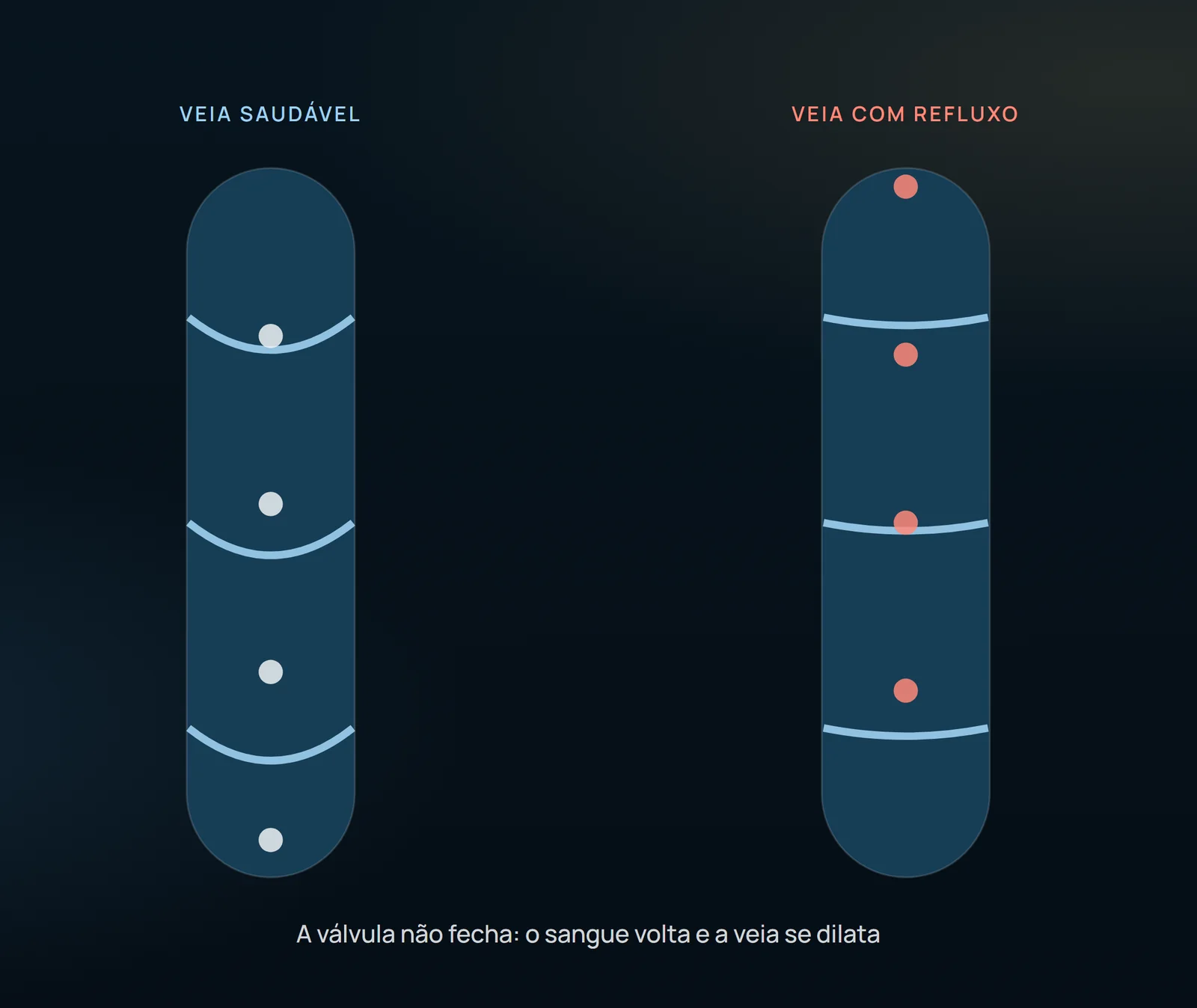
Because PPG provides general functional evaluation of the venous system, but limited anatomical information. It responds if there is hemodynamic dysfunction; it does not respond to which vein. Recurrent varicose veins, history of deep venous thrombosis, deep reflux or saphenopolite reflux continue to require duplex — and the role of PPG in these cases ceases to be filter and becomes compass: the findings are useful to direct the examination to regions of interest. The authors estimate that 30% of patients need both tests, and this is where the proposal to do both on the same visit comes from.
The decision that really changed: the high
The protocol created a separation that the CEAP does not make: group C2a, the patient CEAP C2 without measurable venous dysfunction, and group C2b, the patient CEAP C2 with objective evidence of dysfunction. Same leg as inspection, different ducts. The authors estimate that offering surgery only to C2b would reduce the surgical load for mild venous disease by about 20%.
The blind spot of the exam
If the most influential decision is high, the blind point becomes risk. It is written in the article: PPG measures only local venous hemodynamics near the ankle, and not the venous function of the entire limb. The example of the authors is the isolated reflux of the anterior vein of the thigh with varicose veins in the thigh — normal measurement in the ankle, a potentially operable patient. They claim that this case "is not common" in the experience of the service, without presenting number. Normal PPG with thigh varicose veins is not automatic high.
The column no one quotes
Table 2 has four lines, and the discussion of the article deals with three. The fourth, "others", went from 17 patients (16%) in phase 1 to 59 patients (25%) in phase 2. Every patient who falls into this column comes out of the surgical numerator without the objective test having decided anything. Part of the change in practice between the phases is in this shift of composition, not in photoplethysmography.

What the study does not authorize to state
It is one before and after, not a randomized trial: a center, a consultant, phases of 22 and 46 weeks, without parallel and blinding group of those who decided the conduct. The statistical test applied (x2 = 13.3; df = 3; P = 0.004 in the set; x2 = 8.06; df = 3; P = 0.045 in CEAP C2) compares distribution of administrative outcomes — does not compare clinical improvement, symptom relief, recurrence or progression to chronic venous insufficiency. No patient was followed to find out what happened to the leg after discharge. The authors themselves name the main limitation: the symptoms were not objectively evaluated in patients who needed surgery, and another study would be necessary to compare symptoms and changes in PPG. Finally, PPG does not measure the entire leg, and normal ankle examination does not exclude thigh reflux.
Content addressed exclusively to health professionals. No individual result is guaranteed: the indication depends on clinical evaluation and imaging examination of each patient (CFM 2,336/2023).