The combination won the trial — but the confidence interval spans 3 to 71 patients
The triple-blind PG3T assay showed superiority of the polydocanol 0.2% + glucose 70% mixture over glucose 75% isolated in telangiectasis sclerotherapy. The question that decides conduct is not whether the difference exists, but how much it is worth — and the answer lies in the NNT and injected volume.
 View the video lesson
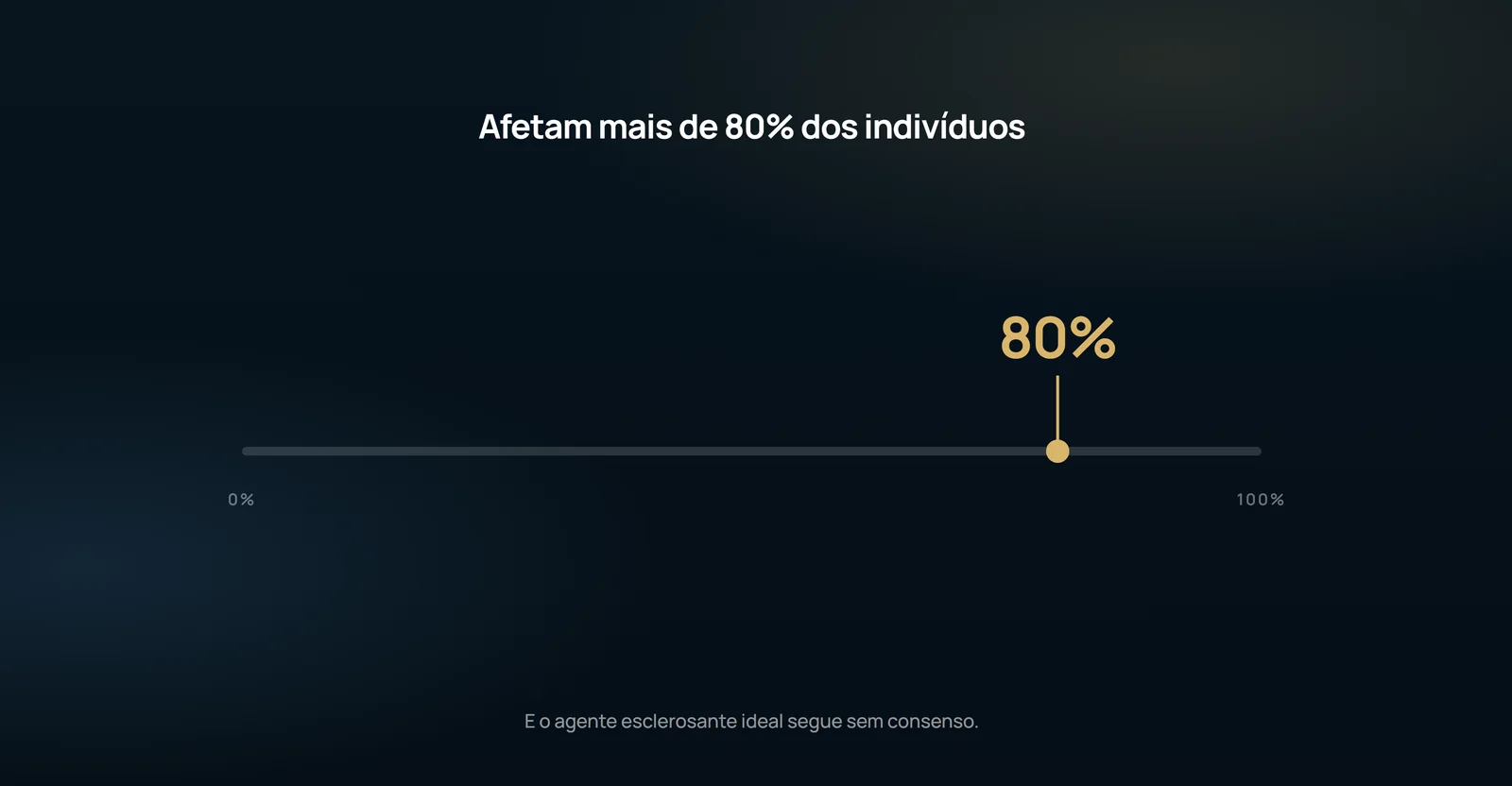
Telangiectasis affects more than 80% of individuals and is more common in women. Sclerotherapy continues to be the predominant treatment, and in Brazil the choice of the agent is reduced, in practice, to two solutions registered in ANVISA: hypertonic glucose 75% isolated and the mixture of polydocanol 0.2% with hypertonic glucose 70%. Until the PG3T assay, the two had never been compared face to face in telangiectasias.
The PG3T drawing
Prospective, randomized, triple-blind, controlled, parallel-group trial in a single Brazilian university center. Of the 308 patients recruited, 115 were randomized 1:1 — 58 for polydocanol 0.2% + glucose 70% and 57 for glucose 75% isolated; 98 completed the study. The participants were women aged 18 to 65 years with telangiectasis on the lateral face of a thigh and mild venous disease. Blinding was rigorous: an independent nurse prepared, in a separate room, a syringe with 5 mL identified only by the protocol number, and both solutions were colourless, odorless and of similar viscosity. Patient, team, evaluators and statisticians were blinded.
The treated area was delimited by a tissue gauge: a rectangle of 150 cm2, 15 by 10 cm, positioned 5 cm above the knee joint line, in one limb. Single session, maximum volume of 0.3 mL per puncture, until bleaching. The photographs of D0 and D60 were measured in ImageJ, with the segmented line tool, by two independent and blind vascular surgeons at allocation — the interobserver agreement was between 0.95 and 0.99.
The primary outcome
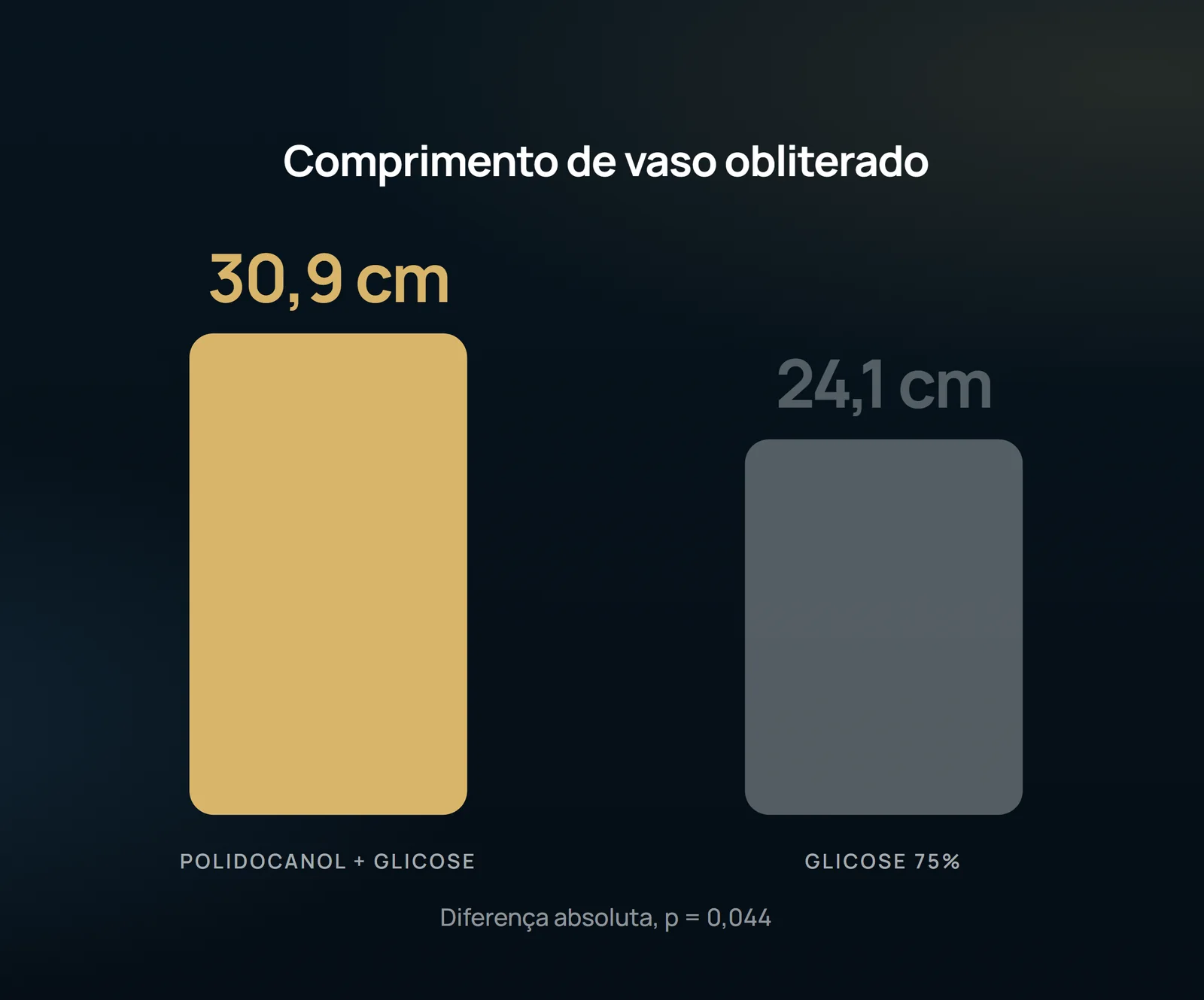
The median elimination of telangiectasis in the target area favored the mixture: 82.2% against 63.9% of glucose alone, in a single session and 60 days of follow-up. In absolute length of obliterated vessel, the difference remained: 30.9 cm against 24.1 cm, with p = 0.044.
How much superiority is worth
The question that decides conduct is not whether the difference exists, but what its magnitude is. Adopting the clinically relevant threshold of at least 75% improvement, the risk reduction was 0.49, with a 95% confidence interval of 0.24 to 0.98 and p = 0.047. The upper limit almost touches unity: significance exists, but it is narrow.
The dose was not equal
Among the parameters of the procedure, one did not close. The mean volume of solution used was 2.3 mL in the mixture group and 2.0 mL in the isolated glucose group, with p = 0.049 – a difference that the authors themselves describe as unintentional. In a triple-blind trial, in which the syringe came out ready from another room, the arm that presented the best outcome received more sclerosing. With this design it is not possible to separate the effect of mixing from the effect of the dose.

Security
There were no serious adverse events in any of the groups: no deep vein thrombosis, tissue necrosis, anaphylaxis or accidental arterial puncture. Pigmentation was the most common minor adverse event and appeared in both arms. It is worth noting who entered: 48 out of 98 patients, or 49%, had a reticular feeding vein within the treated field, with no difference between groups — these veins were treated under the same conditions.
What the study does not authorize to state
The follow-up was 60 days in a single center: recanalization, recurrence and medium-term durability are outside the observed window. Of the 115 randomized patients, 98 completed the study; the others did not attend the consultations and were excluded, and the analysis was performed by protocol, not by intention to treat. The population is narrow — only women aged 18 to 65 years, mild venous disease, one thigh, 150 cm2, single session — and there was no placebo group with simulated procedure. The authors chose not to use elastic compression, which, by decision of their own, tends to reduce efficacy and increase pigmentation in both arms. Pure liquid polydocanol and foam have not been tested, and the ImageJ measurement methodology does not allow direct comparison with the series that use subjective scores. Adding to this the volume difference, what PG3T supports is an alternative to more in the routine of sclerotherapy — not a new standard of care.
Content addressed exclusively to health professionals. No individual result is guaranteed: the indication depends on clinical evaluation and imaging examination of each patient (CFM 2,336/2023).