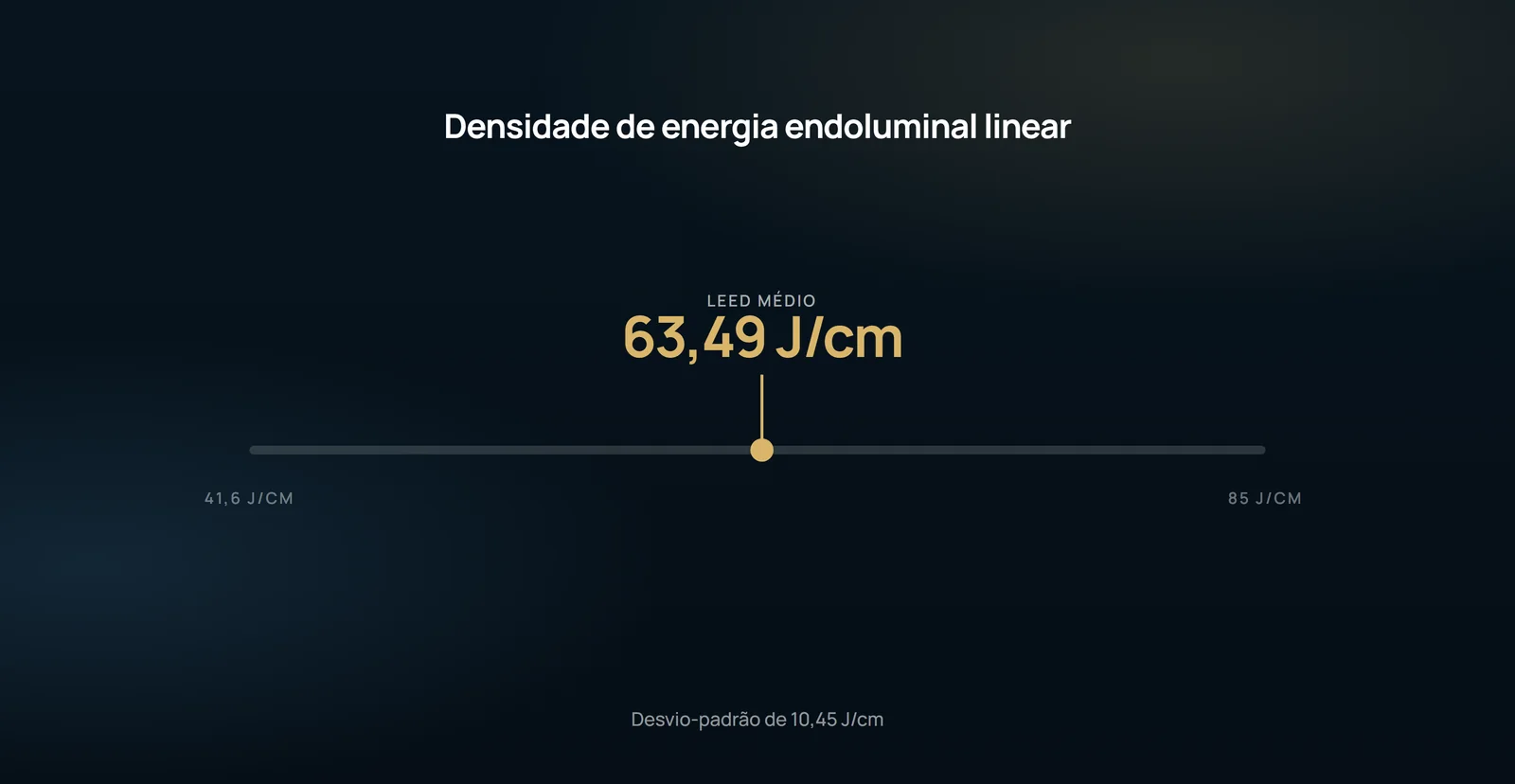
63.49 J/cm: the 1470 nm laser dose used in the great saphenous vein
A Brazilian series of 54 limbs treated the small saphenous vein with 1470 nm laser and mean LEED of 63.49 J/cm. The number is only understood along with the type of fiber and the exclusion criterion: vein less than 5 mm from the skin was left out.
 View the video lesson
The practical discussion of the endolaser always ends in the same parameter: the density of linear endoluminal energy, LEED, in joules per centimeter. It is he who separates the durable occlusion from recanalization — and it is he who, in excess, approaches the shooting of the skin and nerve. This Brazilian series allows reading the number in the context that makes it interpretable: the wavelength, the type of fiber and who was excluded before starting.
Who has been excluded
Patients with short saphenous disease less than 5 mm away from the skin and/or tortuous, in addition to those treated under spinal anesthesia and those who had incomplete data in medical records, were excluded from thermoablative treatment. The criterion is not a methodological detail: it is what authorizes the following dose. A shallow or tortuous vein simultaneously changes the skin risk and the ability to traction the fiber continuously.
The dose and fiber
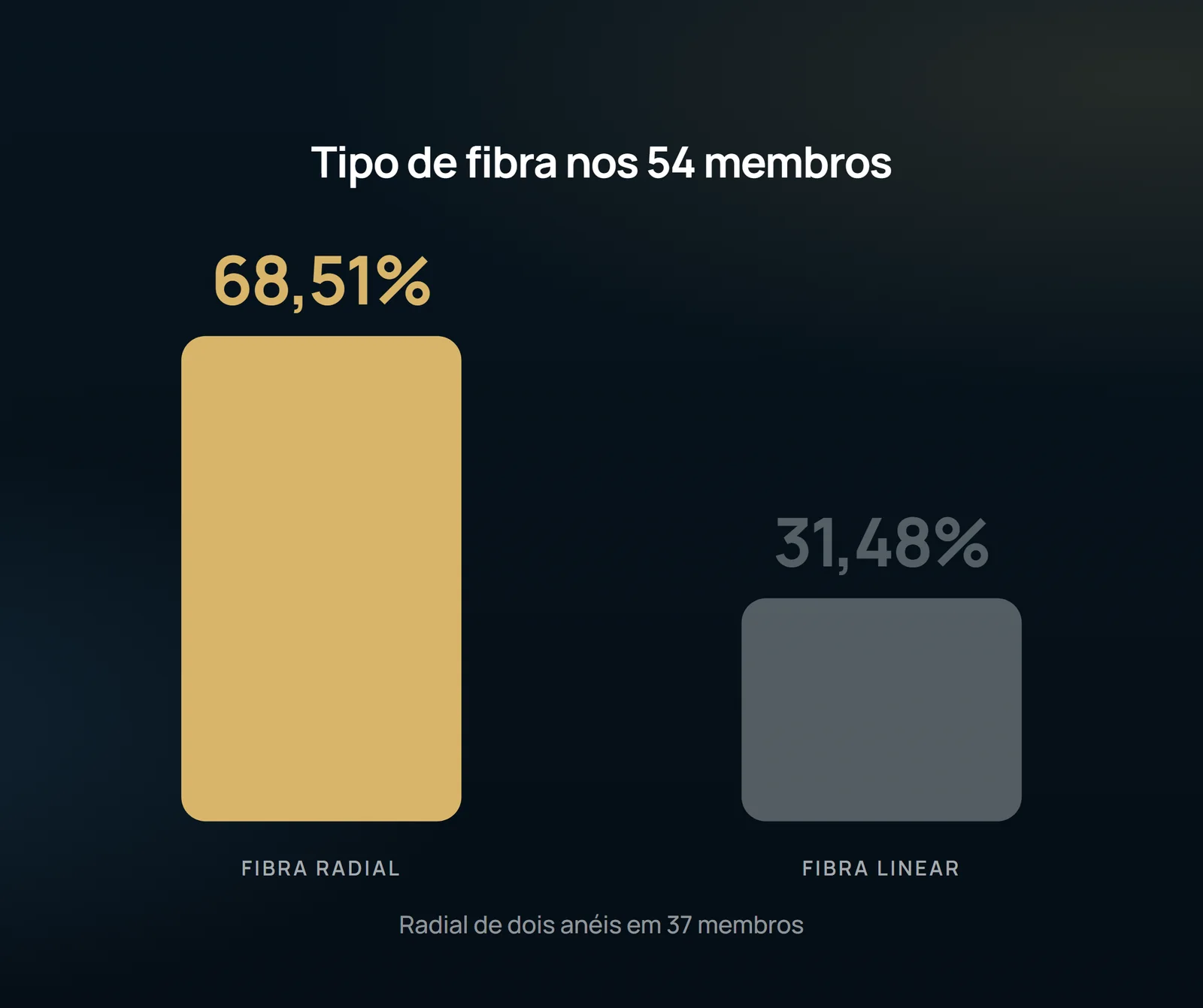
The laser had a wavelength of 1470 nm and the fiber, 600 μm. In 37 of the 54 limbs (68.51%) two-ring radial fiber was used; in the 17 remaining (31.48%), linear fiber. The tip was positioned at 2.5 cm from the sapheno-popliteal junction, the power set at 6 W and the traction made manually, continuously, in a flow direction. The length treated ranged from 4 to 31 cm (SD 5.62), with a mean of 17.26 cm — comparable to the 18 cm series and 17 cm mentioned by the authors.
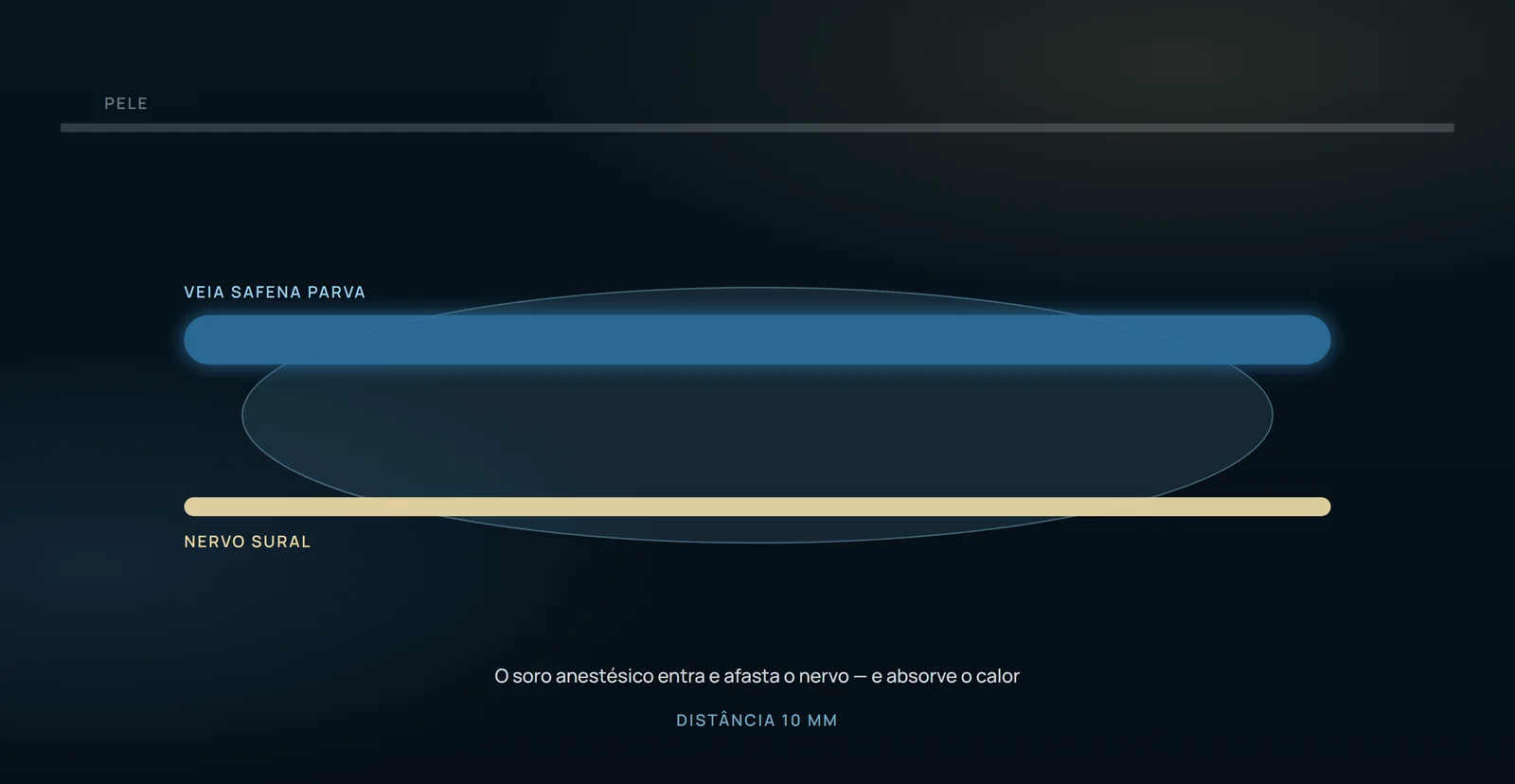
Tumescent anesthesia is a functional part of the dose, and not an adjuvant: the solution described includes 250 mL of 0.9% saline solution, 20 mL of 2% lidocaine with adrenaline and 4 mL of 8.4% sodium bicarbonate, infiltrated throughout the path after the fiber has already been positioned. The authors cite the evidence that tumescence protects nerves and skin by dissipating heat and reducing the diameter of the vessel, improving the absorption of heat in the target.
What the dose produced
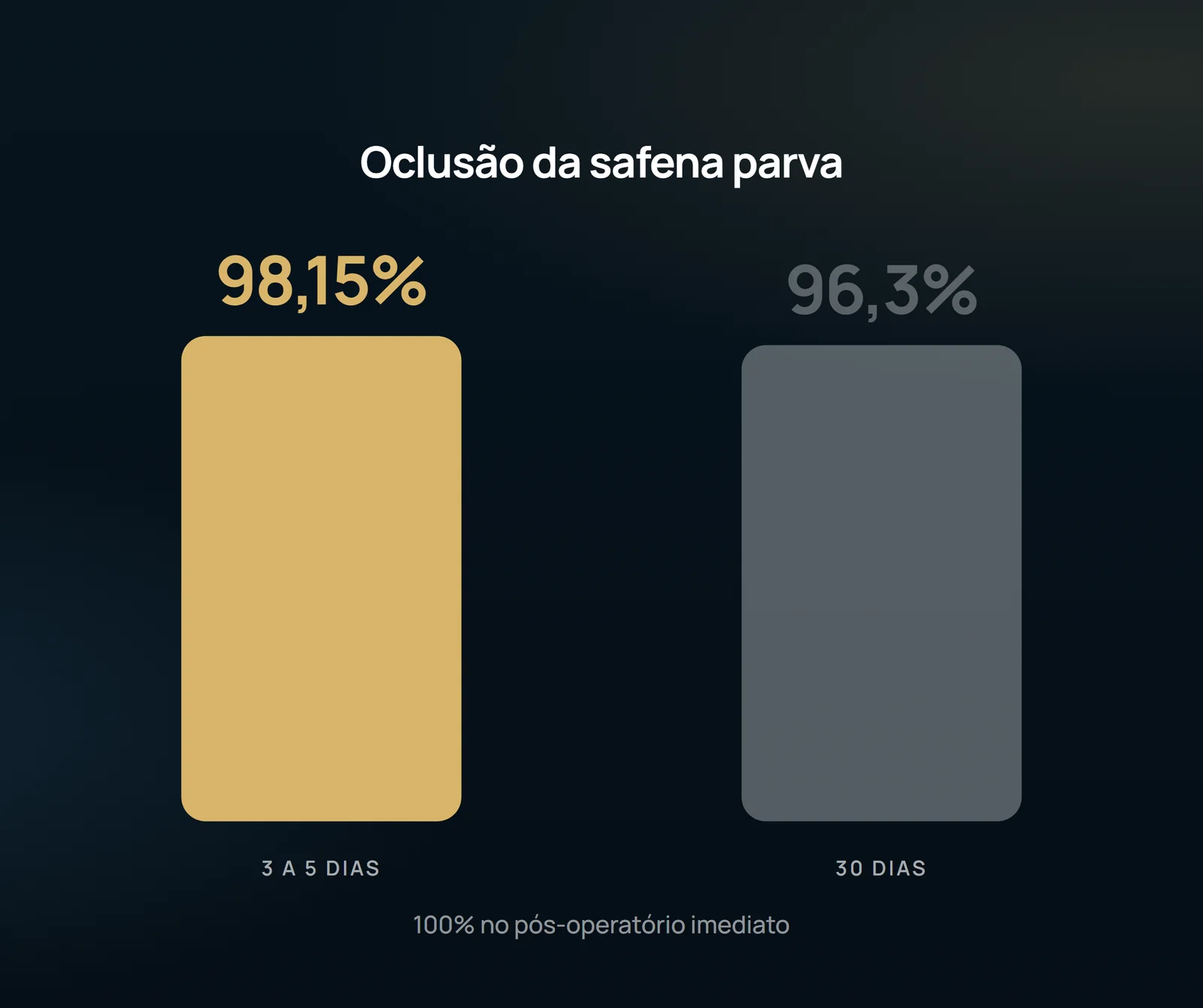
Small saphenous vein occlusion was 100% immediately after treatment, 98.15% at 3 to 5 days and 96.30% at 30 days. Mean treated trunk diameter fell from 6.37 mm to 5.15 mm (95% CI 4.58–5.72), with p < 0.003. The authors attribute the retraction to the theory of late inflammatory response: the thrombus generated by heat releases mediators that attract fibroblasts and macrophages, and the resulting fibrosis occludes the vein later.
The reported complications were paresthesia in 7 limbs (12.96%) at 3 to 5 days and 5 (9.26%) at 30 days; phlebitis in 3 (5.55%) at both visits; and bruising in 23 (42.59%) at the first visit and 1 (1.85%) at 30 days. No deep venous thrombosis was detected by ultrasound. Of 46 patients, 11 required oral analgesia in the first 5 days and 2 were still using it at 30 days. Discharge was on the same day, about 2 hours after the procedure, with 20–30 mmHg compression stockings worn for 48 hours.
A divergence within the article itself
It's worth registering, because it changes the number you quote. Table 3 shows reflux in 1 limb (1.85%) between 3 and 5 days and in 2 limbs (3.7%) at 30 days. The text of the discussion, in the same article, reports 1 patient (1.85%) with saphenic flow on the first return and 4 patients (7.4%) with flow to the echo-Doppler control on the 30th day. The occlusion rate declared in the results, 96.30% in 30 days, corresponds to 3.7% of the table. Anyone who cites this study should say which of the two passages took the value.
What the study does not authorize to state
It's a series of cases, not an essay: there's no comparator arm, and no claim of superiority over another technique can get out of here. The follow-up was 30 days, and the authors themselves explain why: after this period few patients returned to the office. At 30 days, late recanalization is not evaluated — which is precisely the question that an average dose of 63.49 J/cm raises. The sample is small and heterogeneous, with different ages from 33 to 84 years old and CEAP classes; the returns were evaluated by physicians different from the operators, because of the agenda; the patients were not reclassified by CEAP in the postoperative period; and the patients treated under spinal anesthesia were excluded because they confused the origin of the symptoms. Add the divergence of numbers described above. The defensible reading is: with this wavelength, this fiber and this selection, early occlusion was high and low morbidity — nothing more.
Content addressed exclusively to health professionals. No individual result is guaranteed: the indication depends on clinical evaluation and imaging examination of each patient (CFM 2,336/2023).