The number that predicts symptom improvement: venous refilling time
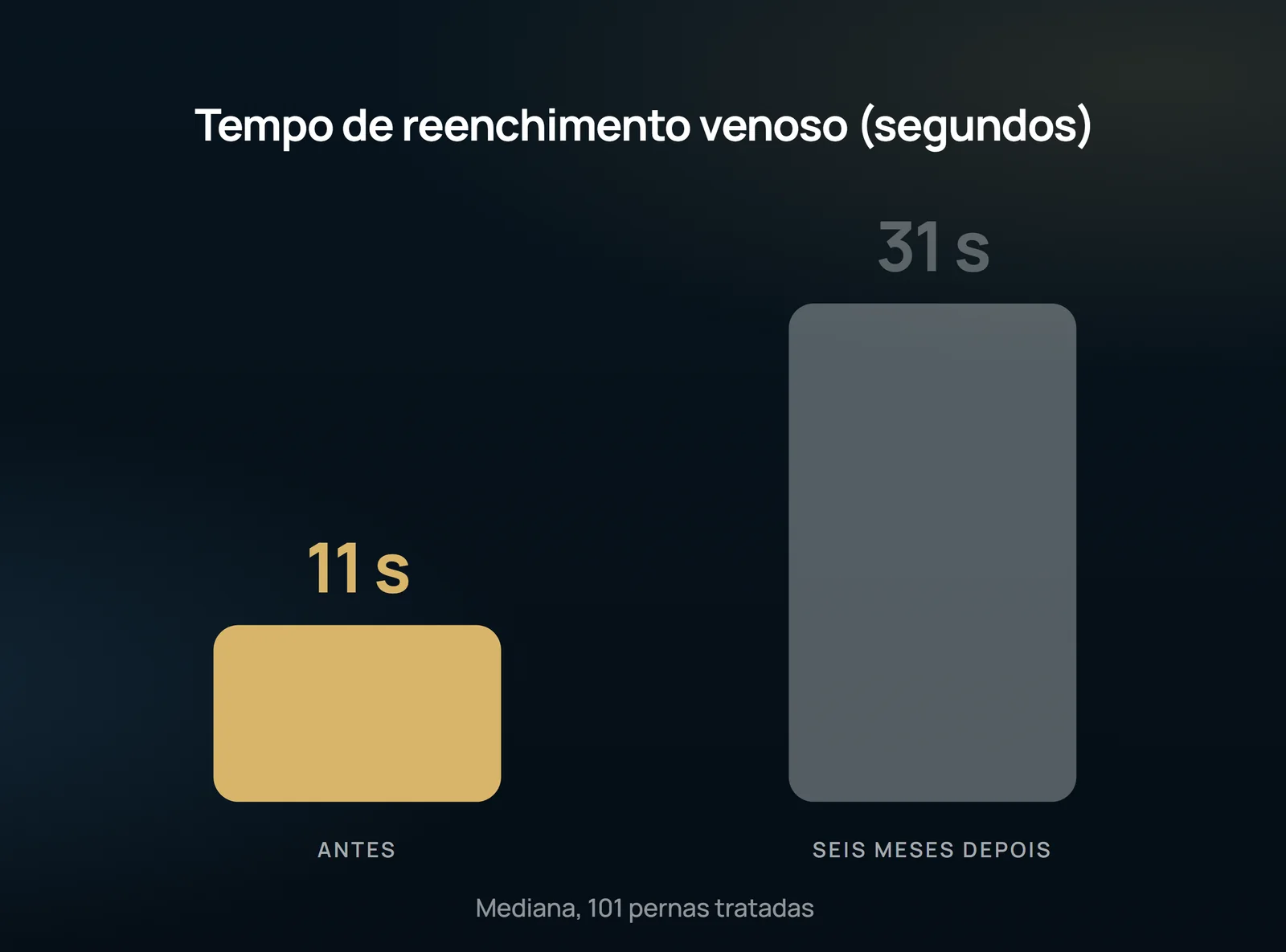
The leg complaint correlates poorly with what the test shows. In 246 Birmingham patients, venous refill time measured by digital photoplethysmography increased from 11 to 31 seconds after foam sclerotherapy — and those who normalized the time had more symptom relief: 80% versus 65%.
 View the video lesson
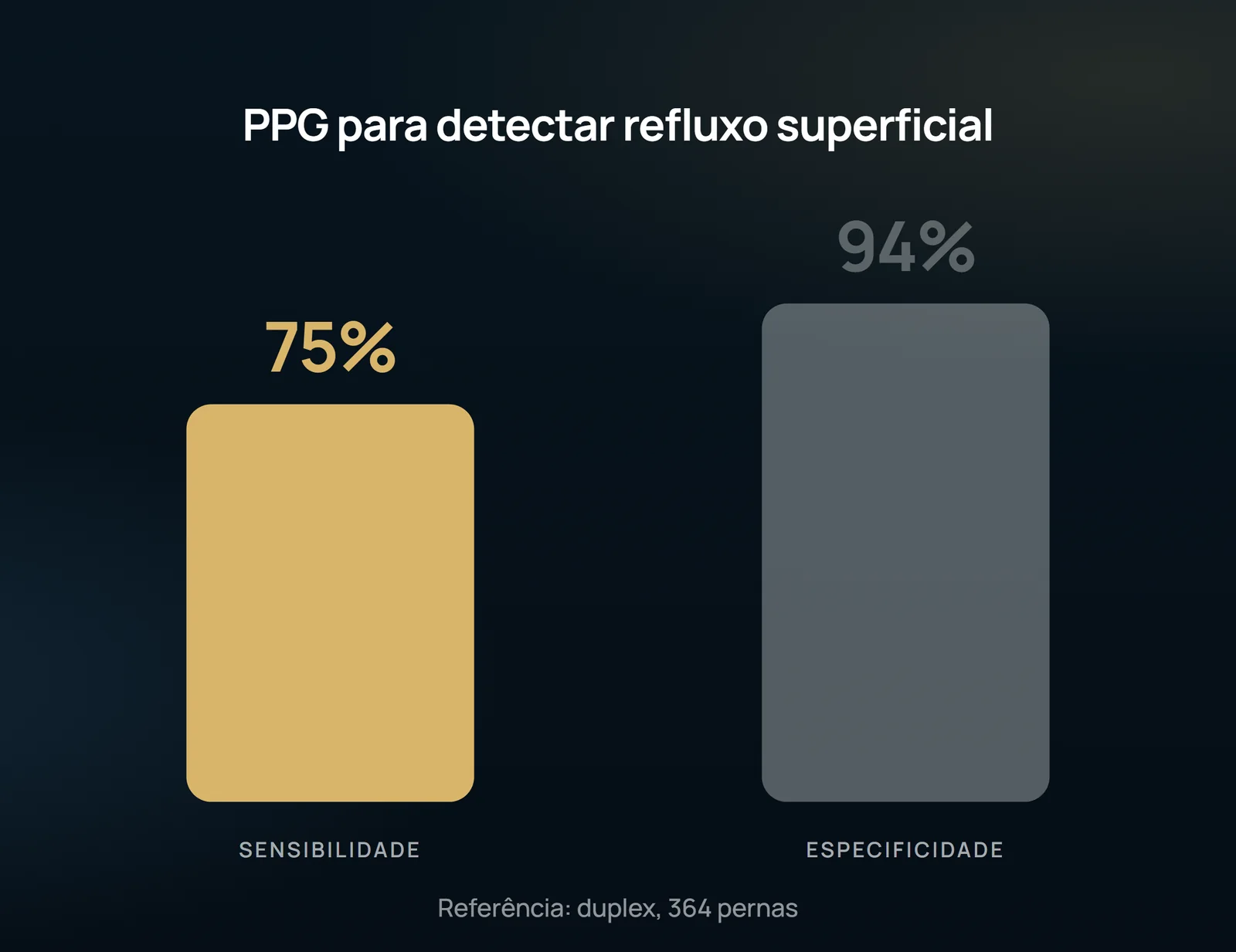
Direct ambulatory venous pressure measurement is considered the best overall assessment of limb venous function, but it is invasive and unsuitable for routine clinical use. Air plethysmography is accurate and reproducible, but time-consuming and dependent on bulky equipment. Digital photoplethysmography (PPG) remains an inexpensive, repeatable, noninvasive functional test — and the venous refilling time (VRT) it measures correlates well with direct pressure measurements.
How the VRT was measured
The PPG tube was fixed to the skin 10 cm above the medial malleolus and 1-2 cm after the subcutaneous border of the tibia, avoiding scar areas, prominent varicose veins or pigmentation. With the patient seated and still, the device calibrated the signal; the exercise was 10 dorsiflexions and plantiflexions over 15 seconds, guided by metronome, followed by rest. The refill curve is displayed and the time calculated up to a maximum of 45 seconds. Each leg was measured twice, 2 to 5 minutes apart, and the mean was used. Normal VRT was defined as ≥20 s.
There were 246 consecutive patients and 364 examined legs, of which 317 symptomatic limbs with superficial venous reflux alone were treated with ultrasound-guided foam sclerotherapy. limbs with deep venous reflux were excluded. The foam was prepared by Tessari's technique, with a portion of tetradecyl sodium sulfate at 3% and three parts of air; compression was bandaged for 10 days, followed by compression stocking class II for 14 more. About 10 to 15% of limbs need a second session.
The VRT monitors clinical severity
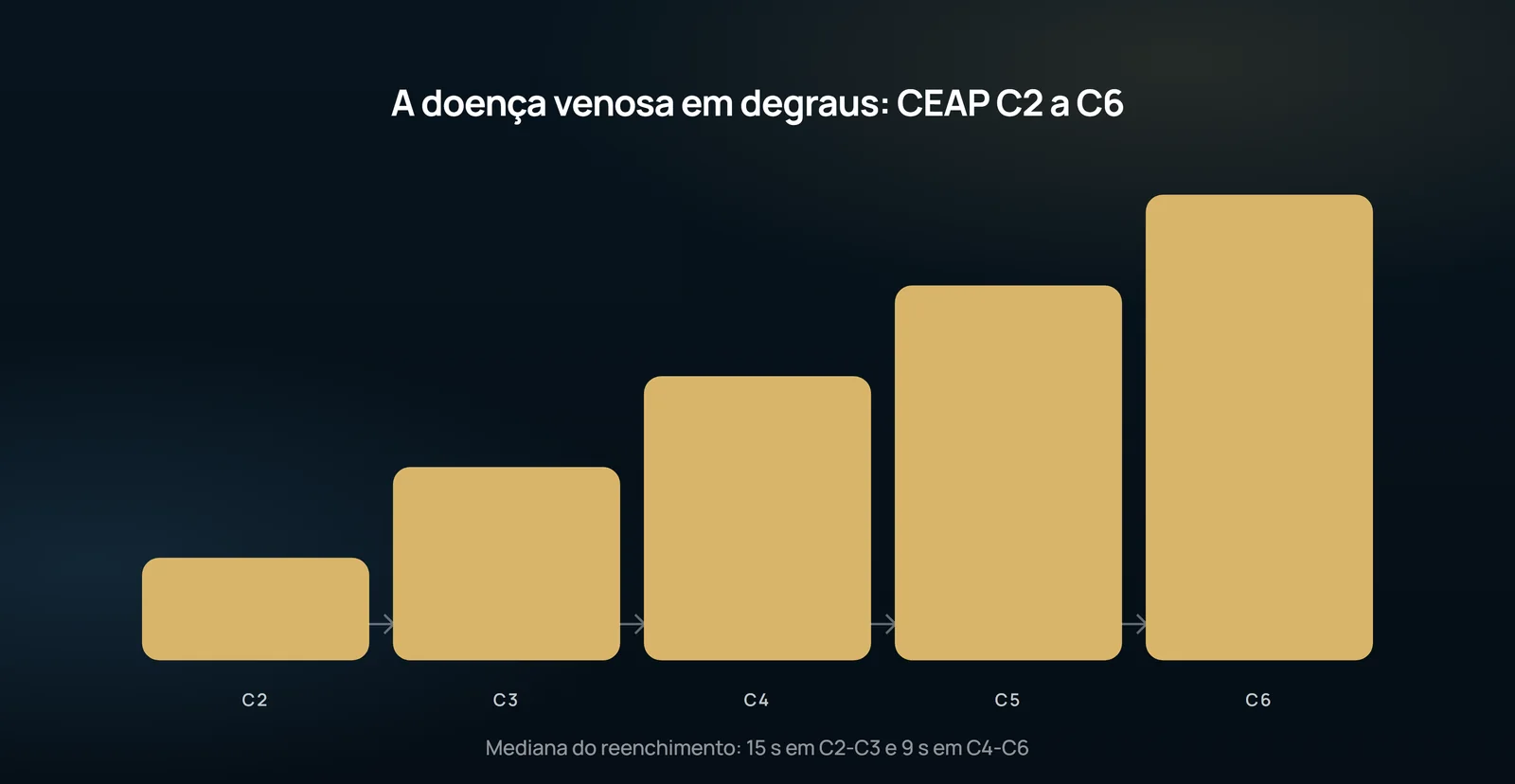
Before treatment, there was a significant relationship between lower RRT and higher CEAP clinical class. In limbs with uncomplicated varicose veins (C2 and C3, n = 225) the median was 15.0 s (IQ 9.0-23.8); in limbs with skin complications (C4, C5 and C6, n = 92), 9.0 s (IQ 6.0-14.0). The extent of reflux to the duplex was also related to lower VRT, but limbs with 1-2 refluxive segments (n = 300) and 3-4 (n = 17) had the same median of 12.0 s. As for symptoms, 28 out of 41 limbs (68%) with one or two symptoms had abnormal RRT, compared to 45 out of 54 (83%) with all seven — a trend that did not reach significance (P = 0.097). Only pruritus (74% × 60%) and sensation of swelling (75% × 45%) were significantly more common in limbs with abnormal RSV.
Normalizing the VRT predicts relief
In 101 limbs measured at 6 months, the median VRT increased from 11 (8-18) to 31 (20-44) seconds (P < 0.0005, Wilcoxon). Comparing the limbs that normalized a previously abnormal VRT with those that did not change (normal, n = 23; normal, n = 17), the relief of all symptoms was significantly more likely in the first group.
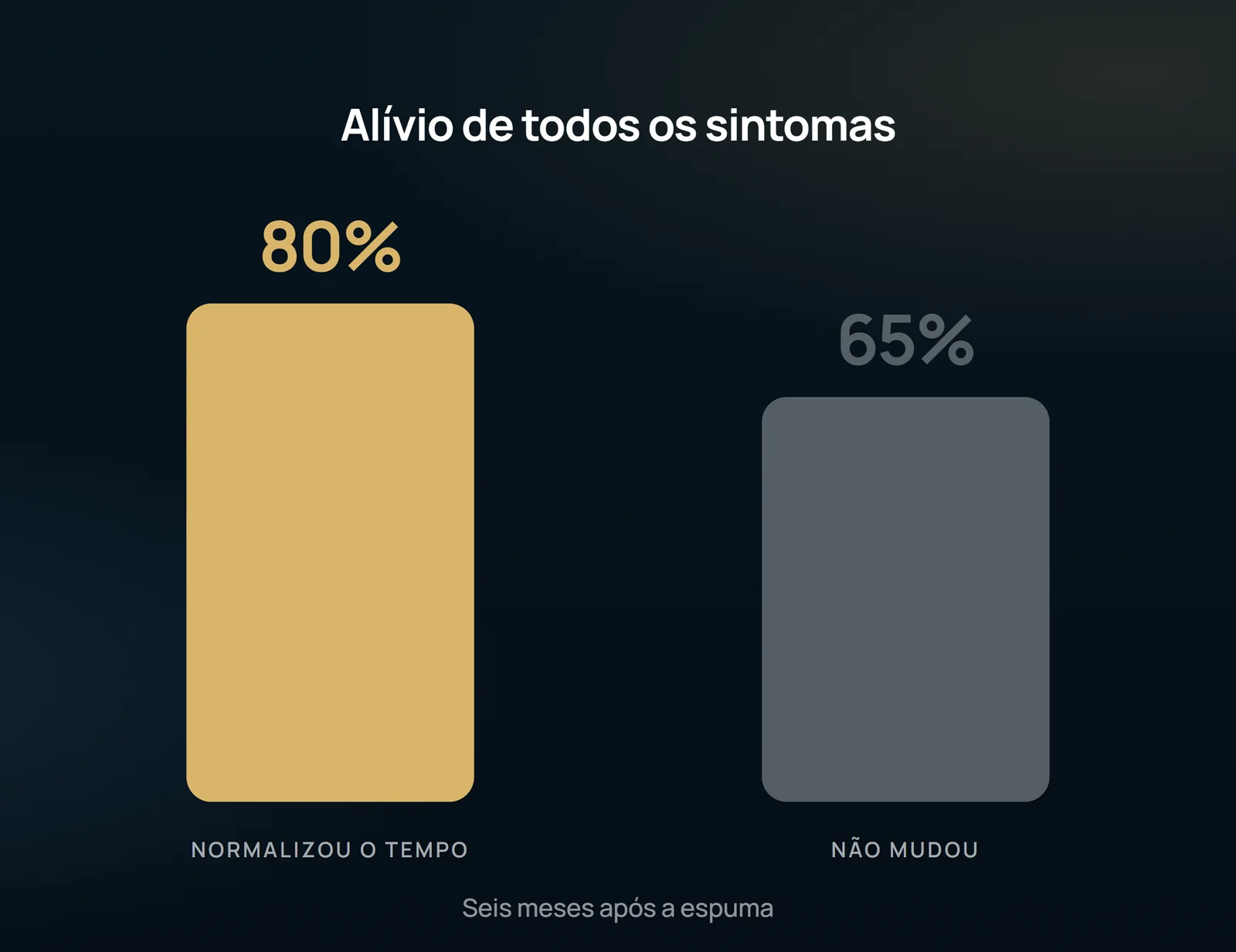
Analyzing the symptom, all improved more in limbs that normalized the VRT, but only the pruritus reached isolated significance (87% × 64%, P = 0.021). Pain (P = 0.54), tingling (P = 0.13), cramping (P = 0.18), restless legs (P = 0.16), swelling sensation (P = 0.28) and weight (P = 0.062) did not reach. In the subgroup of 50 patients with complete questionnaires, the pre-treatment VRT correlated with the physical component of SF12 (r = 0.43, P = 0.002) and with the AVSS (r = 0.41, P = 0.003); at 6 months the relationships persisted weaker and without significance (r = 0.28, P = 0.05; r = 0.19, P = 0.18), and there was no correlation between the variation of the VRT and the variation of quality of life scores.
What the study does not authorize to state
This is a cohort study treated, with measurements before and after: there is no randomization or control group, so that the improvement of the VRT cannot be attributed alone to foam compared to any other approach. The follow-up is 6 months — there is no information on late recanalization or the durability of functional gain. The response rate is a weakness recognized by the authors: there were 128 unilateral procedures and complete data for only 50, although these 50 little differed from the entire cohort in demographic data, CEAP class and treatment. The central finding is valid for the set of symptoms; alone, only the pruritus sustained. And the VRT does not replace the duplex: it remains the ultrasound mapping that defines anatomy, reflux extension and conduct, case by case.
Content addressed exclusively to health professionals. No individual result is guaranteed: the indication depends on clinical evaluation and imaging examination of each patient (CFM 2,336/2023).