Patent foramen ovale and foam sclerotherapy: why the European guideline advises against routine screening
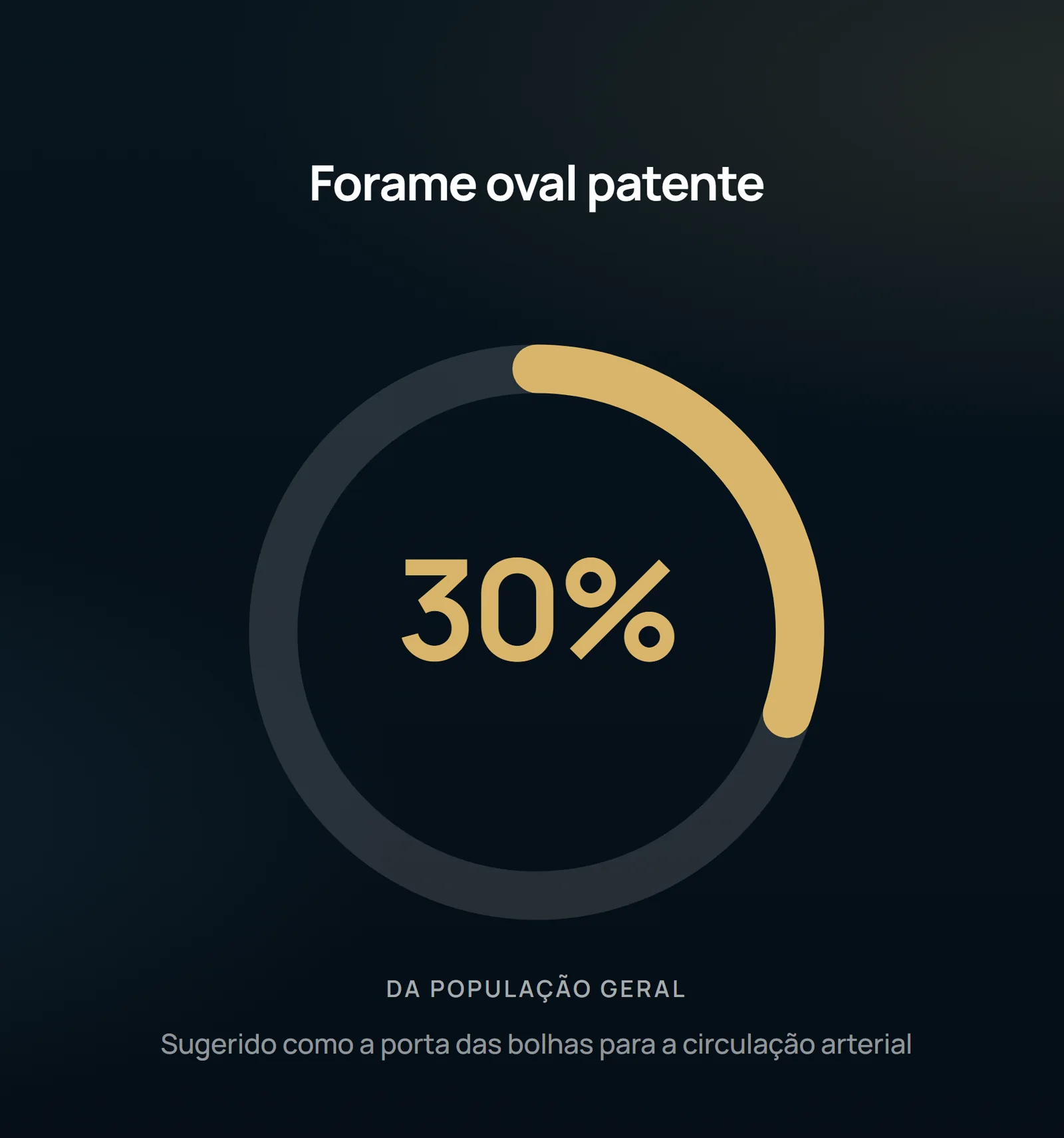
Symptomatic right-left shunt is an absolute contraindication to foam sclerotherapy, and patent oval foramen is in about 30% of the population. Nevertheless, the European directive recommends against routine research. This article goes through the reasoning and what to do in those who have already had neurological symptoms.
 View the video lesson
The question is practical: before a foam sclerotherapy session, do we need to investigate right-left shunt? The European guideline, drawn up on behalf of 23 phlebological societies during the conference from 7 to 10 May 2012 in Mainz, responds explicitly — and in the opposite direction to what the list of contraindications would suggest.
What changes from liquid to foam
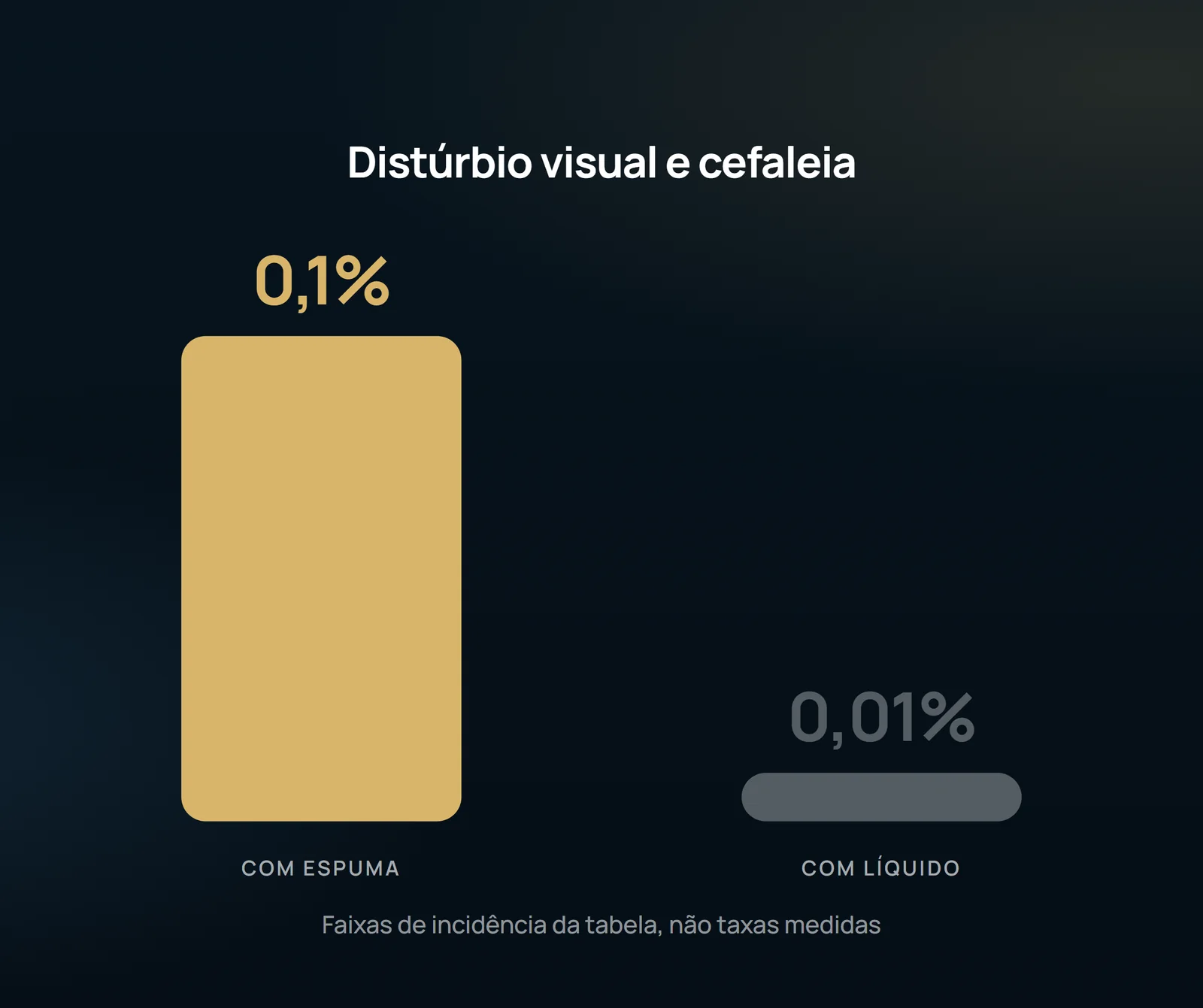
In the table of adverse events of the guideline, visual disorders and headache/migraine pass from the category "very rare" (below 0.01%) with liquid sclerosant for "unusual" (0.1% to 1%) with foam. Sensory nerve injury, not reported with fluid, appears as "rare" with foam. CVA and TIA appear as isolated cases in both forms. These are frequency ranges, not rates measured in a study.
Contraindications exist — and are qualified
Among the specific absolute contraindications of foam sclerotherapy, the guideline lists the right-left symptomatic shunt, citing as an example the symptomatic patent foramen ovale. The "symptomatic" and "known" qualification is what separates this contraindication from a population screening. Neurological disorders, including migraine, after prior foam sclerotherapy enter as a relative contraindication, with individual benefit and risk assessment.
Recommendation 15
The text is direct: before foam sclerotherapy it is not necessary to routinely conduct specific investigations for right-left shunt or thrombophilia, and recommendation 15 formally records the position against this routine investigation. The reasoning appears in the chapter of visual disorders: there is no clear evidence of a relationship between bubbles and visual or neurological disorders; recent evidence has shown release of endothelin 1 by the injected vein with liquid sclerosing or foaming; and visual disorders may correspond to migraine with aura, rather than transient ischemic cerebrovascular events. To date, no abnormality has been observed on ophthalmologic examination and no durable visual problem has been reported.
Two distinct events that the literature calls stroke
The guideline separates stroke related to early onset paradoxical airway embolism, which is a specific complication of foam sclerotherapy, from stroke related to paradoxical venous clot embolism, usually of late onset, already reported after several varicose veins treatment methods. It also records that all patients with paradoxical air embolism stroke at early onset had complete or almost complete recovery, without any case of significant sequelae reported so far.
What to do with those who have had symptoms
Recommendation 8 lists four procedures for the patient who presented neurological symptoms, including migraine, in previous sessions: stay lying down for a longer period; avoid injection of large foam volumes or perform liquid sclerotherapy; avoid Valsalva maneuver in the initial period after injection; and decide on a case-by-case basis, with benefit assessment and risk for the indication in question. Add the recommended technique for general safety — highly viscous foam in C2 varicose veins and avoid movement of the patient or leg for a few minutes after injection —, the observation that multiple injections with single small doses can reduce the passage of sclerosant into deep veins, and the routine ceiling of 10 mL of foam per session.
On gas, the guideline recommends air (GRAU 1A) or a mixture of carbon dioxide and oxygen (GRAU 2B), and treats the subject as controversial: with large volumes of foam, the use of foam with low nitrogen seems to reduce reversible side effects of early onset; in low volumes, no benefit of CO2-O2 foam was shown on air-based foam.
What the directive does not authorize to state
None of the four guidelines of Recommendation 8 is passed from GRAU 2C: weak recommendation on low quality evidence, which in practice is expert opinion. The recommendation against routine screening is GRAU 1C — strong, but also low-quality evidence. The categories "unusual", "rare" and "very rare" are incidence ranges, not measured rates; the guideline itself shows the size of imprecision when recording that, for superficial venous thrombosis, published frequencies range from 0% to 45.8%, with a mean value of 4.7%, because the definition of phlebitis after sclerotherapy is controversial. The 2012 document states that it does not claim completeness, that it requires continuous review and that compliance with recommendations does not always ensure diagnostic and therapeutic success — the decision on the adequacy of any conduct remains with the doctor in the light of the individual situation. And this reading was done on a version of the text that does not include the list of references, so that the original studies behind each frequency were not verified here.
Content addressed exclusively to health professionals. No individual result is guaranteed: the indication depends on clinical evaluation and imaging examination of each patient (CFM 2,336/2023).