10 centimeters: what great saphenous vein surgery actually removed
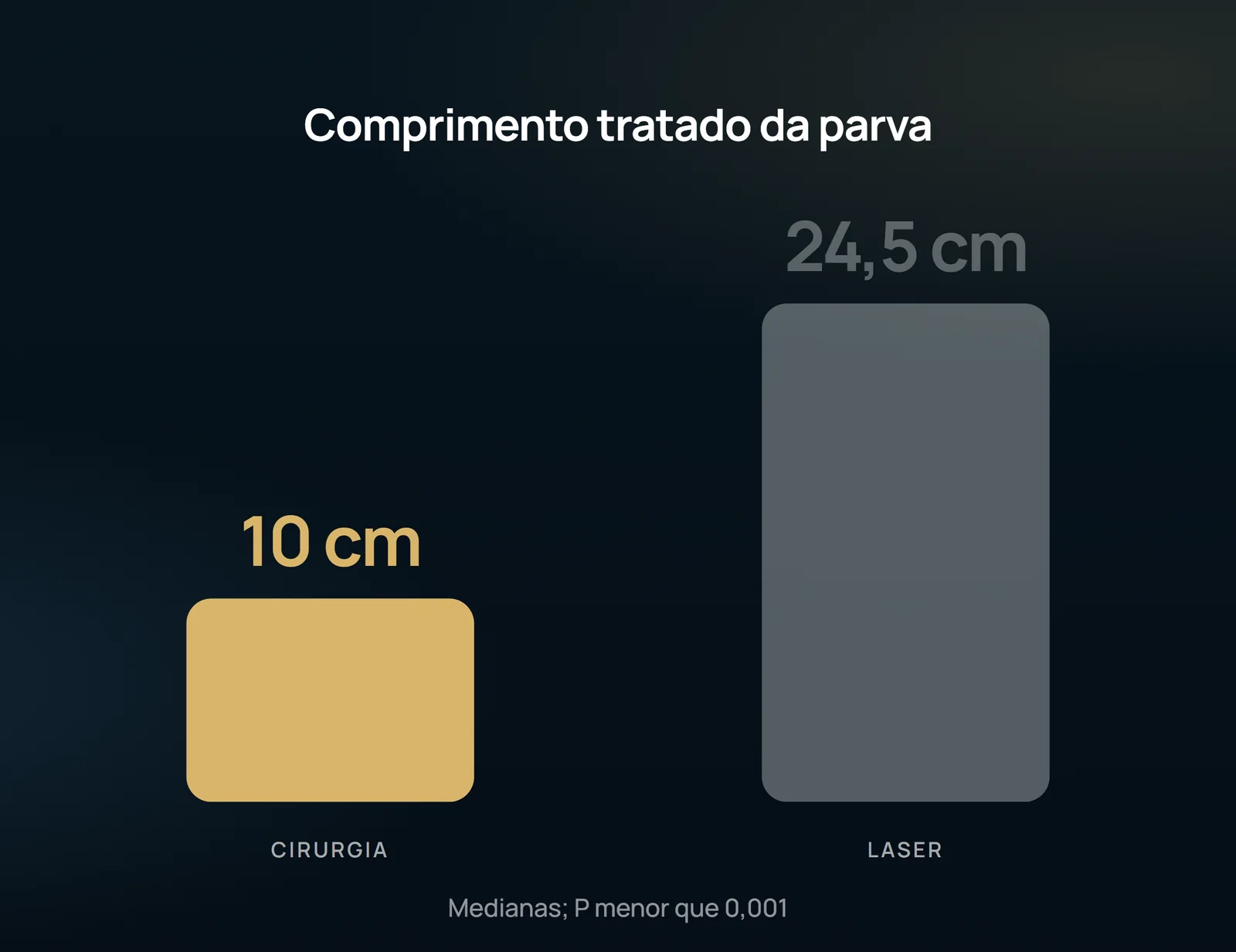
The first randomized trial in the small saphenous vein was known for the difference of technical success. The finding that explains this difference is in the table of interventions: inversion phleboextraction was only possible in 66% of the legs, and removed a median of 10 cm.
 View the video lesson
HELP-2 is the first randomized clinical trial to compare conventional surgery and intravenous laser ablation (EVLA) in the incompetence of the small saphenous vein. Single, non-blind center study conducted in Hull between October 2005 and January 2010: 767 patients evaluated for eligibility, 106 randomized into two groups of 53, all with primary and isolated saphenopolite junction. The primary outcome was the abolition of reflux to duplex in 6 weeks.
The bandage's out. Not the vein.
In the surgical arm, saphenopolite junction was identified and close ligation was possible in 51 (96.2%) legs — technically, the difficult step of popliteal dissection was fulfilled in almost all cases. Phleboextraction by inversion of the small saphenous vein, however, it was only possible in 35 (66%) legs. In the remaining 18 patients, complete extraction was not possible due to vein rupture, tortuosity, spasm or a combination of these factors. In these legs, a short proximal segment (<5 cm) was excised under direct vision.
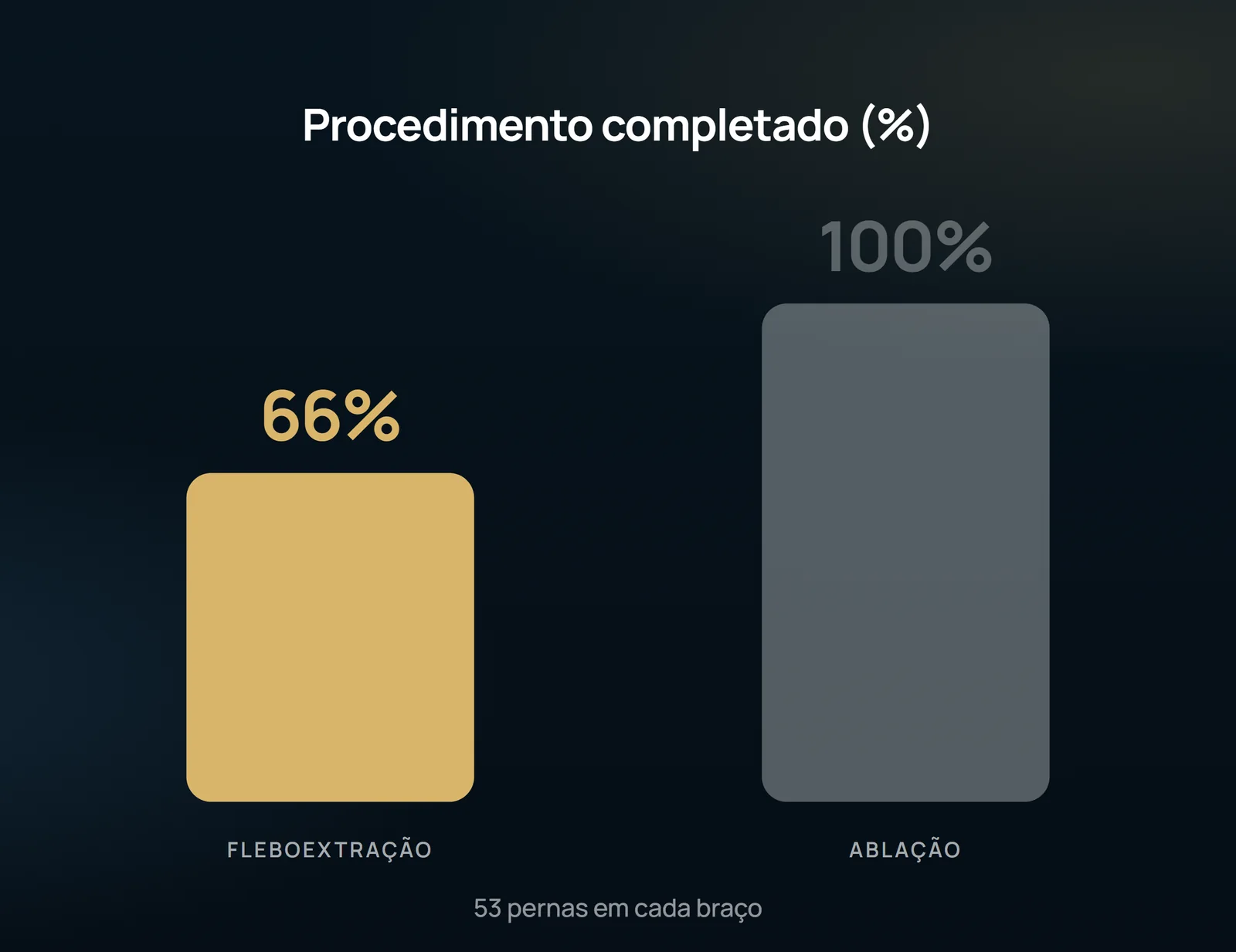
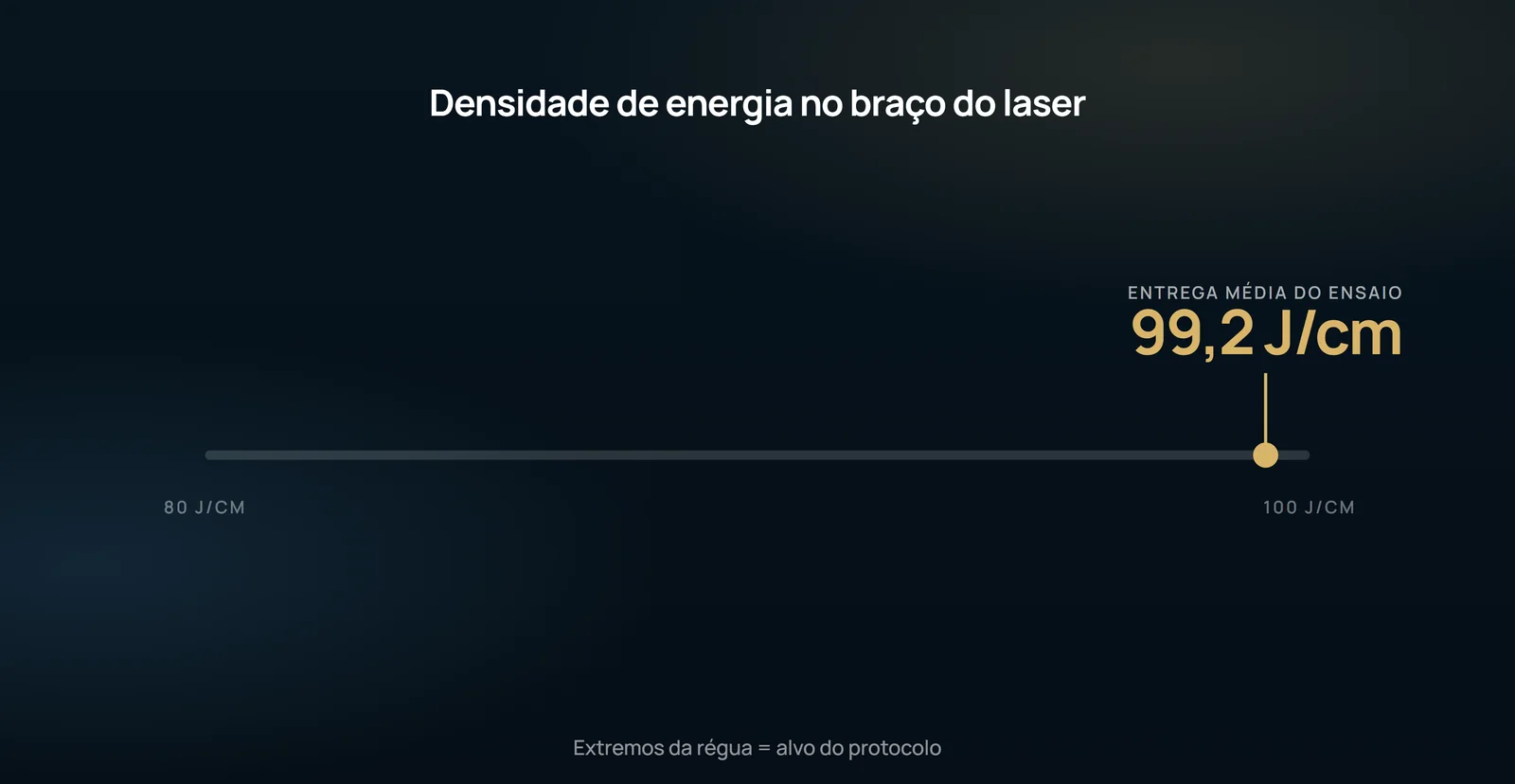
In the laser arm, thermal ablation was successful in all 53 (100%) patients, with an average energy density of 99.2 (18.6) J/cm delivered by a diode from 810 nm to 14 W, aiming 80 to 100 J/cm. The length difference treated is the mechanical explanation of the primary outcome: the abolition of reflux in 6 weeks was 96.2% in the EVLA group versus 71.7% in the surgical group (P < 0.001). The authors explicitly attribute residual reflux in the surgical arm to the inability to strip the small saphenous vein, rather than to the quality of ligation.
Technical success is not clinical success
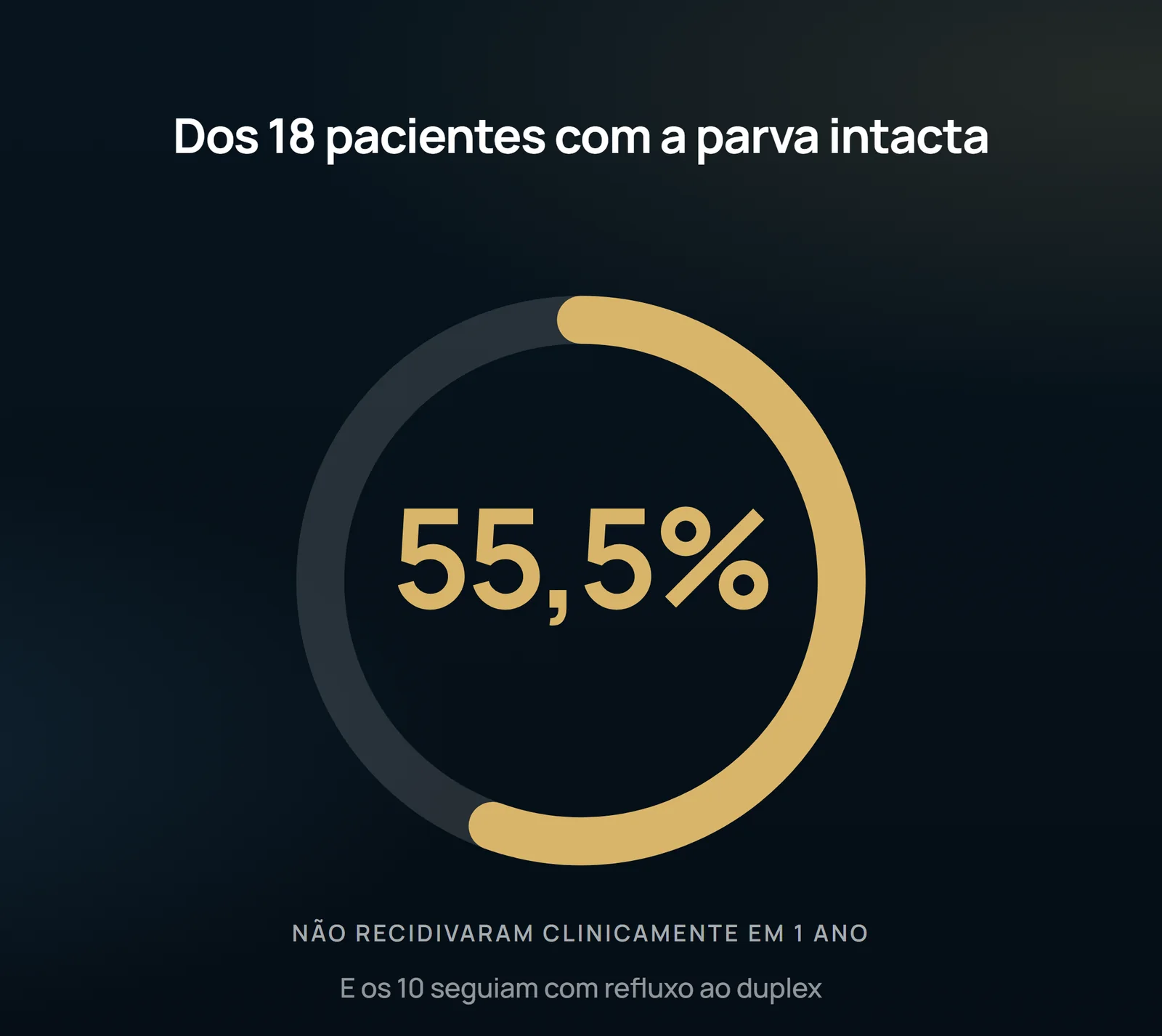
The relative risk of early success with EVLA was 1.34 (95% CI 1.11-1.44), with a risk difference of 0.24 (0.09-0.30) and the number needed to treat 4.0 (3.2-10.9). But the 1-year follow-up softens the reading: of the 18 patients with intact and non-fleboextracted saphenous saphenous disease, 10 (55.5%) did not develop clinical recurrence — and yet all these 10 remained with reflux of the small saphenous vein saphenous disease demonstrable to the duplex at the end of the year. Clinical recurrence in 1 year was 9 (16.9%) legs in the surgical group versus 5 (9.4%) in the EVLA group, P = 0.390.
Sensory disturbance, predominantly in the distribution of the sural nerve, was significantly higher in the surgical group in 6 weeks: 14 (26.4%) patients versus 4 (7.5%) in the EVLA group, P = 0.009. Most spontaneously improved, remaining persistent disturbance in 5 (9.4%) surgical patients and 2 (3.7%) EVLA in 1 year, with no significance (P = 0.434). A single major complication — deep vein thrombosis in a popliteal, asymptomatic vein — occurred in the surgical group and resolved completely after 3 months of oral anticoagulation. The mean duration of the procedure did not differ: 63.6 (16.6) against 58.5 (14.8) minutes, P = 0.111.
What the test does not allow to say
EVLA also failed in some cases: 3 legs (5.6%) developed partial recanalization between 3 and 12 months, receiving 90, 92 and 99 J/cm, with proximal diameters pre-procedure of 5.8, 10.7 and 10.4 mm — all above the threshold of 60 J/cm to 810 nm. An observational series of 229 VLAs of the small saphenous vein reported recanalization of 1.3% in 2 years, but the authors themselves warn that comparing studies with different wavelengths and energy densities would be wicked.
This is a single center trial, with 106 patients and without blinding of patients, surgeons or evaluators — limitation explained by the authors and mitigated, but not eliminated, by validated instruments and standardized protocols. The study was undersized for detailed analysis of quality of life and, in the words of the authors, it cannot confirm or refute the actual benefit of EVLA on surgery in this area. Both arms had equivalent improvement in the Venous Clinical Severity Score from a baseline median of 3 (2-4) to 0 (0-1) at 12 months, with no difference between groups at any time, and satisfaction was equally high with any treatment. The authors' conclusion is equivalent improvements in clinical severity and at least non-inferiority of EVLA — which is no promise of outcome for any individual patient. The indication depends on the evaluation with duplex ultrasound performed by vascular surgeon.
Content addressed exclusively to health professionals. No individual result is guaranteed: the indication depends on clinical evaluation and imaging examination of each patient (CFM 2,336/2023).