Less pain, unchanged analgesic use: the recovery measured by HELP-2
The randomized trial of Samuel et al. is cited by the technical outcome. The block of secondary outcomes tells another story: pain was lower from the 4th to the 7th day in the laser arm, under the same analgesic prescription and with no difference in the frequency of analgesic intake.
 View the video lesson
The HELP-2 is cited by the primary outcome, which was technical: the abolition of the reflux of the saphenous vein at duplex ultrasound in 6 weeks. Pain, recovery time and quality of life entered as secondary outcomes — and it is in this block, less cited, that is the information the surgeon uses in the consultation.
The drawing
We evaluated 767 patients for eligibility; 106 were randomized into two arms of 53 in a single tertiary center, with reassessment at weeks 1, 6, 12 and 52. The surgical arm underwent formal exploration of the popliteal fossa under general anesthesia, with saphenopopliteal ligation and inversion phleboextraction; the intravenous arm, laser ablation under local tumescent anesthesia in the outpatient procedure room.
The analgesia was protocoled — and the same in both arms
This is the detail that changes the reading of everything else. Both groups received identical written instructions to mobilize immediately and resume activities as soon as they felt comfortable. And both received the same prescription: diclofenac 50 mg 3 times a day and paracetamol 1 g 4 times a day, for regular use, in the absence of contraindications. Pain was recorded by the patient, in a diary, with an unmarked visual analog scale of 10 cm, daily during the first week.
What the pain showed
The following sentence of the article is the one that rarely appears in the abstracts: this difference occurred although there was no difference in the frequency of analgesic intake between the groups. The effect is real and was measured under an analgesic roof common to both arms — and at the same time it was not large enough to alter medication consumption. Consequently, patients returned to work and routine activities more quickly after EVLA (P < 0,001).
Periprocedural morbidity: what separated and what did not separate
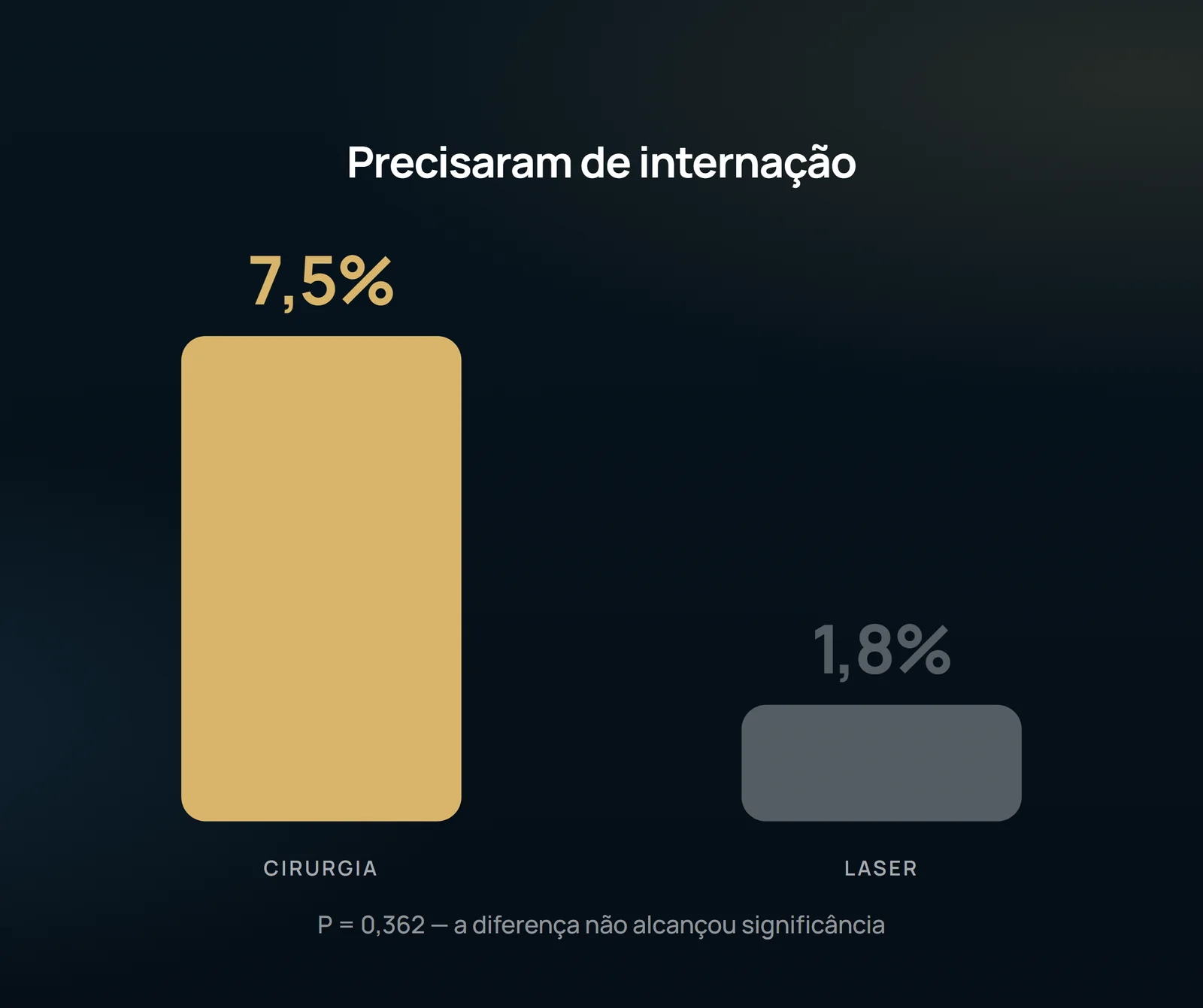
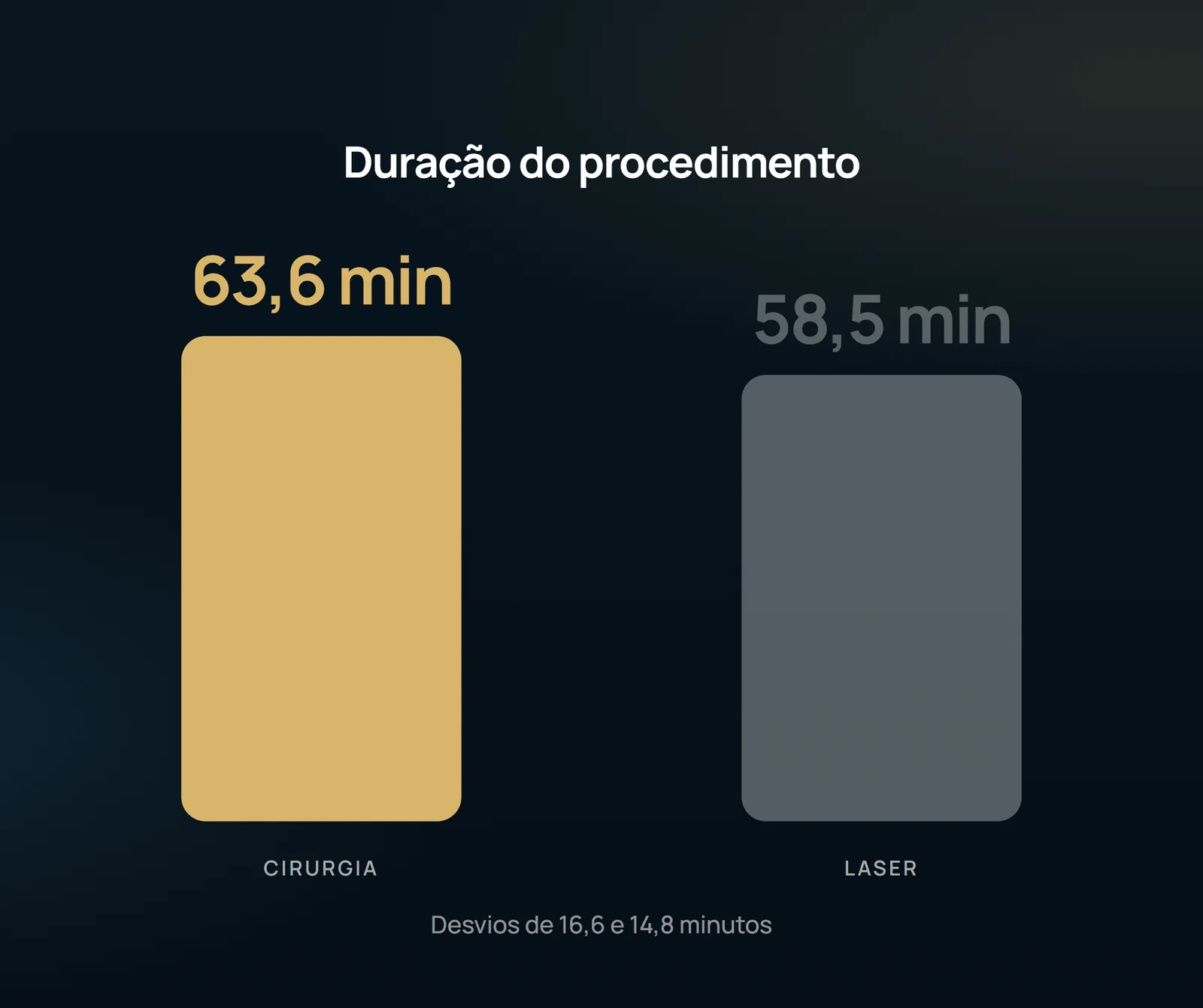
Inadequacy for general anesthesia in a hospital-day regimen required hospitalization in 4 of 53 patients in the surgical arm (7.5%) versus 1 of 53 in the EVLA arm (1.8%), without statistical significance (P = 0.362). The mean duration of the procedure also did not differ: 63.6 minutes (SD 16.6) in surgery against 58.5 (SD 14.8) in EVLA, P = 0.111.
Venous Clinical Severity Score dropped from a baseline median of 3 to 0 at the end of 12 months in both groups (P < 0.001 within each arm), no difference between groups at any time. The two treatments also produced similar and durable improvement in the specific quality of life of the disease and in the generic domains.
What the study does not authorize to state
Due to the nature of the interventions, it was not possible to blind patients, surgeons or evaluators — and the recovery outcomes are exactly self-reported, the ones most sensitive to this bias. The authors themselves record that the study was undersized for the detailed analysis of quality of life and that, therefore, it cannot confirm or refute any real benefit of EVLA on surgery in this area; and that, as the trial was not sized for the analysis of quality of life, the morbidity of the increased rate of early neuropathy in the surgical group is unclear. In addition, it is a single center, with 106 patients, and the P values of pain were presented daily, without correction for multiple comparisons. The defensive reading is narrow — between the 4th and 7th days the pain was lower under the same prescription —, not "the laser hurts less".
Content addressed exclusively to health professionals. No individual result is guaranteed: the indication depends on clinical evaluation and imaging examination of each patient (CFM 2,336/2023).