The cheapest treatment fails most often — and laser does not cost less than surgery
The randomized trial that compared EVLA, radiofrequency, foaming and stripping in 580 legs also published the cost of each arm, divided into cost of procedure and lost work. Read carefully, this table reverses the ranking and changes the conversation of the query.
 View the video lesson
Rasmussen's essay and collaborators are cited almost always by the same line: the four treatments work, and foam fails more. The last table of the article, however, brings something else — the cost of each arm, separated in cost related to the procedure and indirect cost of lost work. It is the table that least circulates and the one that most changes the administrative decision.
The drawing, in a line
There were 500 consecutive patients, 580 legs, randomized in two surgical centers from Denmark for EVLA, radiofrequency (ClosureFAST), ultrasound-guided sclerotherapy or high stripping ligation. All procedures were performed with tumescent local anesthesia and mild sedation, and follow-up was 3 days, 1 month and 1 year.
The design bias that the cost table hides
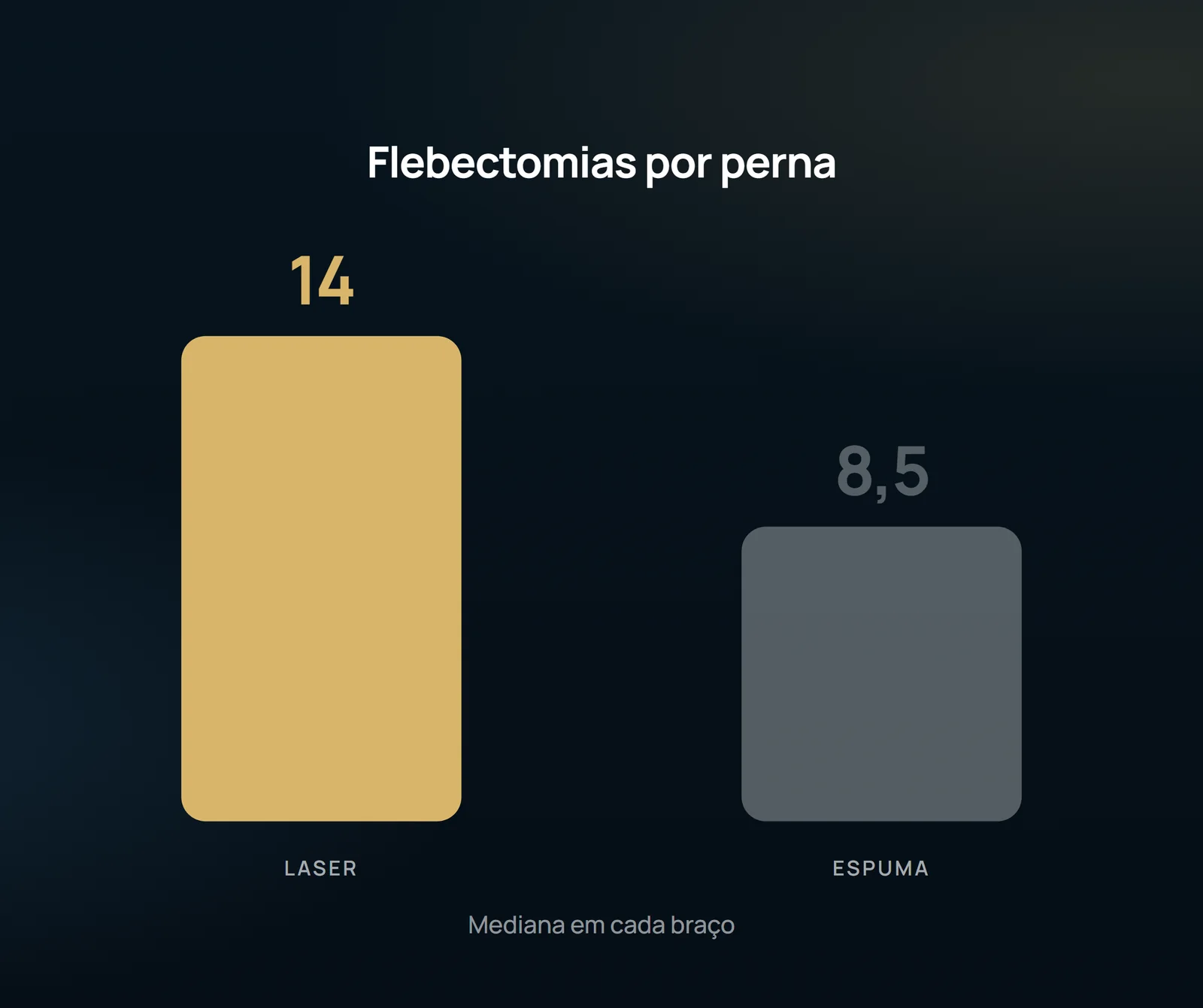
As the last stage of treatment, all varicose veins were removed by phlebectomy in all groups in the same session. The median was 14 phlebectomies in the EVLA arm, 16 on radiofrequency, 8.5 on foam and 15 on stripping. None of the published costs is therefore the cost of treatment of the isolated trunk: it is the cost of a package that includes phlebectomy, and the package is not identical between arms.
Cost of the procedure
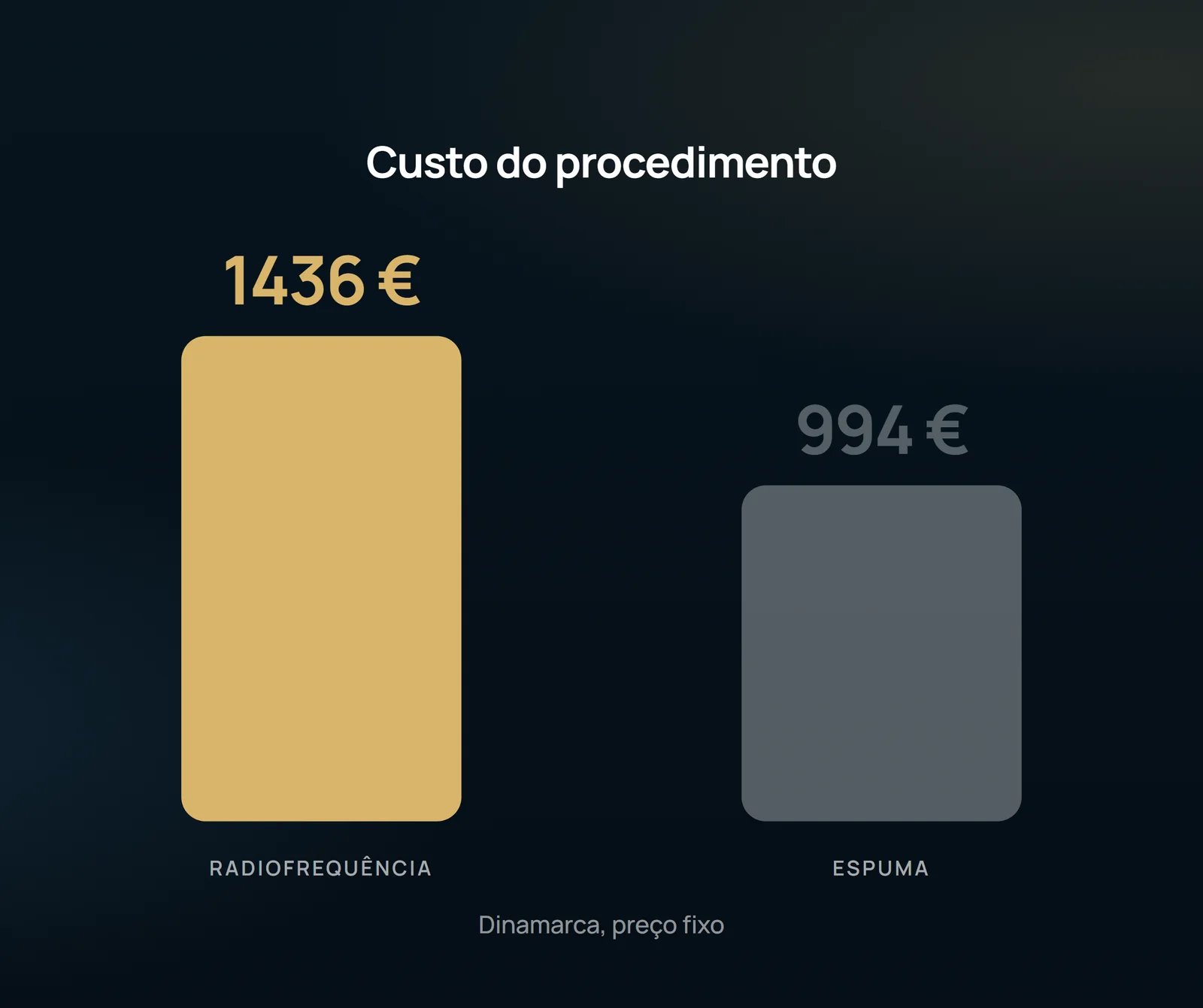
Fixed items were equal in the four arms: 189 euros pre-treatment and 161 euros duplex control. The reimbursement was EUR 644 for the three intravenous procedures and EUR 729 for stripping. The equipment appeared only in two arms: 366 euros of laser and 442 euros of radiofrequency catheter. The total procedure was 1360 euros in EVLA, 1436 on radio frequency, 994 on foam and 1079 on stripping.
Indirect cost reverses ranking
The lost work cost 840 euros on EVLA, 560 on radio frequency, 560 on foam and 1120 on stripping. In addition, the total costs were 2200 euros in EVLA, 1996 in radio frequency, 1554 in foam and 2199 in stripping. The foam went cheaper; the rest moved.
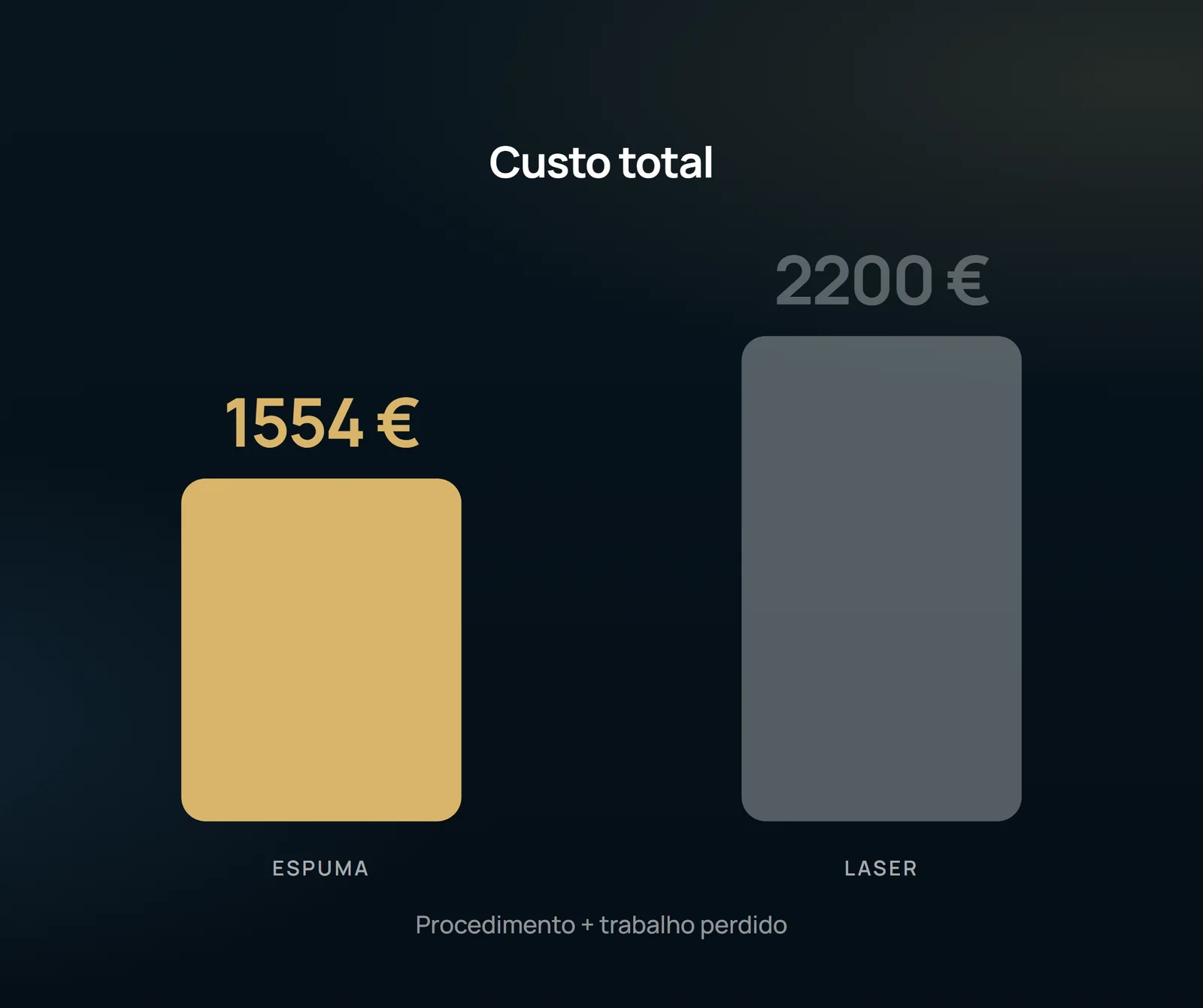
Radiofrequency is the most instructive case: it has the most expensive procedure in the table, 1436 euros, and still ends with the lowest total cost between arms that are not foam, 1996 euros. The tie-breaker occurred at work — 2.9 days against 3.6 of the EVLA and 4.3 of stripping. The surgeon's time, which ranged from 19 minutes in foam to 32 in stripping, does not enter the account: the refund is fixed by procedure.
The price is one year, not the outcome.
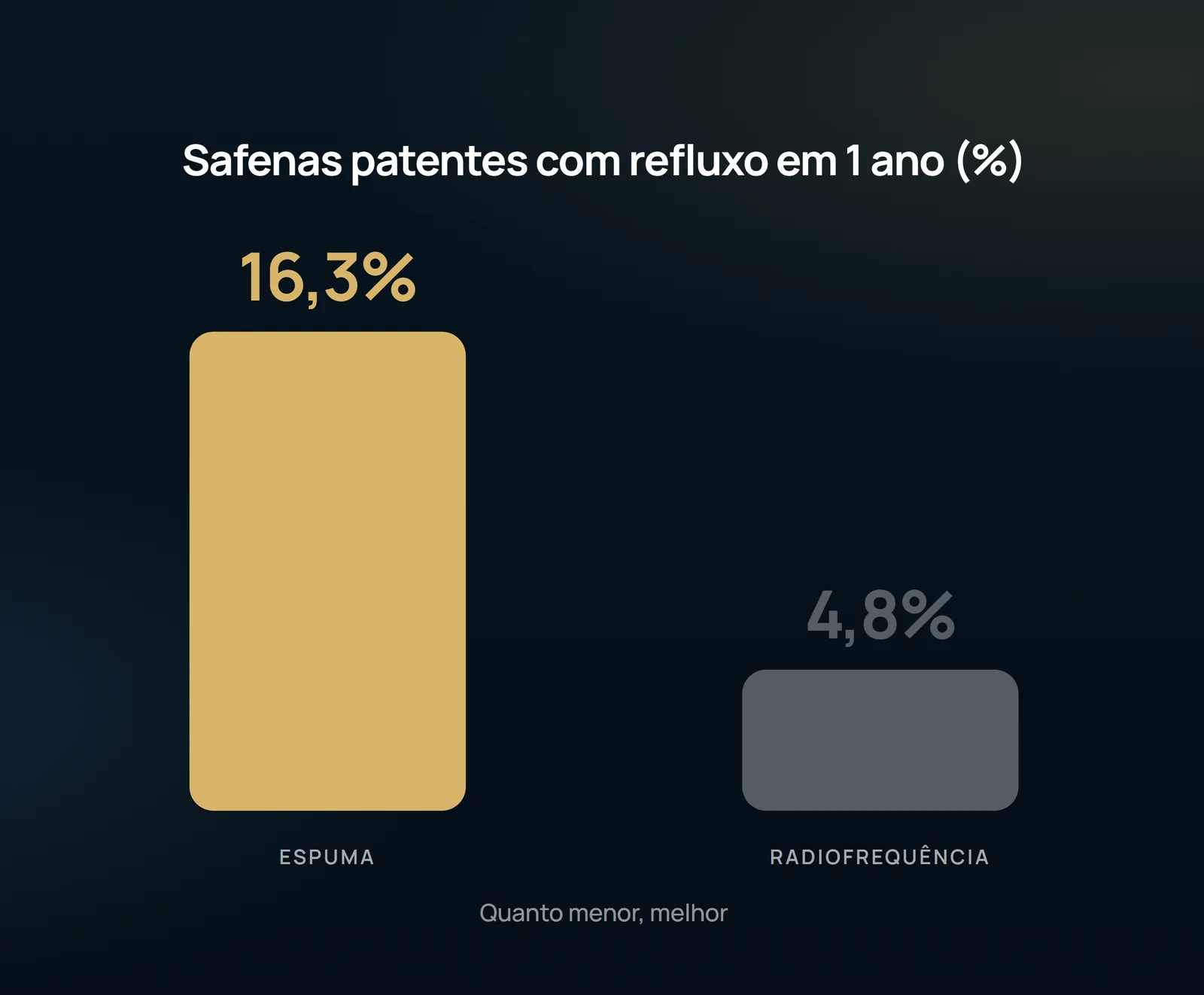
The cheapest arm is the same that failed more: 20 patent saphenous (16.3%) and with reflux in 1 year in foam, against 6 (4.8%) in radiofrequency, 4 (4.8%) in stripping and 7 (5.8%) in EVLA. And the protocol already allowed an extra foam session in the first month, used in five patients. The value of EUR 1554 is therefore the price of a one-year follow-up — not the price of settling reflux.
What the study does not authorize to state
The authors themselves write that the costs presented are short-term and that it was not possible to estimate the cost of treatment failures that may arise afterwards, and that the calculations were based on the fixed price system by procedure and Denmark’s level of productivity — which is not transported to another country. Add to this the follow-up of only 1 year, the absence of blinding treatment and follow-up exams, the variation of technique within the laser arm (17 patients treated with 980 nm and 20 in pulsed mode) and the package with phlebectomy in all groups. The table answers how much it cost a year in that system; it does not answer how much it costs to treat great saphenous reflux until the outcome, or anywhere else.
Content addressed exclusively to health professionals. No individual result is guaranteed: the indication depends on clinical evaluation and imaging examination of each patient (CFM 2,336/2023).