It is not just the stocking — it is where the pressure is applied
The joint guideline of five societies reviewed the evidence of compression after invasive treatment of superficial veins. The recommendation with the highest level of evidence is not about using sock: it is about putting pressure focused on the treated vein.
 View the video lesson
The prescription of elastic stockings after saphenectomy, phlebectomy or thermal ablation comes from the clinical experience of generations — not from a trial that has tested it. The joint guideline of the American Venous Forum, the Society for Vascular Surgery, the American College of Phlebology, the Society for Vascular Medicine and the International Union of Phlebology was written precisely to organize this scattered evidence. The result is less comfortable than the practice suggests.
The Recommendation Changing Conduct
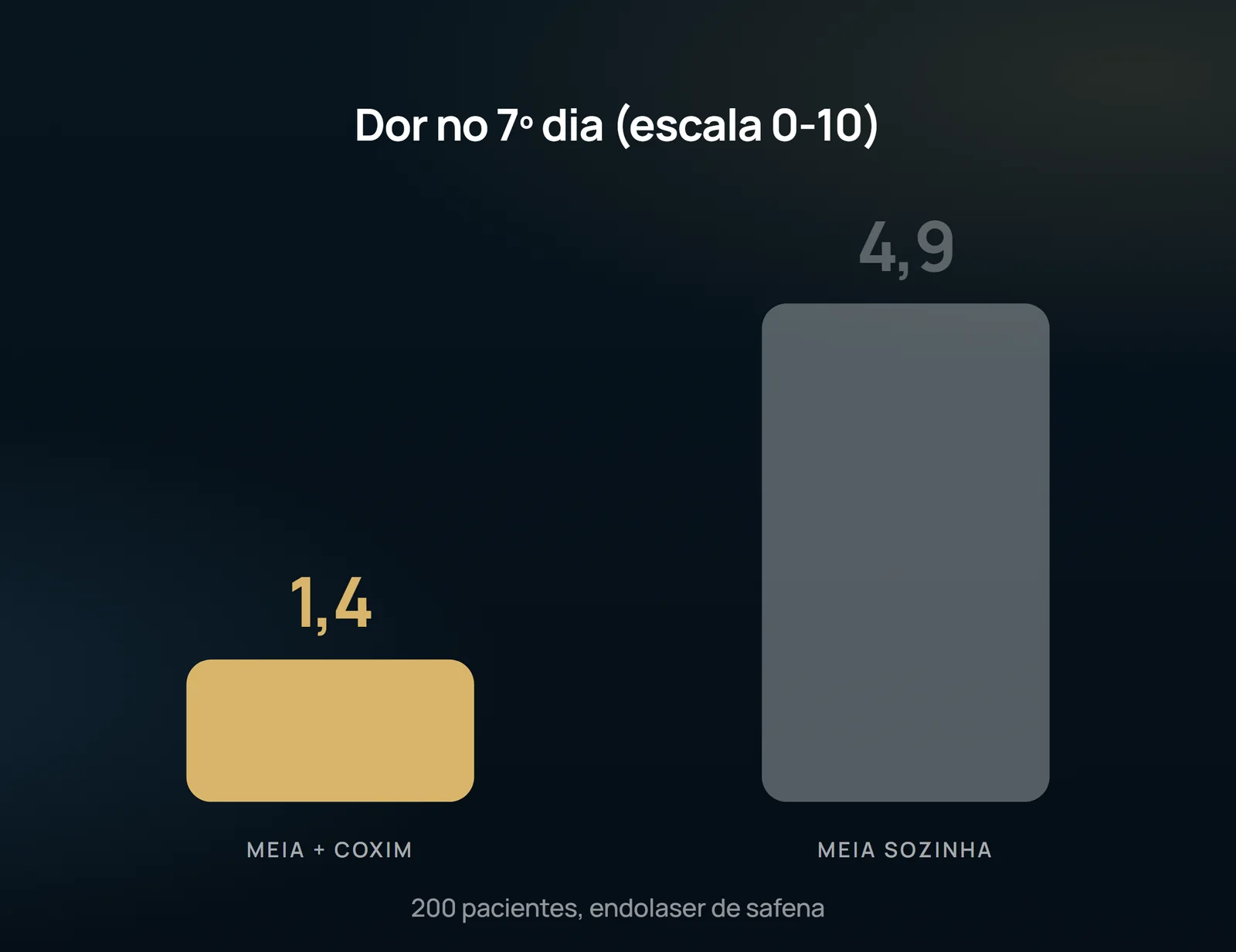
Recommendation 1.1 — use compression when possible after surgical or thermal procedure — is GRADE 2, level of evidence C. Recommendation 1.2 is more specific and has level of evidence B: if there is compressive dressing in the postoperative period, pressures above 20 mm Hg along with eccentric coxins positioned directly on the ablated or operated vein offer the greatest reduction in postoperative pain.
Why Coxim Works
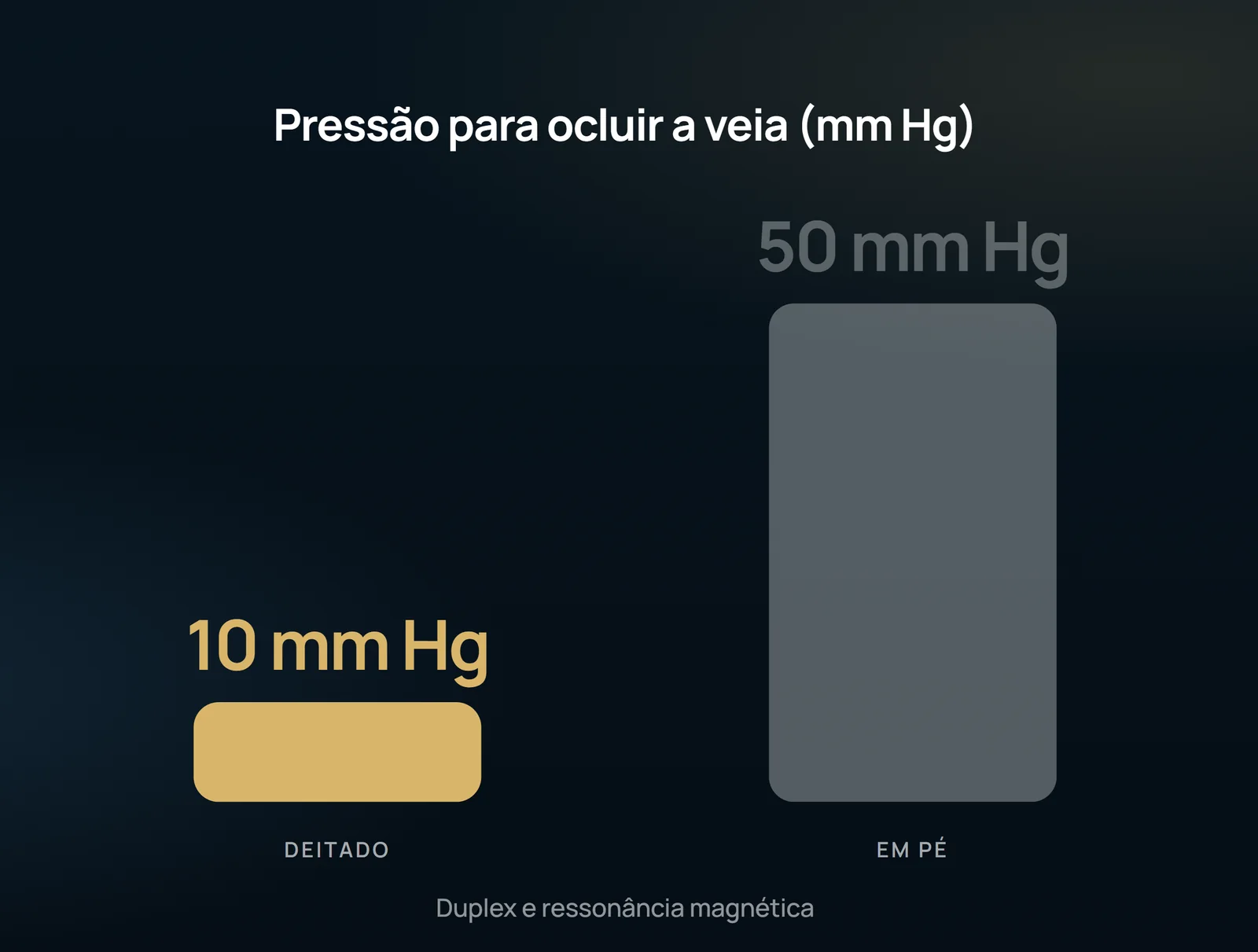
The aim of post-procedure compression is to maintain occlusion of the treated vein. For this the external pressure needs to overcome the intravenous pressure, which depends on the position of the body. In decubitus, less than 10 mm Hg already narrow the great saphenous. On foot, it takes more than 50 mm Hg in the leg and 30 to 40 mm Hg in the thigh to occlude the vein. Under Laplace's law, the cushion reduces the local radius and raises the pressure at that point: in the reviewed studies, the values were 18 mm Hg with an isolated sock at almost 100 mm Hg with two socks and eccentric coxim in the standing position.
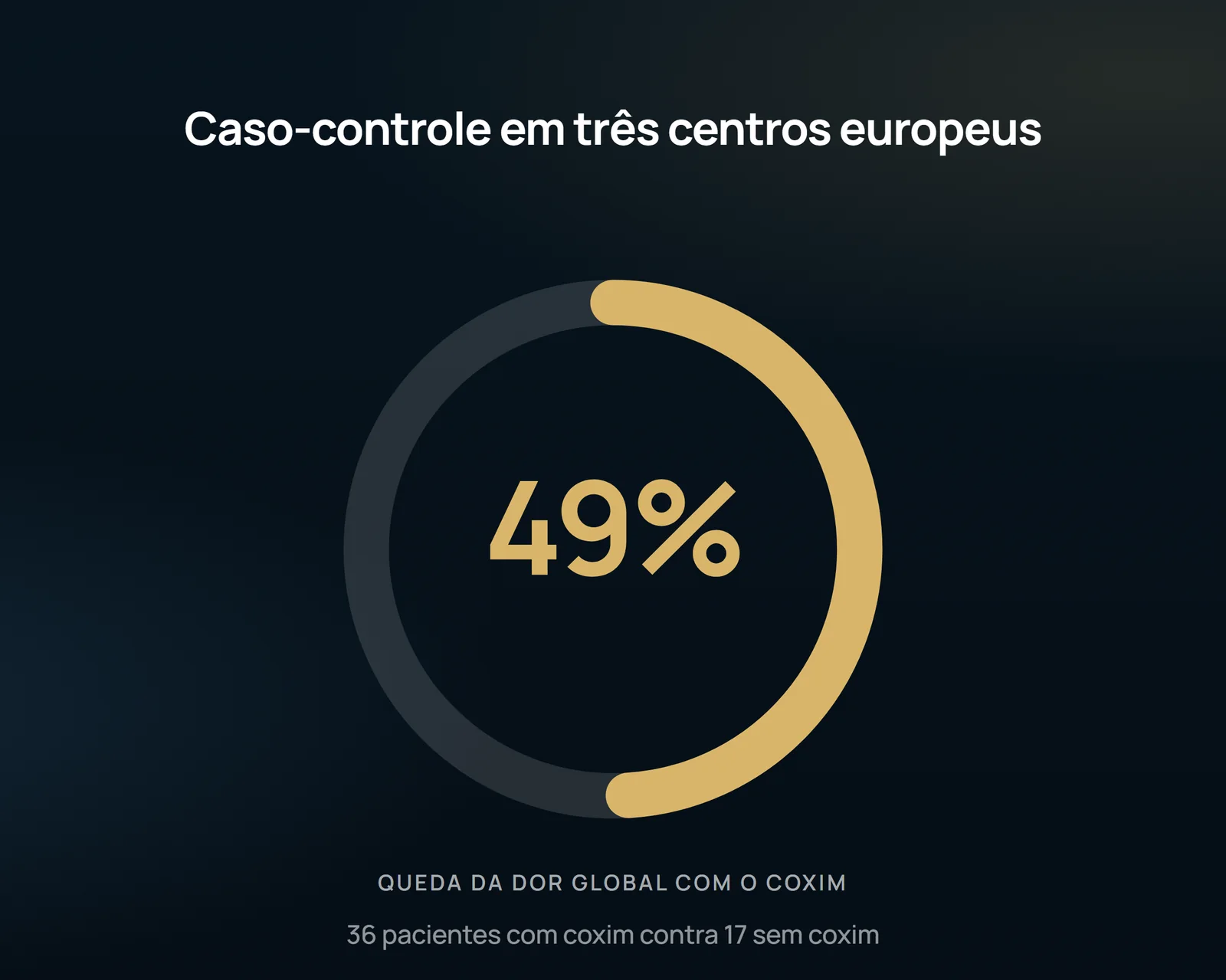
One case-control conducted in three European centers compared 36 patients with two socks and thigh cushions against 17 patients with two isolated stockings: overall pain was 49% lower in the group with coxim, with no difference in adverse events. The gain, however, has counterparts. In another trial, with 54 patients randomized into three groups — medium from 23 to 32 mm Hg, adhesive bandage, and compression stocking with eccentric coxim on the great saphenous thigh — the coxim group achieved the highest pressures and also more minor adverse events, especially skin irritation by the fixation tape. No patient in any group presented superficial or deep venous thrombosis.
After sclerotherapy, the evidence is divided.
Recommendation 3.1 suggests immediate compression after sclerotherapy (GRADE 2, level C). Kern et al randomized 100 patients to sock from 23 to 32 mm Hg for 3 weeks or no compression after a single session of liquid sclerotherapy: three weeks of continuous compression gave the best disappearance of vessels — evaluated in photographs by two blind reviewers, on average 52 days later — and statistically significantly reduced hyperpigmentation. Weiss et al., in 40 patients, also found improvement superior to control in the three subgroups tablets (3 days, 1 week and 3 weeks), with less hyperpigmentation in the groups of 1 and 3 weeks.
What the directive does not authorize to state
This document does not show that compression is better than no compression after ablation or saphenectomy — and the authors themselves say why: neither the randomized trials nor the revised case-control study included a group without compression. The investigators tested different levels of compression, not its need. The overall quality of publications is described as inadequate by small sample, absence of blinding, absence of randomization, lack of data on compression strength and inconsistent outcomes. Any extrapolation, the authors write, should be considered speculative.
Regarding duration there is no recommendation with evidence: guideline 2.1 and 3.2 refer to the best clinical judgment (BEST PRACTICE). NICE advises not to use bandage or compression stocking for more than 7 days after interventional treatment. In 101 patients treated with radiofrequency, 4 hours of compression was not less than 72 hours — the shorter group had even greater reduction in leg volume and fewer complications, with no difference in pain or recovery time. None of this replaces individual evaluation: the procedure is the vascular surgeon who examined that limb.
Content addressed exclusively to health professionals. No individual result is guaranteed: the indication depends on clinical evaluation and imaging examination of each patient (CFM 2,336/2023).