Who CLASS did not study — and why the laser-versus-foam comparison is post hoc
The CLASS trial is cited by outcomes. This text reads the drawing: 6592 screened for 798 randomized, two strata of centers with different options, and the comparison between laser and foam that was decided after the test.
 View the video lesson
CLASS is the largest randomized trial that compared foam sclerotherapy, intravenous laser ablation and surgery to treat primary varicose veins. Their outcomes are cited in almost every discussion about indication. What is rarely discussed is the drawing — and it is the drawing that decides how much of that result is in the patient who is in your room.
The recruitment funnel
Between November 2008 and October 2012, in 11 vascular surgery departments in the United Kingdom, 6592 patients referred by primary care were evaluated for eligibility. Were considered eligible 3369, or 51.1%. Of these, 2571 refused randomization — the reason stated by the majority was already to have preference for a specific treatment.

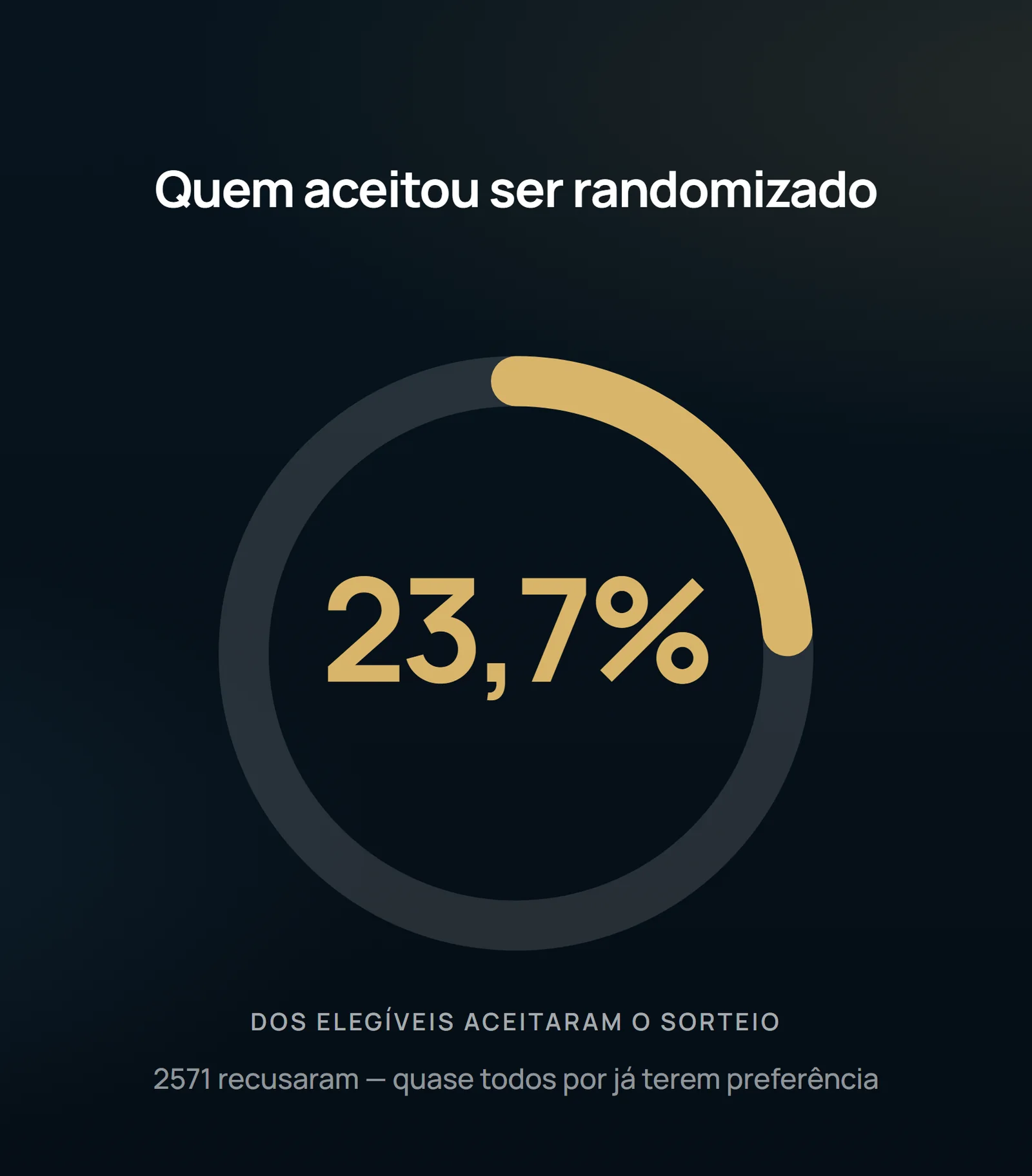
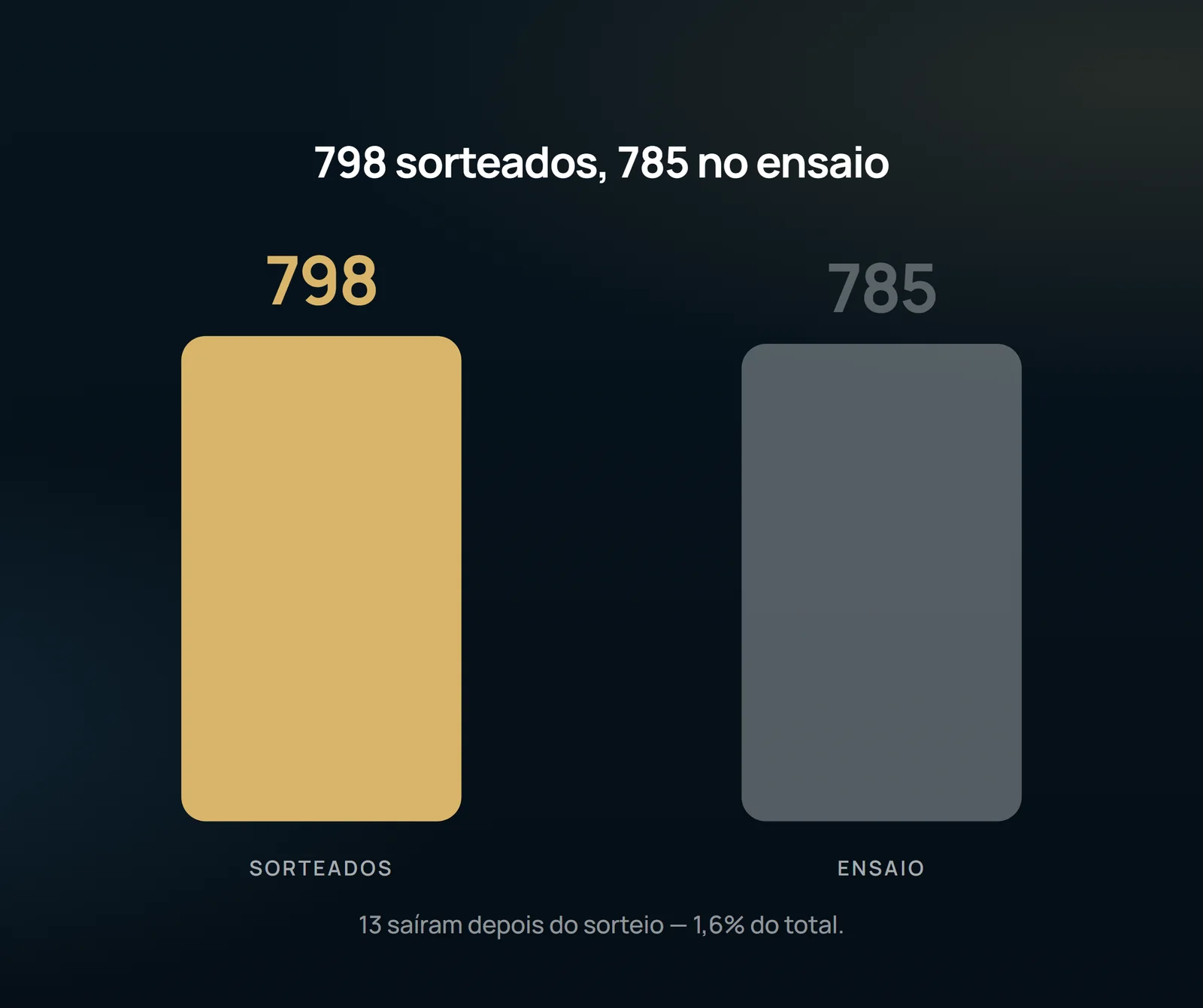
Thirteen participants (1.6%) were excluded after randomization: five per vein with more than 15 mm, three by relapsed varices and five by associated conditions or absence of reflux. The CLASS result, therefore, describes a population who agreed to be drawn from three very different treatments — not the general population of varicose veins.
Two strata, three unequal comparisons
Randomization was stratified according to the number of options available in each center. In stratum A, eight hospitals offered the three modalities. In stratum B, three hospitals offered only foam or surgery. The consequence is structural: the comparison between foam and surgery uses participants in strata A and B; the comparison between laser and surgery only exists within stratum A; and the comparison between laser and foam was a post hoc analysis, also restricted to stratum A.
What randomization did not match
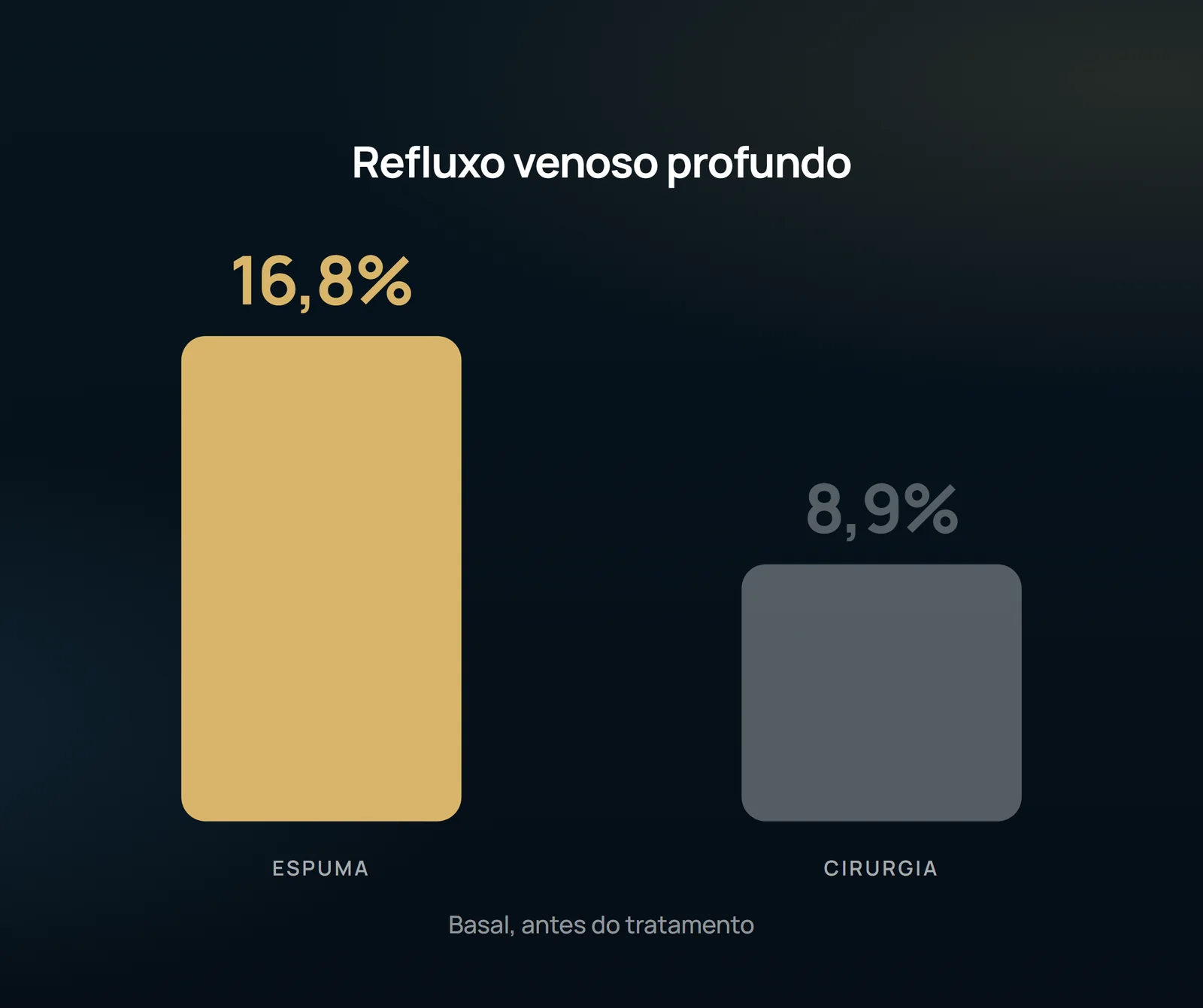
The baseline characteristics were generally similar, with three exceptions declared by the authors. The largest diameter of the great saphenous vein was 9.1 mm in the laser arm and 8.4 mm in the foam arm (P = 0.008). The reflux below the knee was more frequent in foam than in laser (P = 0.03). And deep venous reflux was present in 16.8% of the foam arm against 8.9% of the surgery (P = 0.006). The arm with the worst performance in the outcomes began with more deep disease.
It was also not standardized who performed the procedure: fully trained full-time surgeons performed 73% of laser procedures, 77% of foams and 59% of surgeries; the others were performed by physicians in training. The proportion of patients who received the selected treatment was 97% in laser, 93% in foam and 87% in surgery.
The loss of follow-up was not symmetrical
At 6 months, 33 participants (11%) had been removed from the foam arm, against 9 (4%) in laser and 16 (6%) in surgery. The questionnaire — which was the primary outcome — was returned by 214 patients (74%) of the foam arm, against 175 (83%) in laser and 238 (83%) in surgery. The greatest loss occurred precisely in the arm with worse declared performance.
The center that changes the signal
The authors repeated the analysis of primary outcomes excluding the center that recruited the most. The results were generally similar, with two exceptions: the AVVQ score became significantly worse in foam than in laser (P = 0.02) and the mental component of SF-36 became worse in surgery than in laser (P = 0.04). A conclusion that depends on which center comes into the account is a conclusion that is mentioned with caveats.
What the study does not authorize to state
First of all, it does not allow generalization for the general population of varicose veins, because the vast majority of eligible people did not accept to be drawn. Secondly, it does not authorize treating "laser against foam" as a random comparison — it was post hoc and restricted to a stratum. Thirdly, neither participants nor evaluators were blind, and there was no sham group, so that the effect of treatment itself cannot be separated from the effect of having been treated. Fourth: there were eight primary comparisons and a large number of secondary ones, with no expected correction for multiple comparisons — so the authors adopted the P threshold. < 0.005 in secondary outcomes. Fifth: the follow-up was 6 months, which does not measure durability, late recanalization or recurrence. And radiofrequency, which today divides the first line with the laser, was not included in the test.
Content addressed exclusively to health professionals. No individual result is guaranteed: the indication depends on clinical evaluation and imaging examination of each patient (CFM 2,336/2023).