Similar quality of life, very different occlusion: what CLASS actually measured
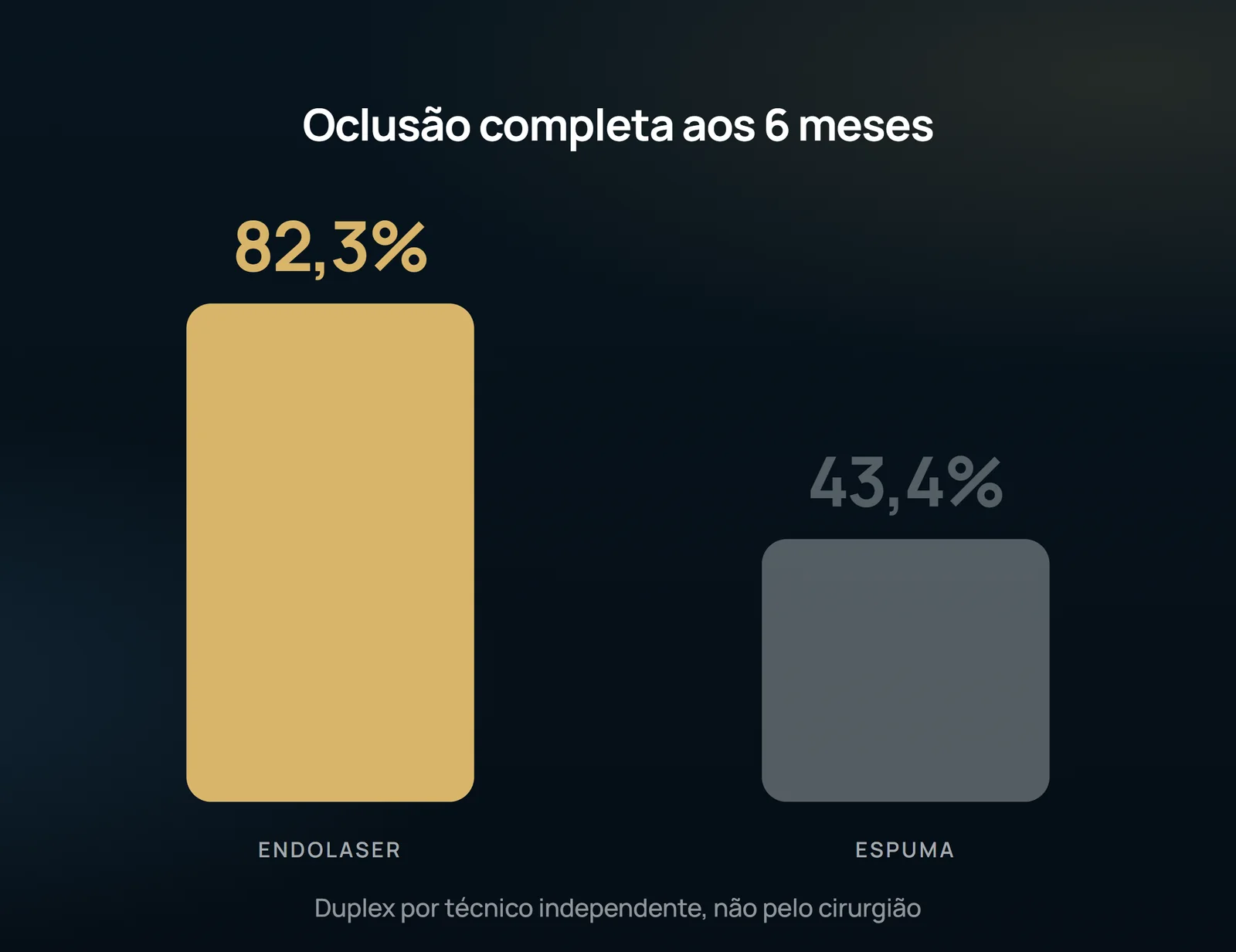
CLASS randomized 798 patients between intravenous laser, foam sclerotherapy and surgery. In the quality of life outcomes, the three arms were close; in the occlusion measured by independent duplex, the foam was almost 40 points behind. That's the distance the surgeon needs to know how to explain.
 View the video lesson
The CLASS trial (Comparison of Laser, Surgery, and Foam Sclerotherapy) recruited 11 vascular surgery departments in the United Kingdom between November 2008 and October 2012. Of the 6592 patients evaluated, 3369 (51.1%) were eligible and 798 (23.7%) consented; 785 entered the analysis — 210 in laser, 286 in foam and 289 in surgery. Criteria: symptomatic or larger primary varicose veins C2 and great or small saphenous reflux greater than 1 second to the duplex. Trunk less than 3 mm or greater than 15 mm was excluded.
What Each Arm Received
The surgery consisted of proximal ligation and saphenectomy (only from the great saphenous artery) with concomitant phlebectomies. Foam was produced by Tessari's technique, in the proportion of 0.5 mL of tetradecyl sodium sulfate to 1.5 mL of air – 3% for saphenous trunks and 1% for varicose veins, with a maximum of 12 mL per session. Laser ablation was performed under local anesthesia, with an average of 83 J/cm2 per pulse, followed by foam for residual varicosities in the 6-week review when necessary — which occurred in 31% of patients in the laser group and 38% of the foam group.
Primary outcome: quality of life
The primary outcome was quality of life reported by the patient: disease specific by Aberdeen Varicose Veins Questionnaire (AVVQ, from 0 to 100, the higher the worse) and generic by EQ-5D and SF-36, at 6 months. The AVVQ scores fell from 17.8 to 7.9 in the laser, from 17.6 to 9.1 in the foam and from 18.2 to 7.8 in the surgery. The only significant difference was between surgery and foam (effect of 1.7 point; 95% CI −3.0 to −0.5; P = 0.006), and the authors recorded that the clinical importance of this difference is uncertain. Laser and surgery didn't differ.
Technical outcome: occlusion tells another story
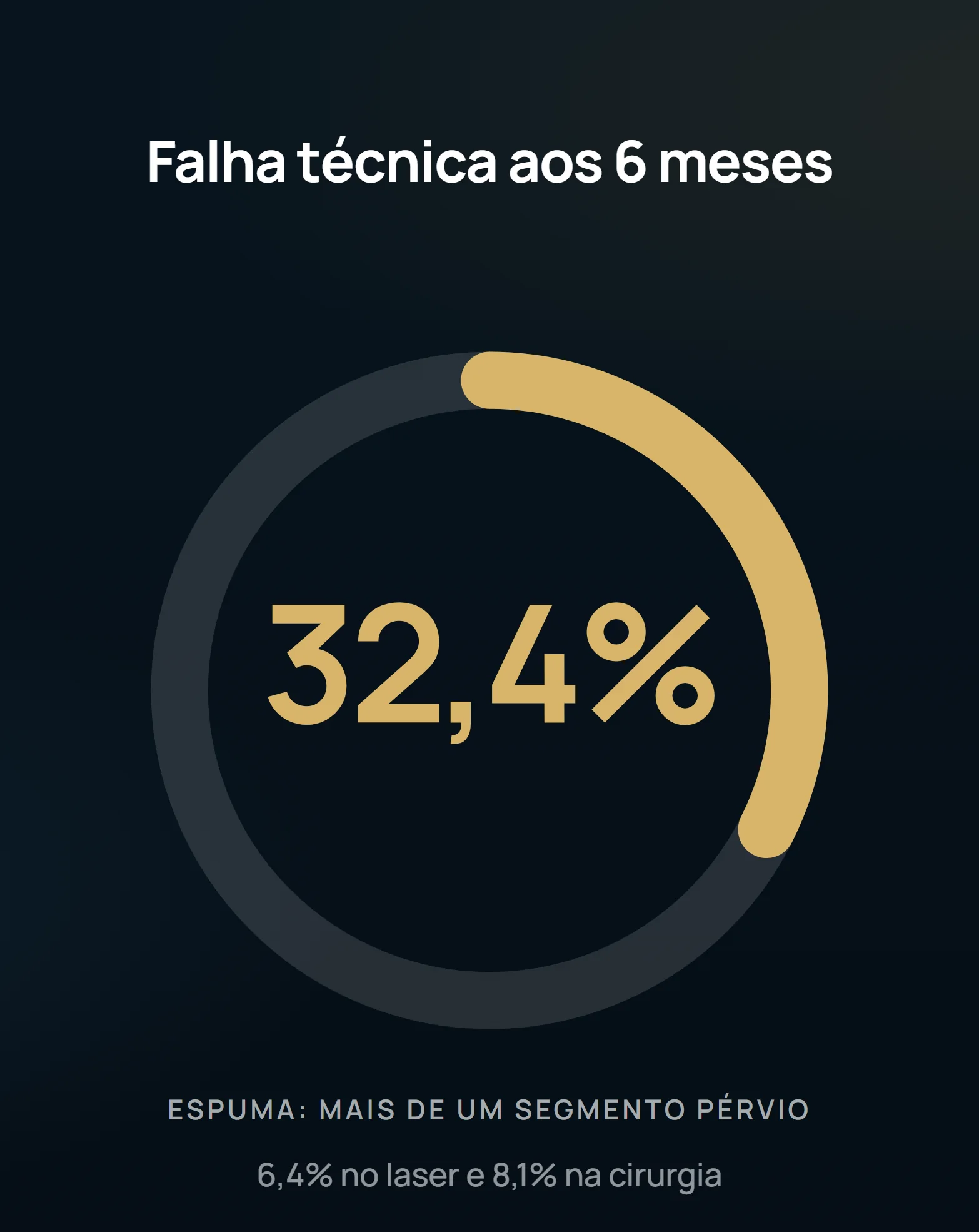
At 6 weeks the picture was already this: complete occlusion in 83.0% on laser, 84.4% on surgery and 54.6% on foam (P < 0.001 for both comparisons with foam). A methodological detail explains why these rates are lower than those in earlier series: complete, partial or failed occlusion was assessed by independent, accredited vascular technicians, rather than the surgeons who performed treatment. Nevertheless, the venous clinical severity score improved similarly in all three groups at 6 months — a separation between clinical and technical success that the authors note has also appeared in other trials.
Complications
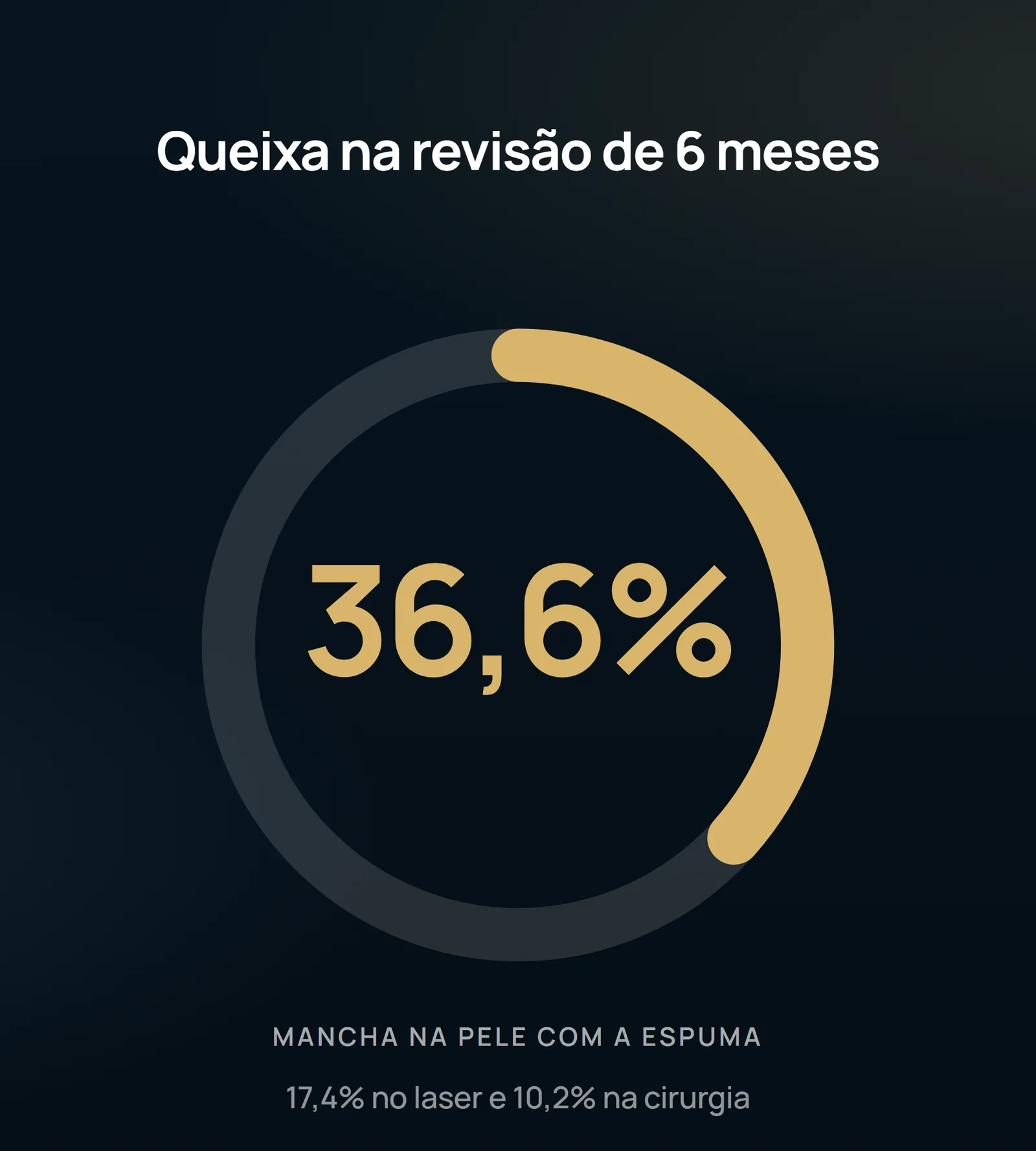
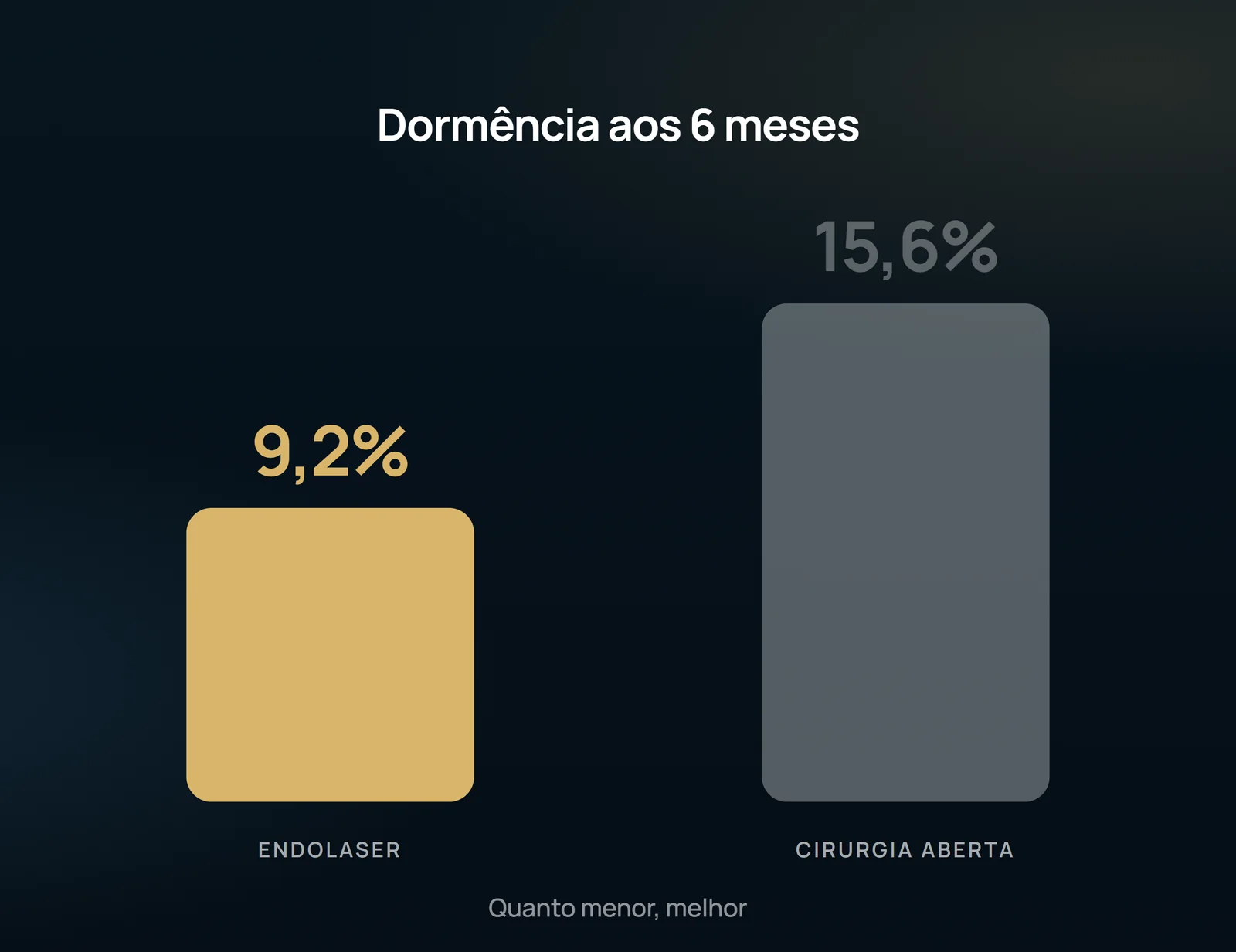
Complications during the procedure were less frequent in laser (1.0%) than in foam (6.2%) or in surgery (7.1%), with P < 0.001 for both comparisons. Serious adverse events were around 3% in the three arms, with no difference. At 6 months, numbness occurred in 9.2% on laser, 4.0% on foam and 15.6% on surgery; skin stain in 17.4%, 36.6% and 10.2%; nodulations in 13.6%, 26.6% and 7.2%, respectively.
What the study does not authorize to state
The authors themselves list the limits. It was not feasible to blind patients or evaluators regarding the treatment received. There was no simulated procedure arm, so the effect of treatment against this control cannot be estimated. The number of comparisons was large — eight involving primary outcomes, and many in secondary outcomes — so that some differences may have occurred by chance; therefore the secondary ones were only considered significant with P less than 0.005. The 6-month follow-up does not allow us to state anything about durability, late recanalization or recurrence. Radiofrequency ablation was not included. And the use of foam in residual varicosities in one third of the laser group may have attenuated the early benefit of quality of life of this arm. Nothing here is promise of outcome: the indication remains individual, made by a vascular surgeon from the duplex.
Content addressed exclusively to health professionals. No individual result is guaranteed: the indication depends on clinical evaluation and imaging examination of each patient (CFM 2,336/2023).