Swelling in milliliters: what venoactive drugs actually reduce
Venous symptom is reported; edema is measured. The review by Gloviczki and collaborators brings together what each venoactive compound reduced in milliliters of volume and in centimeters of circumference — and where this hierarchy begins not to sustain itself.
 View the video lesson
The review separates, in its own conclusion, two lands that are usually treated as one. Venous symptoms are subjective, depend on the words that the patient has available and suffer cultural and linguistic influence. On the other hand, signs such as edema and ulcer can be measured objectively — and this is why oedema studies are easier to drive and easier to compare.
The roof of the class
That's the umbrella of the whole class. Under it, meta-analyses and assays of individual compounds provide evidence of higher quality for some of them — and it is this difference between the aggregate and the individual that guides the choice in the consultation.
What Each Compound Reduced
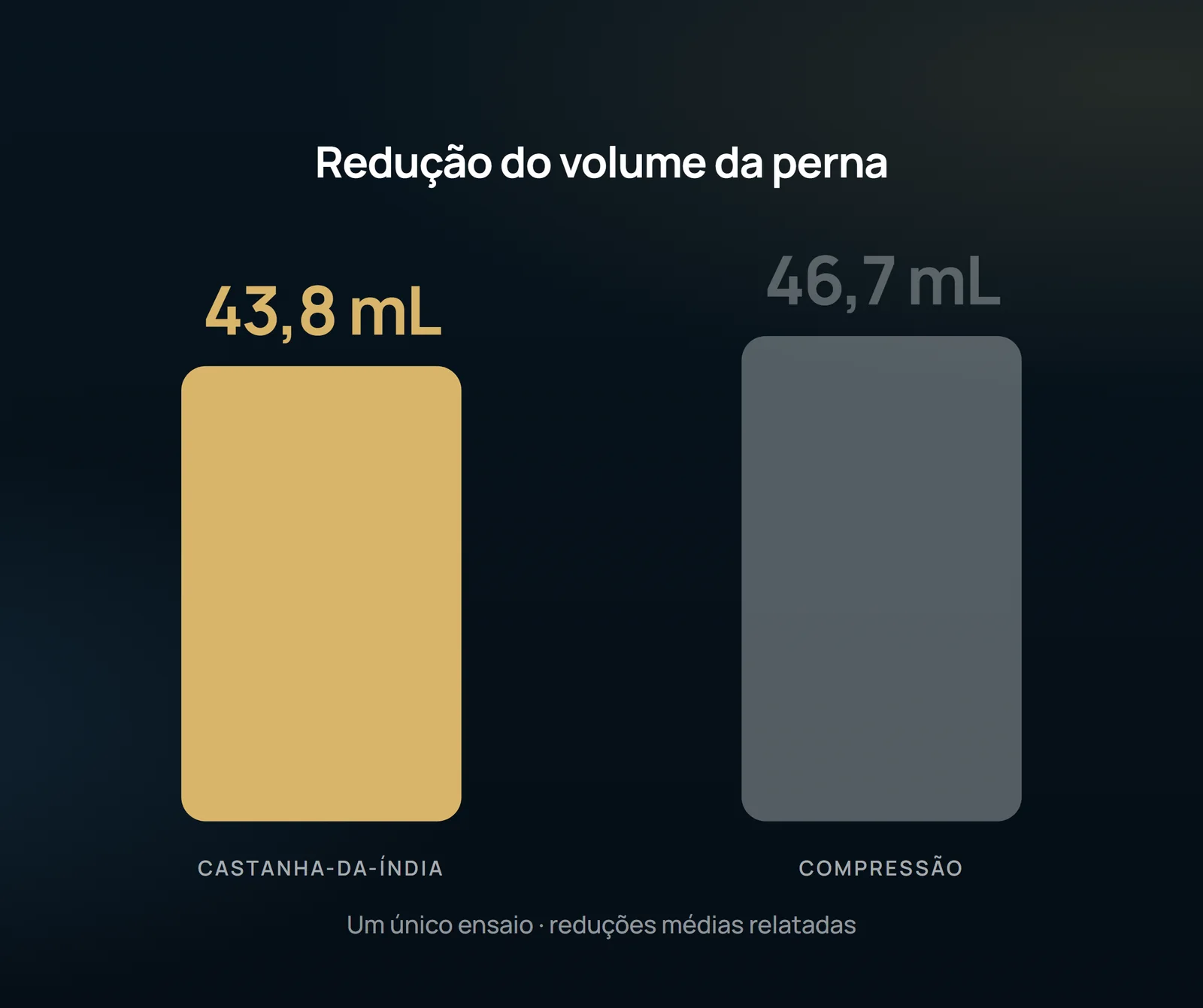
Cochrane analyzed seven trials of Indian chestnut seed extract against placebo. The weighted mean difference in leg volume reduction was 32.1 mL, confirmed in six of the seven trials. One of these trials reported comparable mean reductions in leg volume between the extract group and the compression group: 43.8 mL and 46.7 mL, respectively.
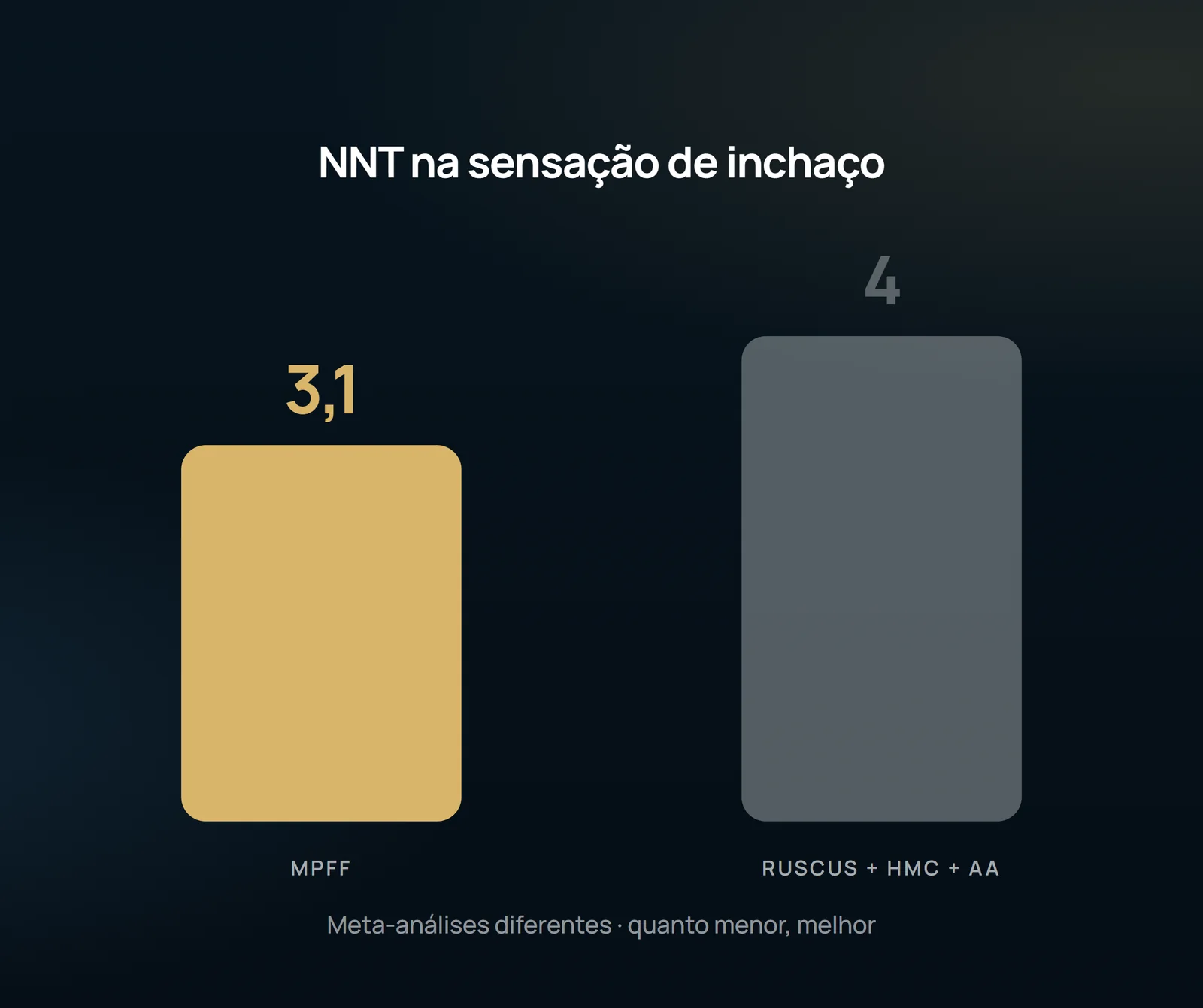
For the micronized purified flavonoid fraction (MPFF), the Kakkos meta-analysis brought together 7 high-quality randomized trials against placebo. In the sensation of swelling, the standardized mean difference was -0.99 as a continuous variable and the relative risk of 0.39 as a categorical variable, with NNT of 3.1. For ankle circumference, the same group reported moderate quality of evidence, with standardized mean difference of -0.59 — the effect on the measured signal is more modest than the effect on the reported symptom.
In a meta-analysis of 10 placebo trials comparing MPFF, hydroxyethylrutosides, ruscus and diosmin in oedema assessed by ankle circumference, MPFF demonstrated the highest efficacy. The Bayesian network analysis of 45 randomized trials and 18 observational studies reached the same direction for leg volume. And a trial with aquatic plethysmography, with 136 patients distributed in four groups, showed the highest frequency of volume reduction equal to or greater than 100 mL for MPFF.
The ruscus extract combined with hesperidine methyl chalcone and ascorbic acid significantly reduced the sensation of swelling in a meta-analysis of 10 trials (RR 0.53, NNT 4) and decreased ankle circumference and leg and foot volume. For hydroxyethylrutosides, the mean reduction in ankle circumference in the Allaert study was -0.58 cm, with a deviation of 0.31 — comparable to ruscus and lower than MPFF. Calcium dobesilate, in a meta-analysis of ten trials, showed more pronounced reductions in severe disease and was the most effective in reducing foot volume, with -85 cm3 versus placebo.
What this revision does not allow us to say
The hierarchy between compounds does not come from an essay that has put them forward: it comes from separate meta-analyses and a network analysis on heterogeneous populations. The NNT of 3.1 and the NNT of 4 cited above are of different studies and do not constitute direct comparison. Meta-analyses disagree with each other on the same compound — Pompilio puts hydroxyethylrutosides with the highest improvement in the bloating sensation score, while Allaert's reading places them below the MPFF. For the extract of red vine leaf, five trials produced significant improvement in only two, without consistency between studies.
Leg volume, foot volume and ankle circumference are measured signs, not hard outcomes: none of the above data shows less ulcer, less progression of CEAP or less intervention because of volume reduction. Adverse events are also not null — the table of the article itself records rates from 1 to 36% for chestnut extract, 20 against 16 for hydroxyethylrutosides, 17.14 against 13.07 for sulodexid and 9.7 against 7.6 for calcium dobesilate, all with no statistically significant difference in relation to placebo, with described agranulocytosis among dobesilate events. Finally, the document is a pre-proof journal.
The number that most draws attention — 43.8 mL of the extract against 46,7 mL of compression — is the phrase of a single test reporting comparable average reductions, not a test designed to test non-inferiority. He doesn't authorize to replace compression with the pill. The position that the review itself defends is another: to incorporate the venoactive to the treatment plan, along with interventional therapies and compression.
Content addressed exclusively to health professionals. No individual result is guaranteed: the indication depends on clinical evaluation and imaging examination of each patient (CFM 2,336/2023).