Laser, foam or surgery: what CLASS showed in the first six weeks
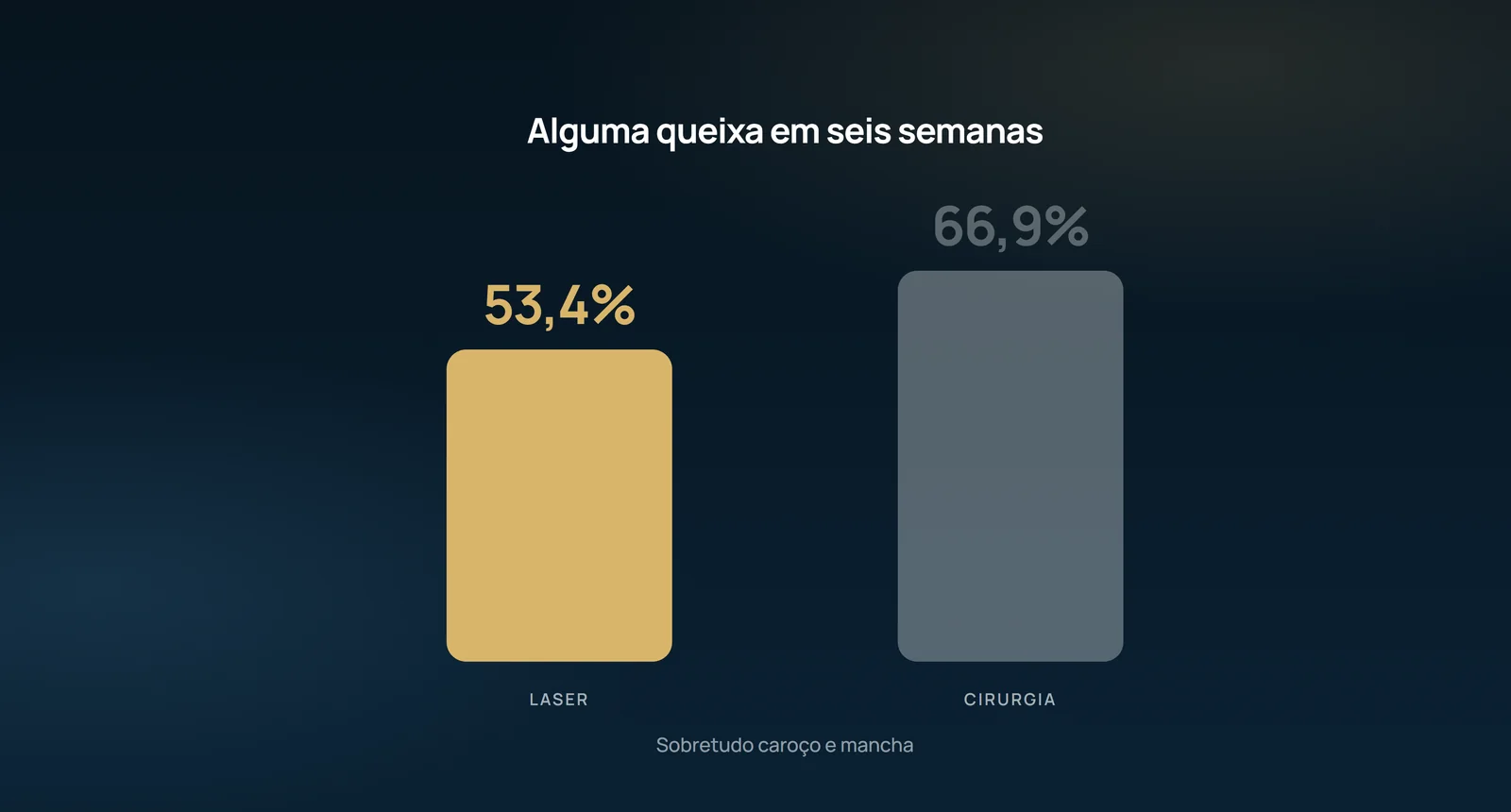
In the CLASS trial, in 6 weeks the surgery had SF-36 scores worse than the laser in body pain, vitality and physical and emotional limitations; the difference disappeared at 6 months. Some complications in 6 weeks occurred in 53.4% on laser, 82.6% on foam and 66.9% on surgery, especially nodulation and staining.
 View the video lesson
CLASS randomized 798 patients with primary varicose veins in 11 UK centers for endolaser, foam sclerotherapy or surgery. The primary outcomes of quality of life were measured at 6 months; the scores of 6 weeks entered as secondary outcomes, with significance fixed in P < 0,005.
At six weeks
In 6 weeks, the surgery group had SF-36 worse than that of laser in the domains body pain, vitality, limitation by emotional health and limitation by physical health. At 6 months, these domains were no longer different between the groups.
The nuances
Serious adverse events were around 3% in the three groups. Surgery included concomitant phlebectomies; lasers generally did not, and 31% of laser patients received foam in residual varicosities at 6 weeks — which, according to the authors, may have attenuated the early benefit of lasers.
What can't be said
There was no blinding of patients or evaluators, there were many comparisons without formal correction and the follow-up was 6 months. Early recovery is a criterion among others: the saphenous occlusion rate with foam was lower.
Content addressed exclusively to health professionals. No individual result is guaranteed: the indication depends on clinical evaluation and imaging examination of each patient (CFM 2,336/2023).