Laser or open surgery: what the network meta-analysis found about complications
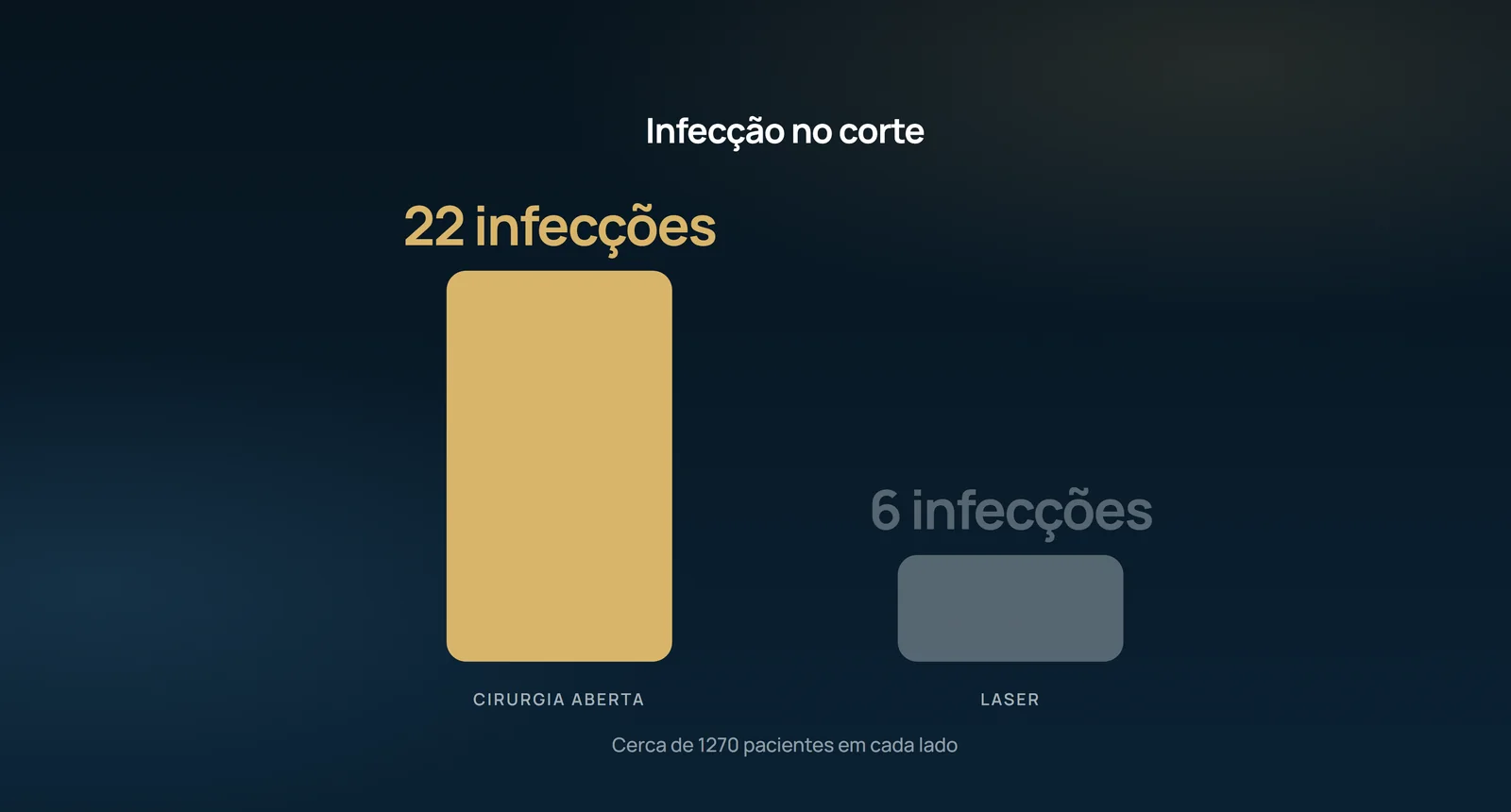
In the meta-analysis by Siribumrungong et al. (72 randomized trials), wound infection was lower with intravenous laser than with open surgery (6 of 1270 × 22 of 1276; RR 0.41; high quality). Hematoma and paresthesia were also minor; thromboembolism did not differ.
 View the video lesson
The review included 72 randomized trials for the treatment of saphenous reflux magna. In addition to anatomical failure, postoperative complications were analyzed: wound infection, hematoma, paresthesia and venous thromboembolism.
The other complications
Hematoma (RR 0.55) and paresthesia (RR 0.64) were also smaller after laser. Thromboembolism did not differ in any comparison. Surface thrombophlebitis was higher in radiofrequency (RR 2.63) and foam (RR 3.41) than in open surgery.
What can't be said
The blinding domain had the highest risk of bias: 85% and 75% of the non-blind team trials and evaluation. Quality varied by outcome, and long-term anatomical failure of the laser was greater than that of surgery, with no difference in clinical recurrence.
Content addressed exclusively to health professionals. No individual result is guaranteed: the indication depends on clinical evaluation and imaging examination of each patient (CFM 2,336/2023).