What the Brazilian Lipedema Consensus allows — and does not allow — vascular surgeons to claim
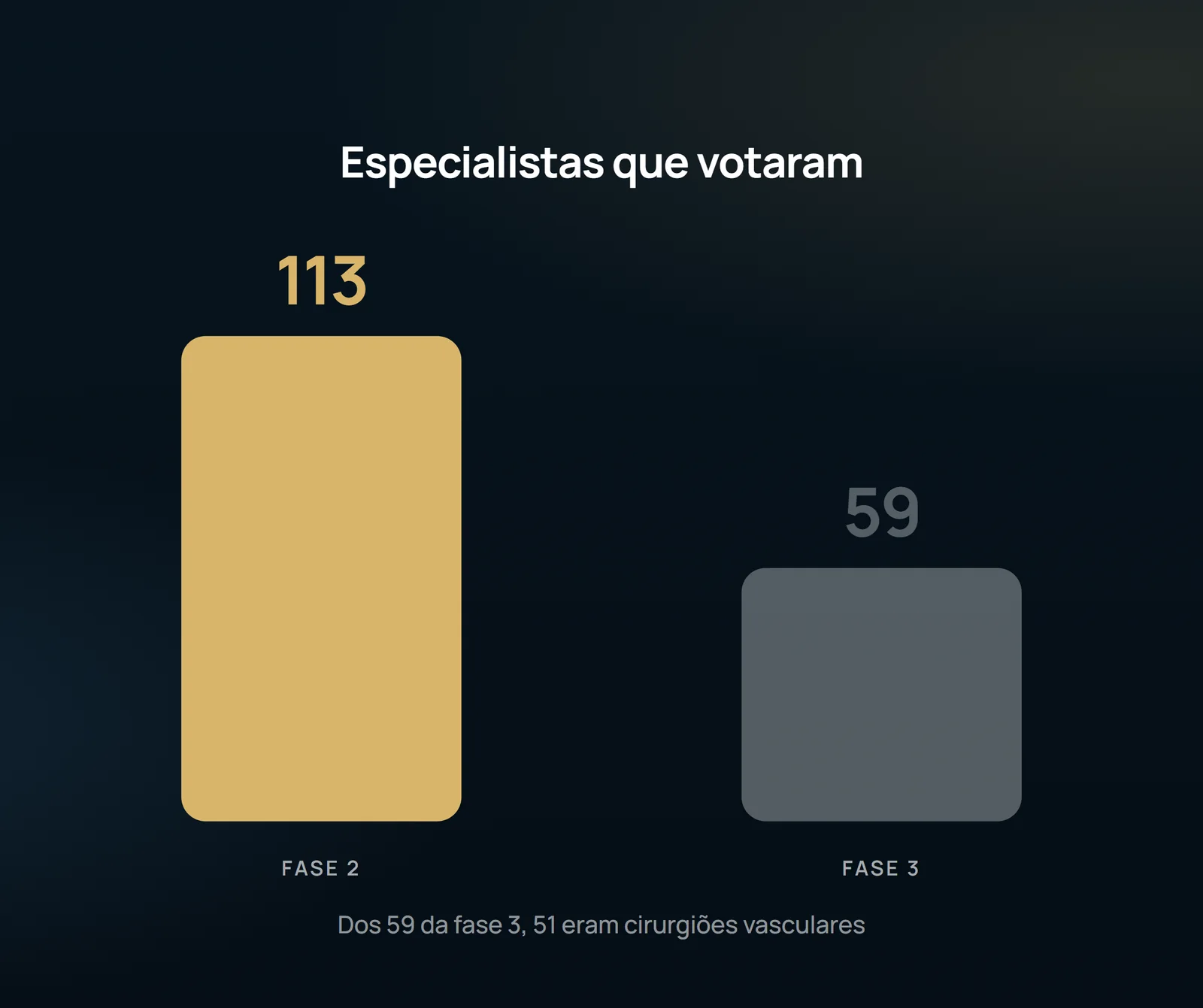
The SBACV consensus, by Delphi method, gathered 90 statements voted by 113 professionals. For the vascular, the value is in two places: the clinical criteria that close the diagnosis and the statements that prohibit promising — early surgery, aesthetics as objective and treatment without evidence.
 View the video lesson
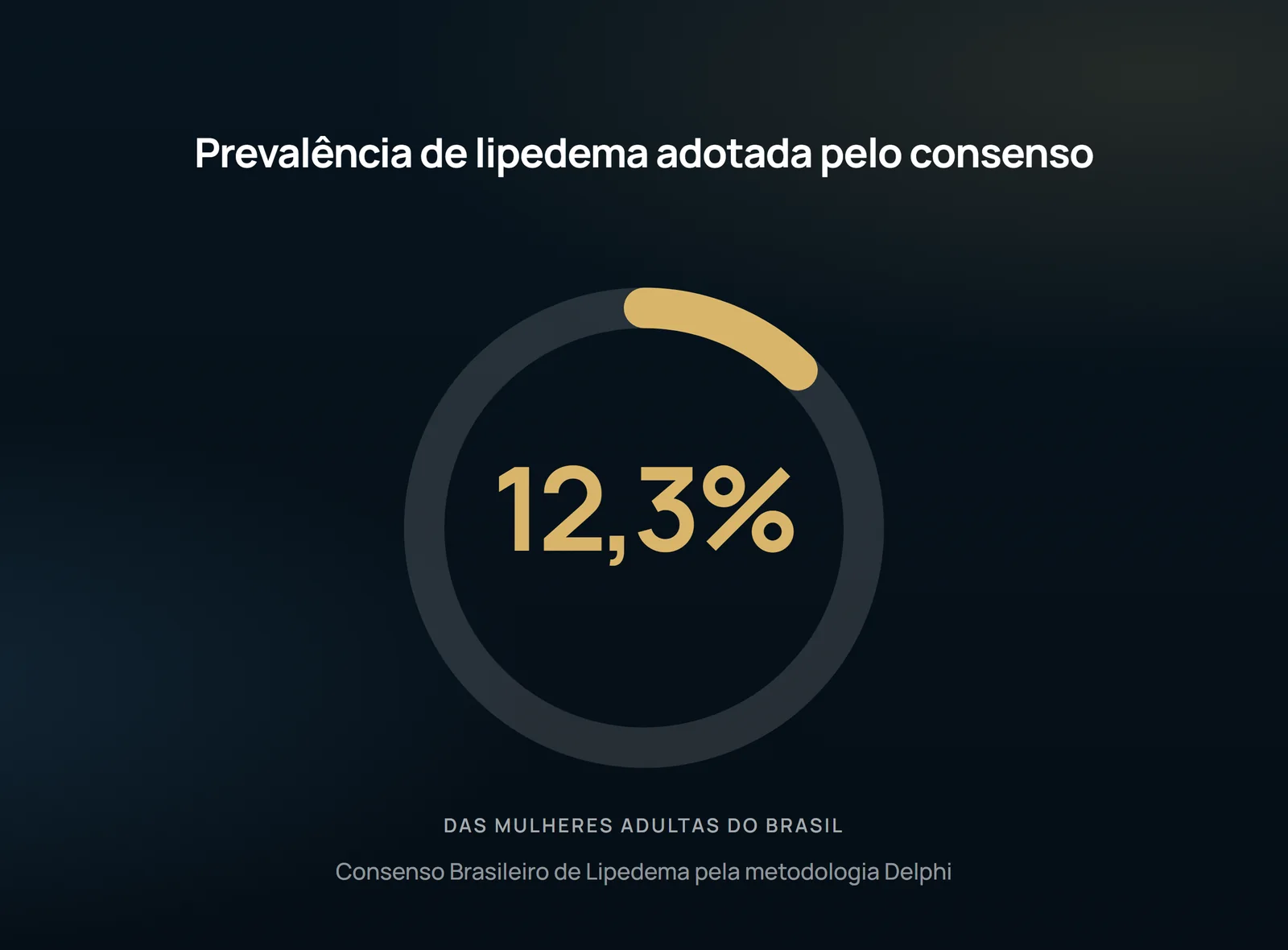
The prevalence of lipedema adopted by the consensus is 12.3% of the Brazilian adult female population. The document acknowledges that the prevalence of advanced lipedema is not well known and that many cases are confused with obesity, lymphedema or chronic venous disease — that is, the patient reaches the vascular surgeon, and often arrives with another label.
How the consensus was made
Delphi method in three phases. Seven authors of the SBACV Lipedema Commission wrote 90 statements; 113 professionals voted them on a 5-point Likert scale, in four criteria (agreement, inclusion, clarity and evidence), with 75% threshold to enter the text. In the final phase, 59 experts reassessed 42 statements. Consensus is a structured opinion of experts — it is not an outcome measured in trial, and that defines the weight of each sentence below.
Clinical criteria that close the diagnosis
Symmetric and bilateral increase in subcutaneous adipose tissue of the extremities, disproportionate to the trunk, sparing hands and feet. Painful sensitivity to pressure and stretching, reported as pain. Weight sensation and easy bruising. Godet sign generally absent; limb elevation usually without volume reduction; Kaposi-Stemmer signal usually negative. The diagnosis is clinical — history, physical examination and exclusion of differentials — and BMI has limited value to distinguish lipedema from obesity: the panel prefers waist-height and waist-hip ratio, with bioimpedance or densitometry when necessary.
The two claims that matter to the vascular
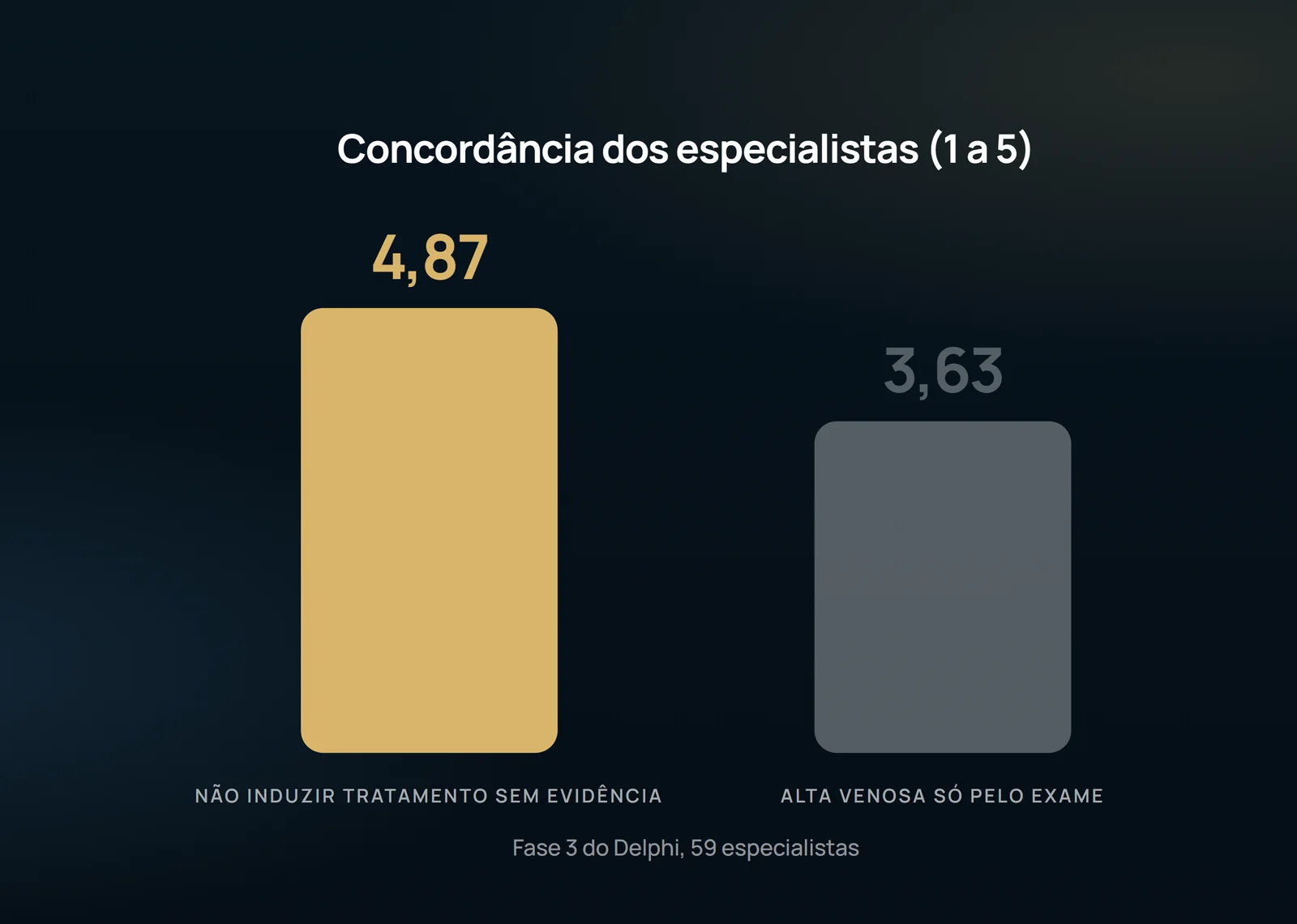
There is also the statement that changes the behavior of those who treat varicose veins: there is a relationship observed between lipedema and varicose veins, but it needs further investigation, and the treatment of associated venous disease should consider the presence of lipedema and establish causal relationship of symptoms. If the pain in the thigh is from lipedema, treating the vein solves the vein — not the complaint.
Treatment: conservative first, surgery after 1 year
Conservative management — lifestyle and nutrition, compression therapy and low impact exercise — is the first step, with complex decongestive therapy indicated up to an early stage. In advanced patients, elastic stockings can be uncomfortable due to disproportion of the limbs and need individual adaptation. As for liposuction: the decision should not be made before 1 year of clinical treatment, except advanced lipedema with impaired mobility; it should be approved by the clinician, surgeon and patient; it aims at mobility first and symptoms second — the aesthetic result should not be the main objective. With obesity and metabolic disease, the consensus prioritizes bariatric surgery before liposuction, remembering that lipedema symptoms may persist after it.
Level of evidence, said in the face
In the consensus tables, statements about treatment are almost all evidence level C. The anti-inflammatory diet and ketogenics enter as "symptomatic improvement in certain patients", with evidence note 3.89. Vitamin D enters as a frequent deficiency to monitor. Manual massage, vibratory platform and soft bristle brush enter as self-care. None enter as cure: the text defines lipedema as a chronic disease without known cure, and the conclusion admits that there is no defined treatment protocol yet.
What the consensus does not allow to say
First, the method: a Delphi measures agreement between experts, not effectiveness. The criterion "there is sufficient evidence" was the perception of evidence of who voted, and nine statements were below it and still remained in the document, marked with asterisk. Second, the sample: in phase 2 participants were not filtered by experience on the subject, 83.2% were vascular surgeons voting also on nutrition, psychology and physiotherapy, and of the 113 initials 59 reached the final stage — in the last statements, 19 of these 59 skipped the answer. Third, the references: the paragraph on diets is based, among others, on two books by the main author himself. None of this invalidates the document as a floor of conduct; all this prevents us from using it as proof of effectiveness. Compromise yes, guarantee never.
Content addressed exclusively to health professionals. No individual result is guaranteed: the indication depends on clinical evaluation and imaging examination of each patient (CFM 2,336/2023).